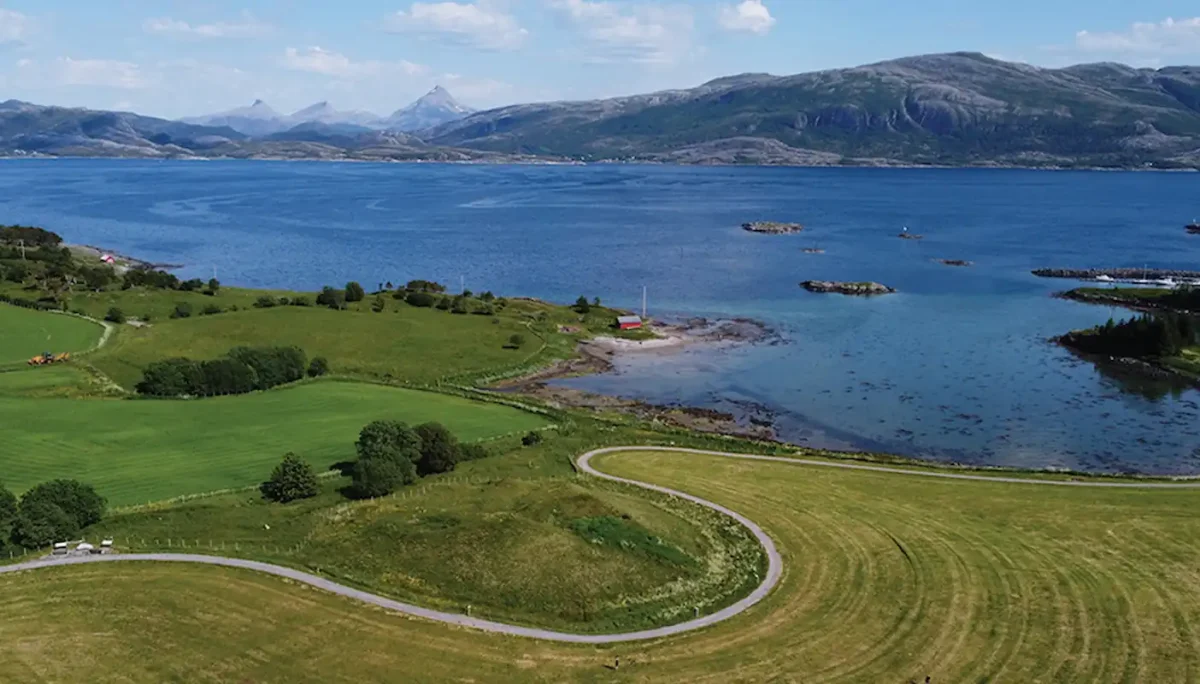
A 1,300-year-old ship burial discovered in Norway is pushing the origins of the Viking Age back by nearly a century, offering new evidence that complex maritime traditions were already in place long before the Viking world began to expand across Europe.
A Burial Once Thought to Be Legend
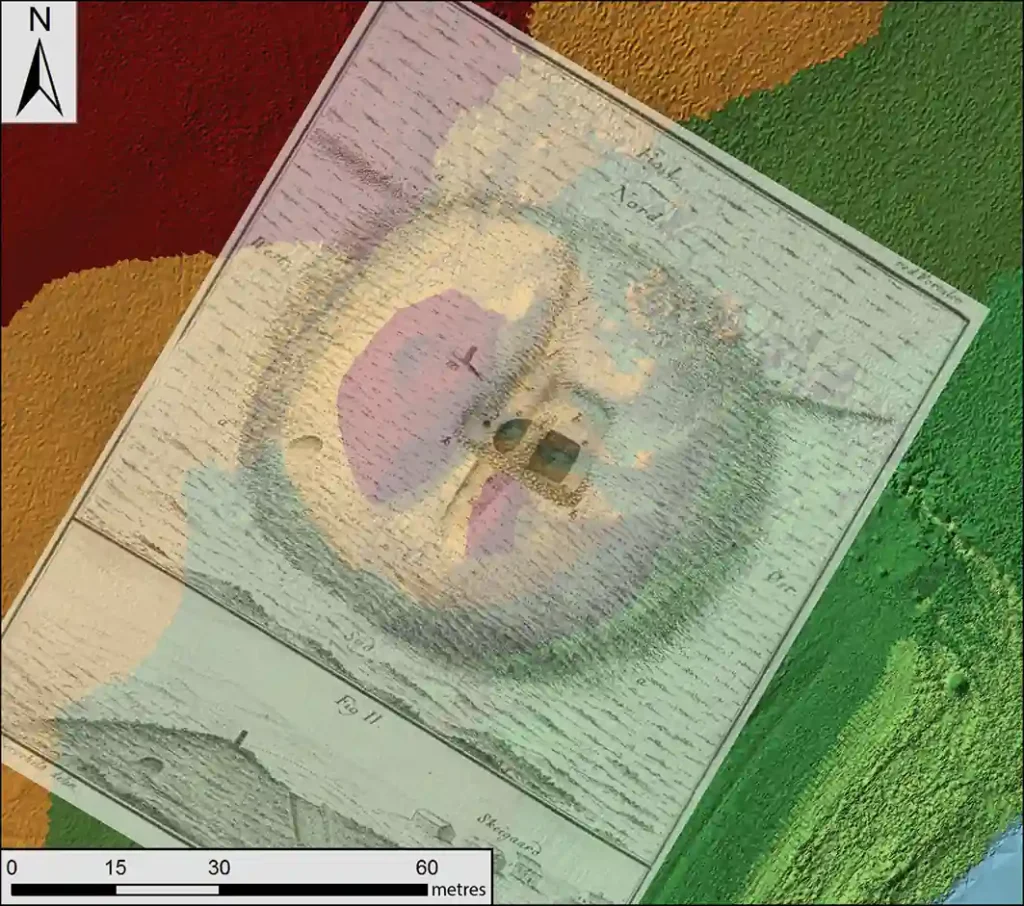
The burial lies within Herlaugshaugen, one of the largest known mounds in Norway. For generations, the site was linked to a medieval account describing a regional ruler who chose to seal himself inside the mound rather than submit to a rising king. Written centuries after the events, the story has long sat somewhere between legend and history.
Now, the ground itself is offering clearer answers.
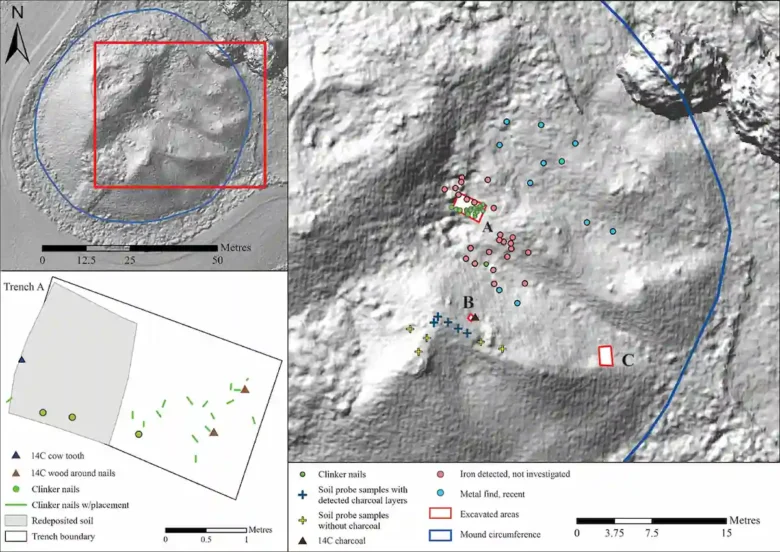
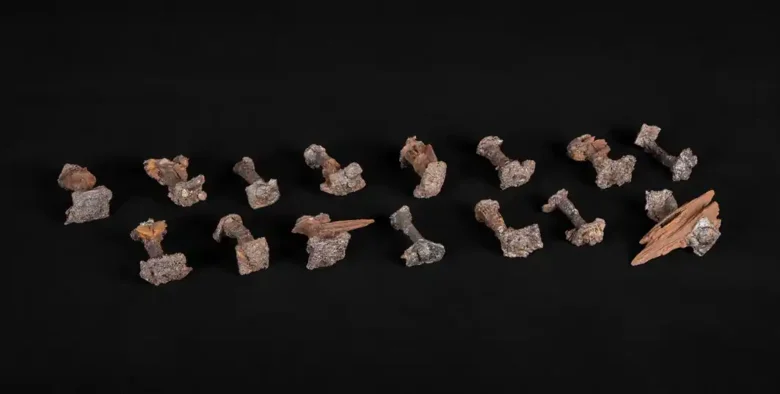
In 2023, archaeologists returned to the mound with a simple question: was there really a ship inside? What they found was modest in appearance but decisive in meaning. A group of iron rivets emerged from the soil, some still carrying traces of wood. Their shape and construction leave little doubt—they belong to a clinker-built vessel, the same technique used in early Scandinavian shipbuilding.
Evidence of a Large and Elite Vessel
The rivets tell more than one story. Their consistent size points to the midsection of a large ship, while their form suggests a vessel likely exceeding 20 meters in length. This was not a small or symbolic structure. It required resources, planning, and authority to build.
Not every burial demanded that level of investment.
Dating That Changes the Timeline
Radiocarbon analysis provides the clearest shift in understanding. Samples taken from wood and charcoal within the mound place its construction between approximately AD 680 and 720.
That timing matters.
Large ship burials in Norway have long been associated with the late 8th and 9th centuries. Herlaugshaugen pushes that tradition further back, suggesting it did not suddenly appear with the Viking Age, but developed earlier, in ways that are only now becoming visible.
A Missing Link Across the North Sea
The discovery also reshapes how connections across the North Sea are understood.
Early ship burials are well known from eastern England, particularly at Sutton Hoo, dating to the early 7th century. Scandinavian examples seemed to appear later. This Norwegian mound begins to close that gap. It points to a shared tradition shaped through ongoing maritime contact, rather than isolated developments on either side of the sea.
Power, Symbolism, and the Landscape
Burials of this scale carried meaning beyond the grave. Building a mound of this size required coordinated labor, and placing a ship within it turned the monument into a visible claim of power and presence.
At the same time, the ship likely held symbolic weight. In pre-Christian belief systems, it may have represented a passage—less an end than a transition.
Its placement strengthens that reading. The mound stands near a maritime route that once connected communities along the Norwegian coast. For those moving along these waters, the monument would have been impossible to ignore. It faced movement, trade, and exchange—and, perhaps deliberately, spoke to all three.
A Landscape of Gathering and Control
The surrounding area adds another layer. Local place names and historical references suggest links to assembly sites, markets, and communal gatherings. These were not peripheral activities. They were part of how early societies organized themselves, negotiated tensions, and maintained alliances.
Within that landscape, the burial mound begins to look less isolated. It becomes part of a wider system where authority, movement, and interaction met.
What Remains Unknown
Even now, much is unresolved.
The excavation was limited, and the full structure of the ship remains buried. Earlier digs, carried out centuries ago, reported human remains and grave goods, but those finds have since been lost. Recent work has not confirmed any human remains.
There are also hints that the mound may have been reused, possibly for later cremation burials. The evidence is suggestive, but not yet conclusive.
Rethinking the Pre-Viking World
Herlaugshaugen does not just add another site to the map. It adjusts the timeline.
It suggests that the foundations of Viking-age society—maritime networks, political signaling, and large-scale monument building—were already taking shape earlier than once assumed.
The ship beneath the mound has remained hidden for over thirteen centuries. What it reveals now is not a sudden beginning, but a slower process already underway—long before Viking ships appeared on distant horizons.
Cover Photo: Herlaugshaugen burial mound (foreground, center) viewed from the west, overlooking the strait and the mainland beyond. Credit: Hanne Bryn, NTNU University Museum, Norwegian University of Science and Technology
Grønnesby G, Bryn H, Forseth L, et al. The Herlaugshaugen ship burial: closing the gap between the East Anglian and Scandinavian ship burial traditions. Antiquity. Published online 2026:1-18. doi:10.15184/aqy.2026.10330