
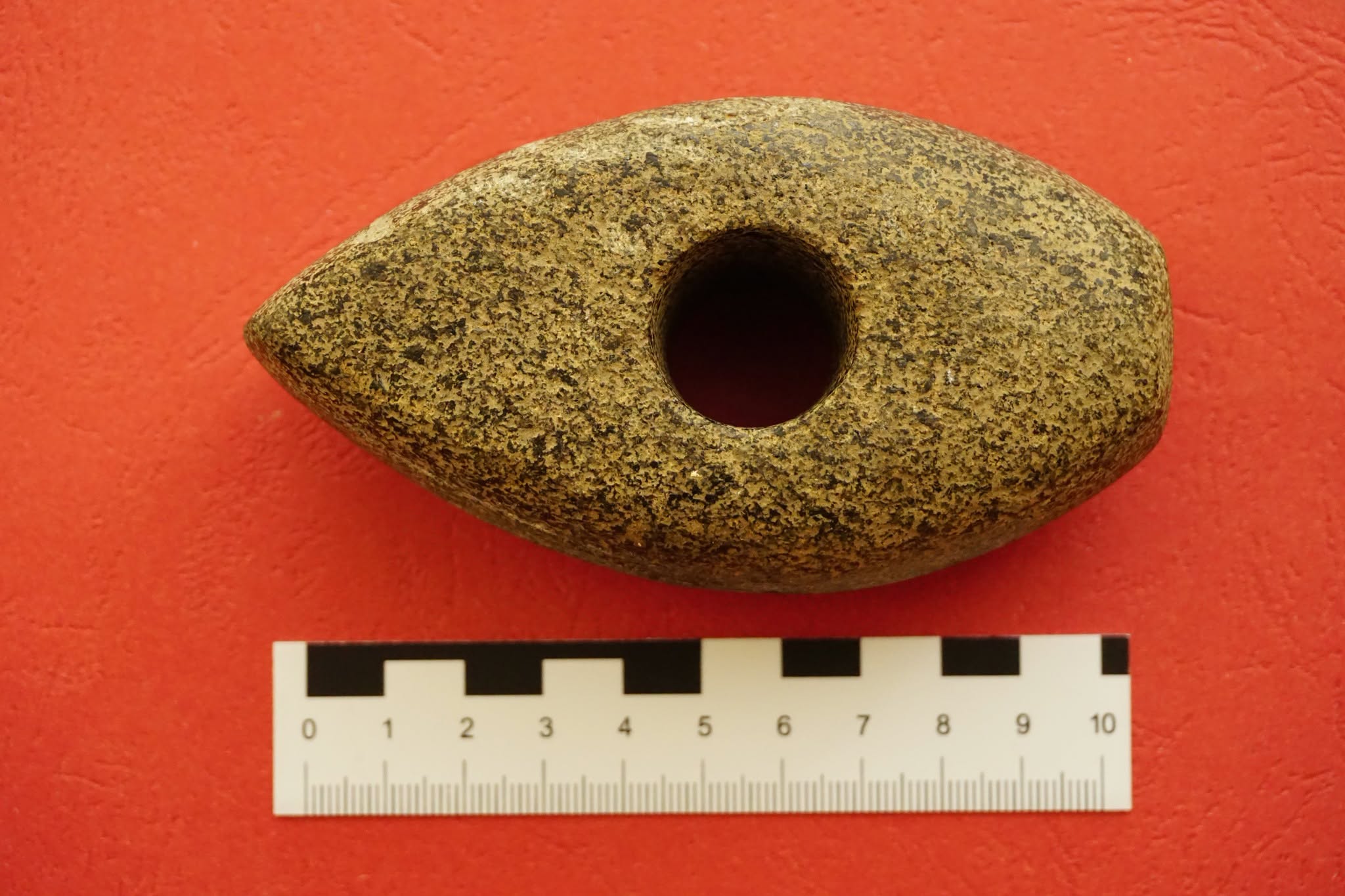
A stone axe handed over to heritage officials in Lublin, eastern Poland, may belong to the Early Bronze Age Mierzanowice culture, despite sharing features with better-known Corded Ware axe forms.
The object was delivered to the Provincial Office for the Protection of Monuments in Lublin by Roman Szymajda. According to the office, it will soon be transferred to a museum in the Lublin Voivodeship.
Because the axe was not reported from a controlled excavation, its cultural attribution has to remain cautious. Even so, its form, proportions and traces of wear make it an interesting object for specialists working on the late prehistoric communities of southeastern Poland.
A Small Axe Made from Crystalline Rock
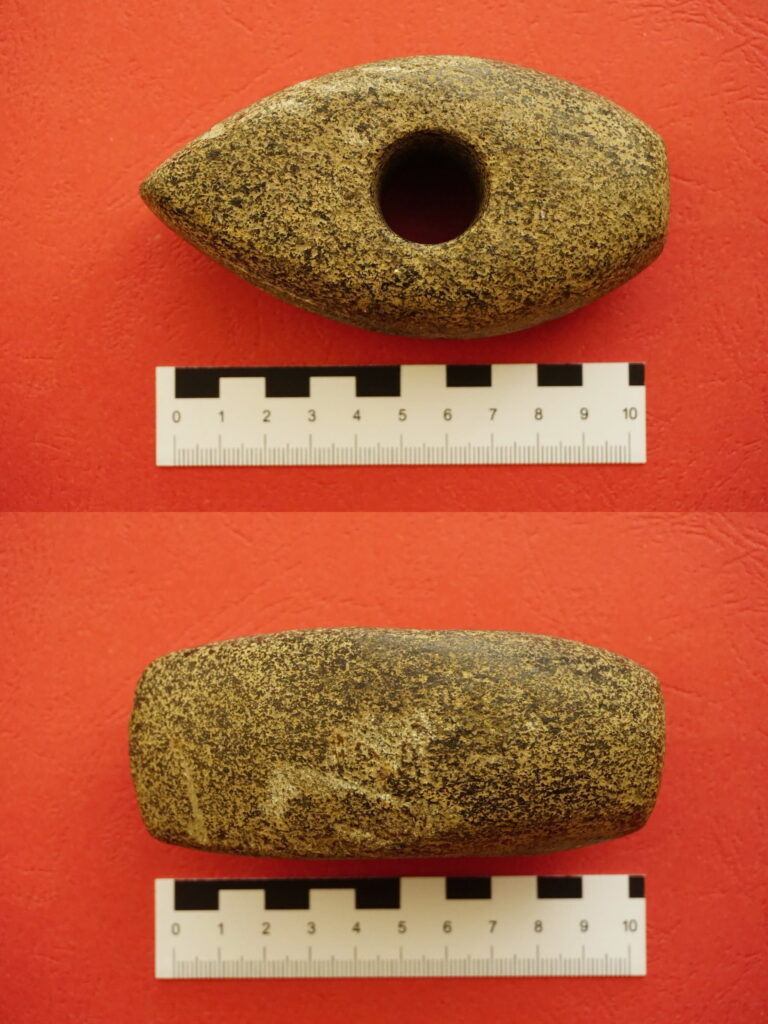
The axe was made from crystalline rock and has a compact pentagonal shape with rounded edges. It measures 11 cm in length, 5.7 cm in width and 4.6 cm in height. The butt is 2.7 cm wide, while the shaft hole, placed almost centrally, has a diameter of about 2 cm.
The cutting edge is 4.2 cm long and slightly arched. The butt is almost flat. Officials noted that there are no clear visible traces of use on the blade itself. On the butt, however, there are marks caused by impact or crushing of the surface.
Those marks are important, but they do not provide a simple answer. The heritage office notes that they may have formed during secondary use, meaning the axe could have been reused or damaged after its original period of use.
Close to Corded Ware Forms
In shape, the object resembles some stone axes associated with the Corded Ware culture. The Lublin heritage office compares it with type IIIA axes identified among examples from central and northern parts of the Lublin region. This type includes compact, streamlined axes with rounded forms.
The axe also has similarities to type H1 examples known from the Małopolska Upland. These comparisons place the object within a broader tradition of late prehistoric stone axe production in southern and eastern Poland.
But typology is not exact identification. When an object lacks a secure archaeological context, shape alone cannot prove its date or cultural attribution. It can only point to the most likely comparisons.
An Early Bronze Age Possibility
Despite its similarities to Corded Ware axes, one feature suggests a different direction: the blade is not widened. According to the Lublin heritage office, this detail may connect the object more closely with the Mierzanowice culture, an Early Bronze Age culture known especially from southern and southeastern Poland.
A similar axe has been reported from a Mierzanowice culture grave at Wojciechowice, site 1, in Opatów County. That parallel does not prove that the Lublin axe came from the same cultural setting, but it strengthens the possibility that the object belongs to an Early Bronze Age horizon rather than a Corded Ware one.
This is the main archaeological interest of the find. The axe sits between familiar formal categories: it looks close to some Corded Ware types, but at least one important detail points toward Mierzanowice material culture.
What Can Be Said for Now
The axe should be treated as a cautious attribution, not a closed case. Its find context has not been presented as an excavation context, so it cannot currently be tied to a grave, settlement, or archaeological layer.
For now, the safest interpretation is that the object is a prehistoric stone axe whose form is close to Corded Ware examples but whose unwidened blade may indicate a link with the Early Bronze Age Mierzanowice culture.
Further study could make the picture clearer. A closer examination of the raw material, manufacturing traces and microscopic wear could help determine whether the damage on the butt reflects ancient use, later reuse, or post-depositional damage.
Until then, the value of the axe lies in the details: its compact shape, central shaft hole, clean cutting edge and battered butt. Those features are enough to make it more than a stray object, but not enough to remove all uncertainty.