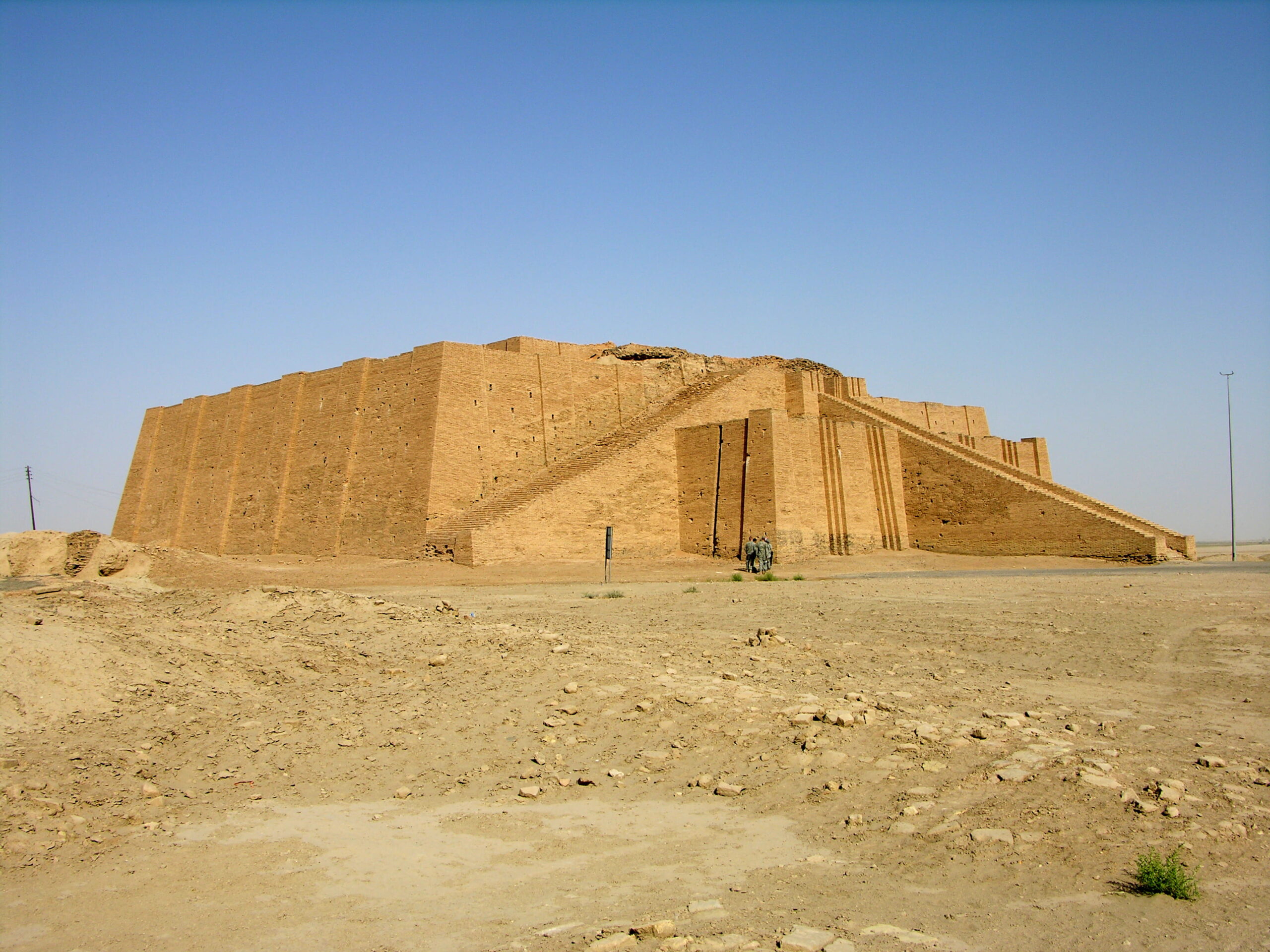
Climate erosion is now threatening the 4,000-year-old Ziggurat of Ur, one of ancient Sumer’s most iconic monuments, as restoration work begins in Iraq’s Dhi Qar province to protect the sacred tower from salt, sand and rising heat.
The monument, built around 2100 BC by King Ur-Nammu and dedicated to the moon god Nanna, has survived empires, excavations and modern reconstruction. But conservation teams are now facing a slower and more persistent danger: environmental damage driven by soil salinity, drought, wind erosion and advancing sand across southern Iraq.
The work comes at a sensitive moment for Iraq’s archaeological heritage. Across the country’s ancient south, mud-brick monuments that endured wars, collapsed kingdoms and centuries of abandonment are now exposed to pressures that are harder to control. Climate erosion does not destroy a site in one dramatic moment. It weakens it gradually, through salt, heat, wind and unstable soil.
A sacred tower from the age of Sumer
The Ziggurat of Ur was one of the great religious monuments of ancient Mesopotamia. Rising above the flat southern plain, it formed the ceremonial heart of Ur, a city that once stood among the most powerful urban centers of the Sumerian world.
For the people of ancient Ur, the ziggurat was not simply a large building. It was a sacred platform, a constructed mountain in a landscape shaped by rivers, marshes and open horizons. Its staircases carried ritual movement upward, while its massive brick body announced the authority of the king and the city’s devotion to Nanna, the moon god.
The monument was built mainly from mud brick, with baked bricks and bitumen used to protect parts of the exterior. This combination gave the structure strength, but it also tied its survival to the surrounding environment. In Mesopotamia, ancient architecture often depends on a fragile balance between clay, salt, moisture and heat.
That balance is now under pressure.
Salt and sand reach the ancient brickwork
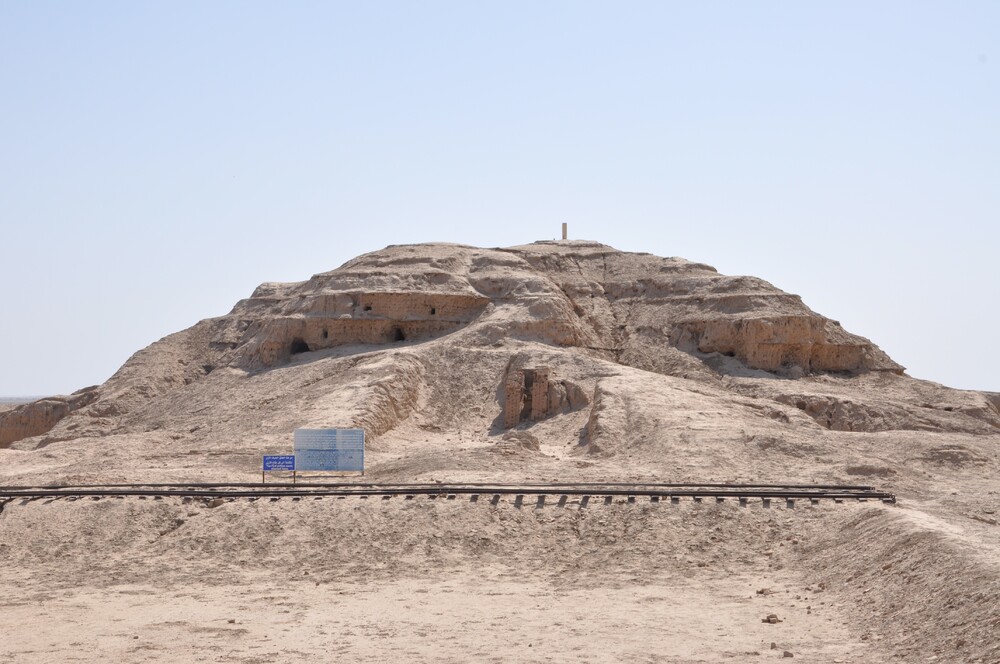
The latest restoration campaign is driven by damage that has become increasingly visible. Wind-blown sand has affected parts of the monument, while rising soil salinity and harsher dry conditions have placed new stress on the ancient and restored brickwork.
Salt is especially dangerous for mud-brick architecture. When salts enter the bricks and crystallize, they can expand inside the material and slowly break it apart. The damage may appear small at first, but over time it can weaken entire sections of a structure.
This is why the Ziggurat of Ur has become more than a symbol of Sumerian engineering. It is now also a warning sign for the future of archaeological conservation in southern Iraq.
Near the ziggurat, the Royal Cemetery of Ur has also faced salt-related damage. The cemetery, excavated in the 1920s by British archaeologist Leonard Woolley, revealed some of the most extraordinary evidence of elite burial practices in early Mesopotamia. Its tombs produced luxury goods, musical instruments, jewelry, weapons and objects that reshaped modern understanding of Sumerian society.
The threat to Ur is therefore not limited to one monument. It reaches into one of the richest archaeological landscapes of the ancient world.
Iraq begins a new restoration campaign
According to regional reports, Iraq’s State Board of Antiquities and Heritage is carrying out the current restoration work in cooperation with the Dhi Qar Antiquities Inspectorate. The campaign reportedly includes work on the first level and its three main staircases, repairs to cracks in the second level and reconstruction activity on the third level based on available archaeological evidence.
At a monument like Ur, restoration is never a simple act of rebuilding. Conservators must distinguish between original Sumerian remains, ancient repairs, modern reconstruction and areas damaged by weathering. Each decision affects how the monument will be read by future visitors and researchers.
The Ziggurat of Ur has already passed through several historical lives. It was built in the age of Sumer, restored in antiquity, excavated in the modern era and partly reconstructed in the 20th century. The new work adds another layer to that long biography, this time shaped by environmental urgency rather than royal ambition or archaeological discovery.
A monument caught between archaeology and climate change
Southern Iraq is one of the most historically important regions on earth. It is also one of the most vulnerable. Rising temperatures, prolonged drought, reduced water flow and increasing salinity have placed pressure on landscapes once sustained by the Tigris and Euphrates.
For archaeologists, the challenge is changing. Excavation is no longer enough. The task now includes protecting exposed sites from environmental forces that are becoming more severe and less predictable.
Mud-brick monuments are especially at risk. They can survive for thousands of years when buried or kept under stable dry conditions. But once exposed to salt, wind and heat cycles, their surfaces can deteriorate quickly. In southern Iraq, that problem is no longer theoretical. It is visible on the ground.
The Ziggurat of Ur remains one of the clearest surviving images of Sumerian civilization. Its stepped form still rises from the plain, carrying the memory of a city where religion, kingship, writing, trade and urban life were deeply connected.
Now its survival depends on a different kind of labor. Not kings ordering bricks into place. Not archaeologists uncovering lost chambers. But conservation teams working against climate erosion, soil salinity and the slow chemistry of decay.
At Ur, the past is still standing. The question is how long it can keep standing without help.
Cover Image: The Ziggurat of Ur in southern Iraq, one of ancient Sumer’s most iconic monuments, is undergoing restoration as climate erosion threatens its mud-brick structure. Credit: Photo: Michael Lubinski / Wikimedia Commons