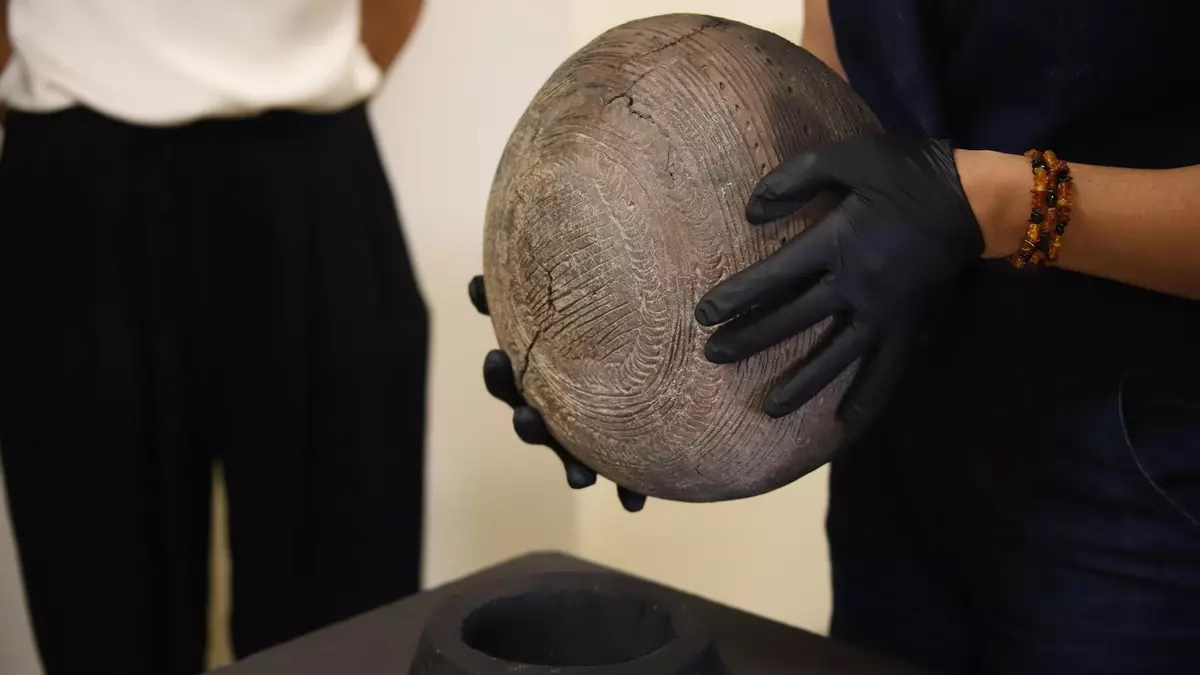
La Palma in Spain’s Canary Islands has once again grabbed the spotlight of the archaeological world. In the cliffs of Tijarafe’s Barranco de Los Gomeros, researchers have uncovered one of the island’s rarest finds: a fully intact Benahoarit ceramic vase dating to the 13th–15th centuries.
Unlike the usual fragments scattered across excavations, this vessel has survived untouched for centuries, offering a direct window into the daily life and death rituals of La Palma’s indigenous Benahoarit people.
Student’s Eye, Archaeologist’s Discipline
The vase was spotted during cave surveys by archaeology student Lourdes Barroso, who showed professional restraint: she reported it without handling the artifact. Project co-director Francisco Caamaño highlighted the importance of the discovery:
“Most sites give us shards and broken pieces. Here we have a complete vessel, carefully placed beside the dead. It reveals how these people confronted death and structured their rituals.”
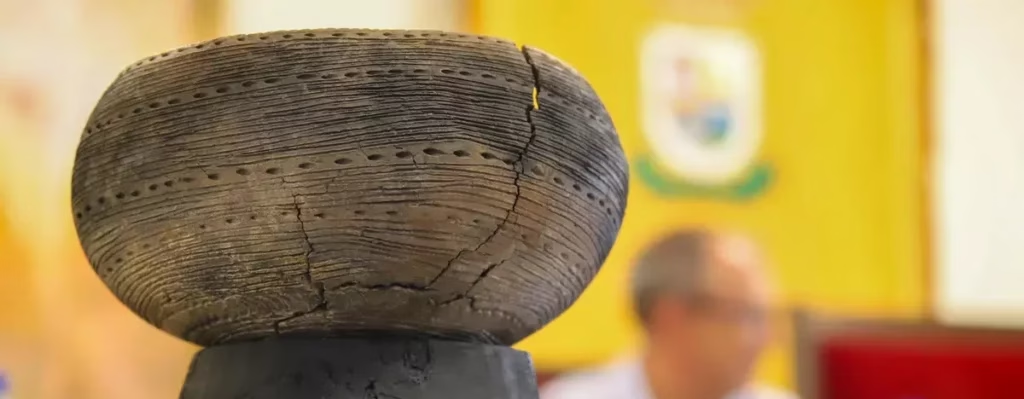
Ritual Object or Daily Tool?
Preliminary analysis shows the vase was found alongside human remains, strongly suggesting its role in funerary rites rather than domestic storage. Jorge Pais, Head of Historical Heritage for La Palma, emphasized:
“Many museum artifacts are stripped of their original context. This vase, preserved exactly where it was placed, speaks directly to its cultural significance.”
A Gateway to Indigenous Culture
With its rounded base, wide mouth, and polished surface, the vessel reflects both the practical and symbolic artistry of Benahoarit pottery. In everyday life it may have held food or water; in death, it accompanied the deceased as part of ceremonial practice.
Why It Matters
The find is not just another ceramic. It anchors the study of pre-Hispanic funerary practices in the Canary Islands and provides a rare glimpse of the Benahoarit worldview on the eve of European contact. For archaeologists, such intact discoveries are vital to reconstructing the complexity of societies that otherwise survive only through fragments.