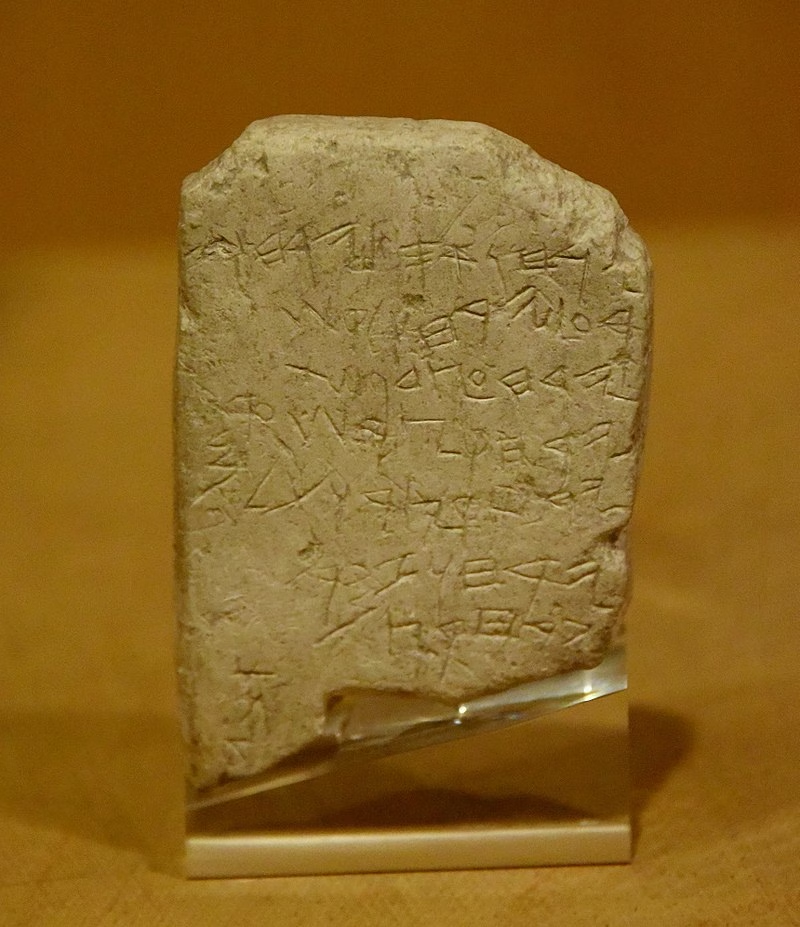
Discovered in 1908 by Irish archaeologist RA Stewart Macalister in the ancient city of Gezer, a small limestone tablet dating back approximately 3,000 years continues to intrigue archaeologists and linguists. Known as the Gezer Calendar, this tablet is considered by many scientists to be one of the oldest known examples of written Hebrew.
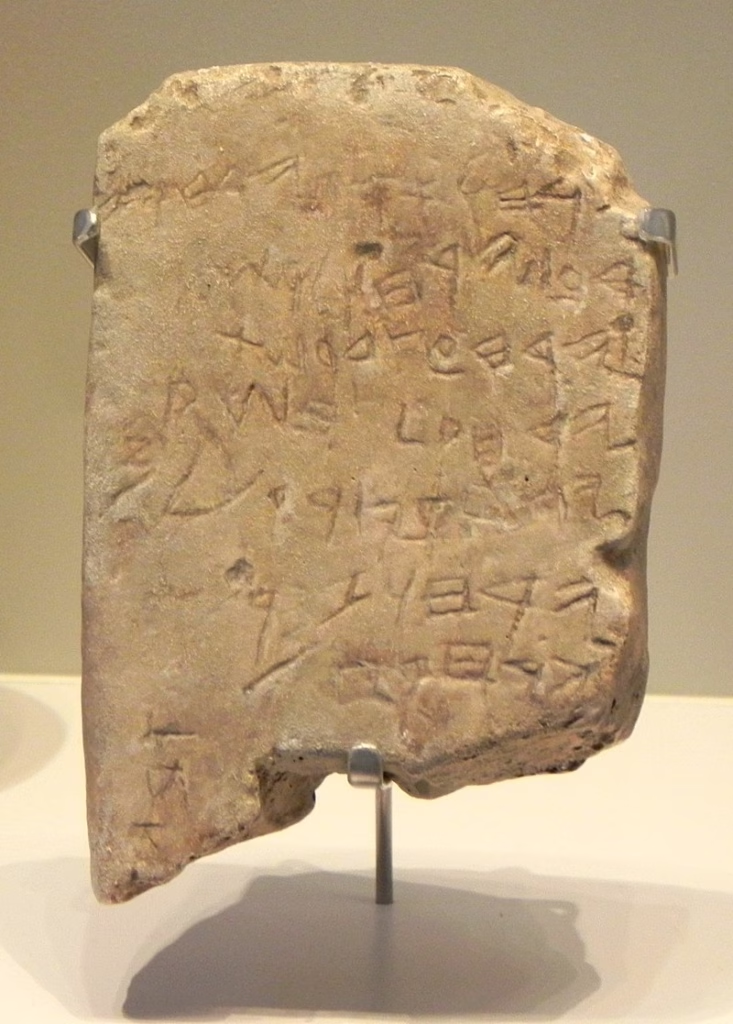
Measuring approximately 11 x 7 centimeters, the tablet contains eight short lines written in a script resembling Paleo-Hebrew or the early Phoenician alphabet. The text summarizes an agricultural year in two-month cycles: fruit gathering, planting, late planting, flax weeding, barley harvest, wheat harvest, measuring, pruning, and summer fruit gathering.
A glimpse into daily life
Despite its simplicity, the purpose of the inscription remains unclear. While some archaeologists suggest it may be a schoolchild’s writing exercise, others believe it served administrative purposes such as tax records or agricultural planning. The absence of direct religious references offers a rare glimpse into the daily concerns of people living during the biblical period.
Linguistic and historical significance
The Gezer Calendar is dated to the 10th century BCE, overlapping with the reign of King Solomon as described in the Hebrew Bible. This places the work during a significant period in the formation of the early Israelite kingdom and provides valuable insights into both the development of the Hebrew language and the agricultural practices of the time.
Where is it now?
The tablet is currently on display at the Istanbul Archaeology Museums. Visitors can see this small piece of limestone, once held in the hands of someone nearly three millennia ago, as a tangible record of one of the earliest agricultural calendars in history.
Archaeologists emphasize that the Gezer Calendar remains a subject of active study — not only for what it reveals about the rhythms of ancient farming but also for the linguistic and cultural landscape of the biblical world.
The ancient city of Gezer
Located in the Shephelah region between Tel Aviv and Jerusalem, Gezer was one of the most strategic settlements in the Southern Levant from the Bronze Age to the Iron Age. Situated at the crossroads of trade routes between Egypt and Mesopotamia, the city changed hands many times. Gezer, mentioned in the Bible, was conquered by an Egyptian pharaoh and given as a dowry to King Solomon, according to 1 Kings 9:16, and was subsequently fortified with walls.
The massive walls, monumental gates, water tunnels, and cult areas uncovered in excavations reveal the city’s military and religious importance. The Gezer Calendar, discovered in 1908, further enhances the linguistic and cultural value of this historic center.
Cover Photo: The Gezer Calendar tablet, early Iron Age, 10th century BCE, Museum of Archaeology, Istanbul, Turkey. Image: Wikipedia