
A remarkable archaeological discovery has emerged from southern India, where workers restoring a centuries-old Shiva temple near the Javvadu Hills uncovered a sealed pot containing 103 gold coins. The find, made in Kovilur village of Tamil Nadu’s Tiruvannamalai district, is believed to date to the late Chola or early Pandya period — a pivotal era that bridged two of South India’s most powerful dynasties.
The coins were unearthed beneath the sanctum sanctorum of the Sivan temple during authorized renovation works. As the soil beneath the temple floor was cleared, the team found a buried mud vessel tightly sealed and hidden for centuries. Inside lay neatly stacked gold coins — remarkably intact despite the long passage of time.
Officials from the Revenue and Hindu Religious and Charitable Endowments (HR&CE) Departments arrived promptly to secure and document the discovery. The hoard has since been transferred to safe custody for expert examination. Initial observations suggest the coins date from the transitional period between the declining Chola Empire and the ascendant Pandya kingdom.
A Treasure from a Time of Change
The late Chola period, spanning the 12th and 13th centuries, was marked by political instability but continued artistic and architectural brilliance. The Cholas, who once ruled vast territories across South and Southeast Asia, were facing growing challenges from the resurgent Pandyas in the south. Despite this turbulence, temple construction and patronage flourished, with sanctuaries often serving as both sacred and economic institutions.
Archaeologists believe the gold coins found at Kovilur may have been part of a temple treasury — offerings made to safeguard wealth in uncertain times or as votive deposits symbolizing devotion to Lord Shiva. The temple’s architecture displays distinct late Chola characteristics, strengthening the chronological link to this transformative period in Tamil history.
Insights into Medieval South Indian Economy
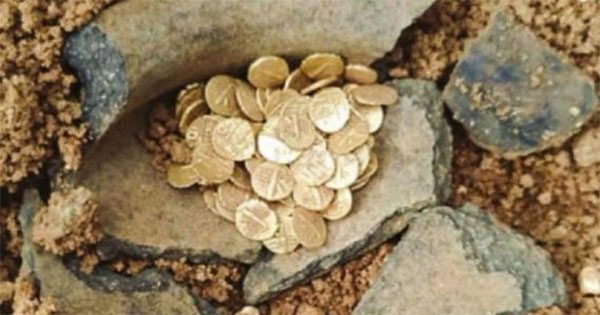
Experts suggest the coins could carry dynastic emblems such as the tiger of the Cholas or the fish of the Pandyas, as well as religious motifs invoking divine protection. Detailed studies of their inscriptions, iconography, and metal composition are now underway.
If confirmed, the find would provide rare physical evidence of temple-based economic systems in medieval Tamil Nadu — where gold served as the backbone of exchange and temples acted as repositories of wealth, trade, and cultural memory.
The discovery sheds light on how wealth was managed and protected during times of political transition. It also underscores the dual role of temples as both spiritual and administrative centers, binding faith and economy in a uniquely South Indian synthesis.
A Living Connection to the Past
For the residents of Kovilur, the find has become a moment of collective pride. Locals have gathered around the temple, viewing the coins as echoes of their ancestors’ devotion and prosperity. For scholars, the hoard opens a new chapter in understanding Tamil Nadu’s medieval numismatic and temple traditions.
As archaeologists continue their study, the 103 gold coins promise to offer invaluable clues to the shifting balance of power between the Cholas and the Pandyas — and to the enduring sanctity of the temples that safeguarded their legacy.
Cover Image Credit: Representative image of a gold coin from the reign of Kulothunga Chola I (1070 – 1120 AD). The coin depicts two fish, a seated tiger, a bow, and two lamp stands at its centre. The punched legend reads “Malai Nadu Konda Chola,” and the regnal year inscribed is 36. It commemorates Kulothunga’s conquest of Malainad, most likely the Malabar coast. Credit: Chennai Museum.