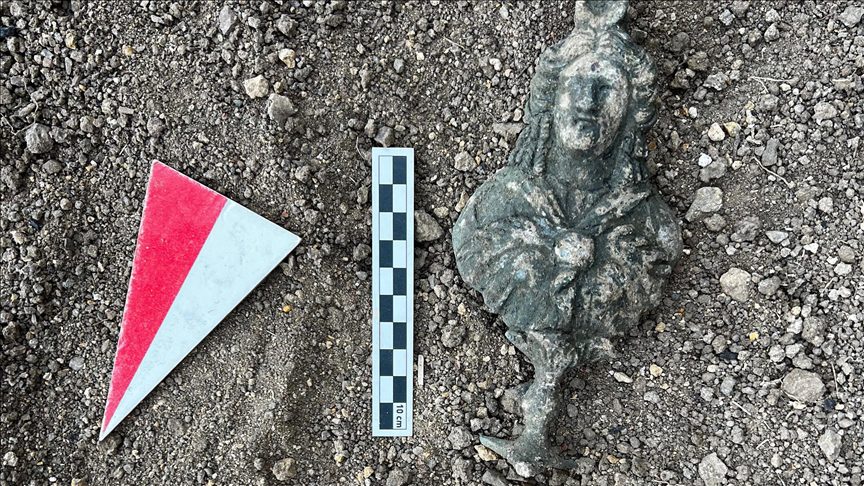
A rare bronze depiction of Isis, uncovered in the ancient Roman military site of Satala, reveals traces of eastern cults among the legionaries stationed in northern Anatolia.
Archaeologists excavating the Roman fortress of Satala, located in the Kelkit district of Gümüşhane, Türkiye, have unearthed an exceptional bronze bust of the Egyptian goddess Isis — a discovery shedding light on the complex religious landscape of the Roman legions in Anatolia.
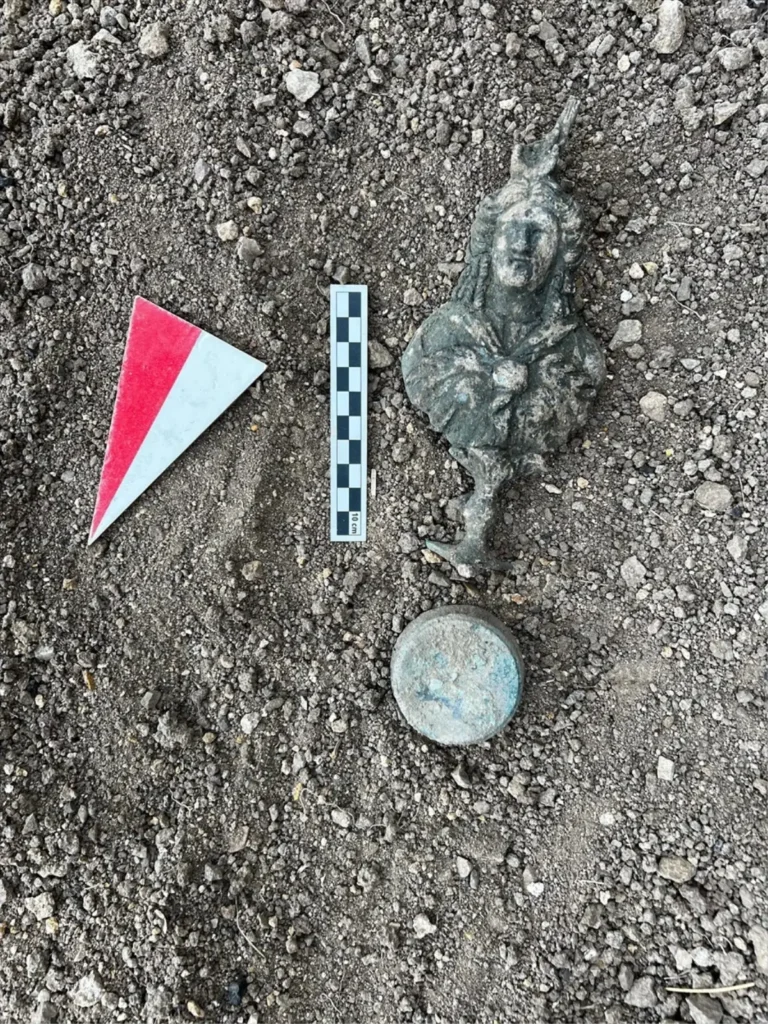
The 20-centimeter-tall bronze artifact was found during excavations in the necropolis area of the ancient city, which served as a strategic Roman legionary base during the Empire’s eastern campaigns. The find was announced by Dr. Elif Yavuz Çakmur, excavation director and faculty member at Karadeniz Technical University’s Department of Archaeology.
“We encountered a surprising and highly significant find — the bronze bust of Isis, discovered detached from its base,” said Dr. Çakmur. “The presence of this goddess within a Roman military settlement is crucial, as it reflects the legions’ openness to Eastern deities alongside their traditional pantheon of twelve gods and the cult of Mithras.”
Echoes of a Cosmopolitan Army
The discovery provides rare physical evidence of the religious diversity among Roman soldiers stationed in Satala, one of the Empire’s most remote fortresses in the eastern provinces. Isis, worshipped across the Mediterranean as a symbol of fertility and protection, was especially popular among Roman soldiers, sailors, and traders who served in foreign lands.
Dr. Çakmur emphasized that this is the first bust unearthed in Satala since the discovery of an Aphrodite sculpture in the 1870s, marking it as one of the site’s most significant artistic finds in over a century.

Artistic and Symbolic Details
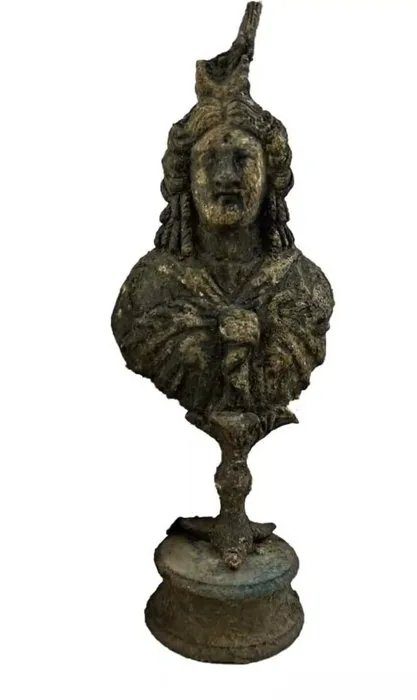
The Isis bust was found mounted on a three-legged stand emerging from a triple-leafed calyx, symbolizing rebirth and divine fertility. The goddess wears a shawl tied with a front knot and tasseled ends, and her head preserves two ears of corn on the left side, representing abundance and prosperity — motifs deeply rooted in the iconography of the Hellenistic-Roman Isis cult.
Conservation and restoration efforts are currently underway. Once stabilized, the bronze bust will be exhibited at the Gümüşhane City Museum, accompanied by a detailed scientific study to determine its exact chronology and workshop origin.
A Meeting Point of Cults
Satala, known in antiquity as Satala Legio XV Apollinaris, functioned as a crucial military hub linking Cappadocia, Armenia, and the eastern provinces. The discovery of an Egyptian deity’s image in this context underscores how Roman frontier garrisons acted as crossroads of belief systems — where imperial, local, and eastern religious traditions intertwined.