
A queen’s lost wedding crown, an emperor’s forgotten debt, and a medieval treasure buried for centuries — the story of the Środa Treasure is one of Europe’s most extraordinary archaeological mysteries. Now, the National Museum in Wrocław has reopened its doors to showcase the glittering hoard in a new light, inviting visitors to rediscover what curators call “the unseen beauty” of royal craftsmanship.
A Treasure Unearthed by Chance
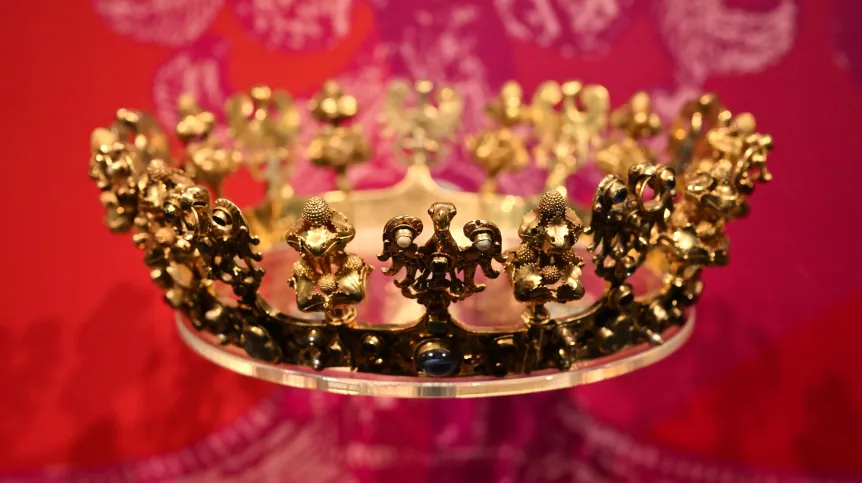
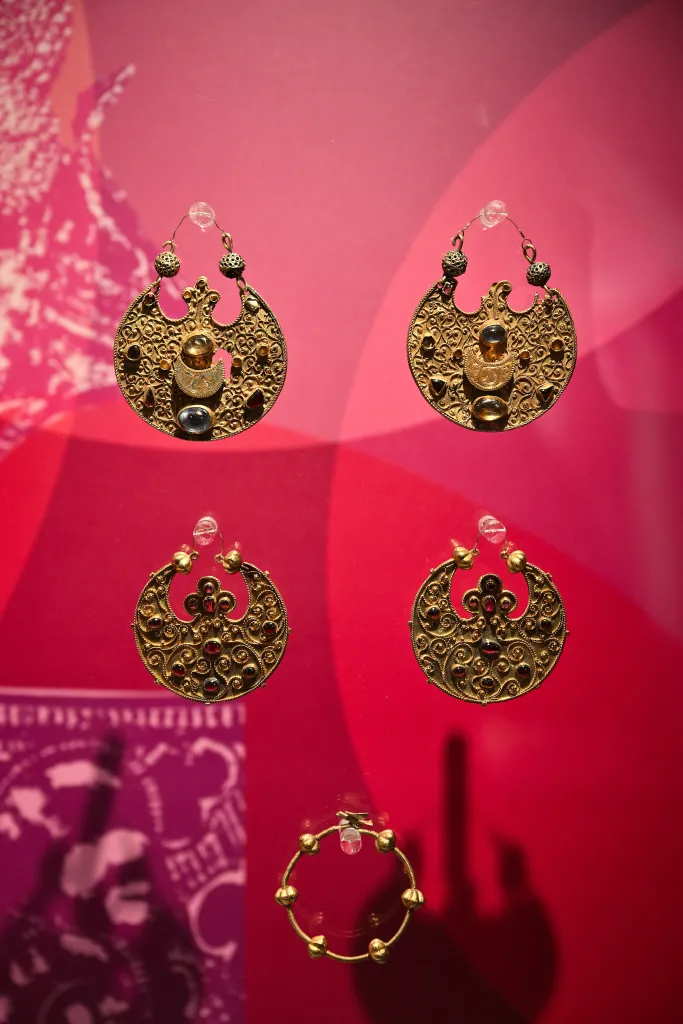
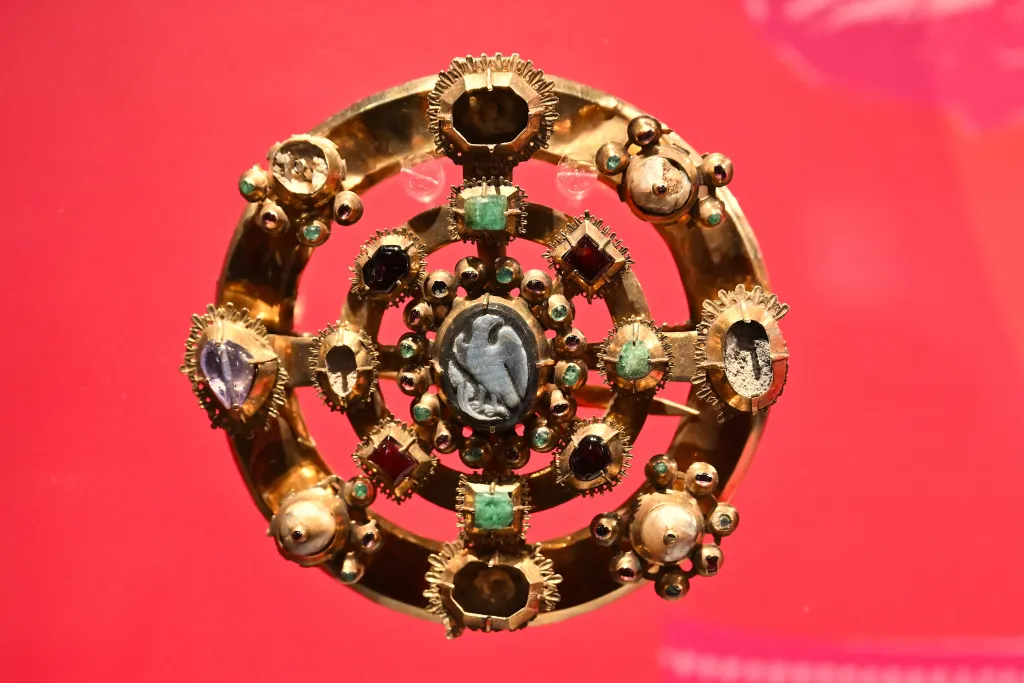
The Środa Treasure, or Skarb Średzki, was uncovered accidentally in the 1980s in the small town of Środa Śląska, near Wrocław in southwestern Poland. What began as a construction project turned into one of the most remarkable finds in medieval European archaeology — a cache containing thousands of silver and gold coins, a 14th-century gold wedding crown, a 13th-century imperial clasp, and other priceless ornaments once belonging to the Bohemian royal treasury.
Researchers believe the treasure was pledged as collateral to Jewish bankers by Charles IV of Luxembourg, then King of Bohemia and later Holy Roman Emperor, during a time of political and financial turmoil. When the medieval loan was never repaid, the deposit vanished from history — until the late 20th century.
The Queen’s Crown Returns
At the center of the exhibition is the royal wedding crown, likely once worn by Blanka de Valois, the first wife of Charles IV, who died in 1348. Delicately wrought from gold and adorned with sapphires, rubies, and pearls, the crown represents not only the opulence of medieval Bohemia but also the personal story of a queen whose legacy was buried with her dowry.
“This crown is priceless for any art historian,” says Jacek Witecki, curator of the exhibition. “You cannot assign it a market value — royal crowns from the 14th century simply don’t exist on the market. Their worth is purely historical and symbolic.”
Witecki explains that curators approached the valuation process “modularly” — analyzing individual elements such as gemstones and comparing them with medieval jewelry analogues. Yet, he adds, even such a method cannot capture the object’s true cultural value.
Hidden Beauty in the Details
This year’s exhibition, titled The Unseen Beauty of the Środa Treasure, highlights the meticulous conservation and reconstruction efforts that preceded the display. Because of the objects’ fragility and intricate workmanship, many details are impossible to observe through glass cases. To bridge this gap, the museum presents short documentary films revealing the restoration process in microscopic detail — showing visitors how conservators see the artifacts.
“I wanted people to look at the Środa Treasure the way we do — to explore its micro-world of detail,” says Witecki. “That is where the real beauty lies.”
A European Journey
Since its first presentation at the Wrocław National Museum in 1996, the treasure has traveled across Europe, with exhibitions in Warsaw, Dresden, Valladolid, and Brussels. It now returns home in a renewed display that places the wedding crown at the heart of a broader story — one that also explores the symbolism of crowns, the rituals of royal marriage, and the lost regalia of the Middle Ages known today only through art and chronicles.
The exhibition can be visited at the National Museum in Wrocław until December 30.