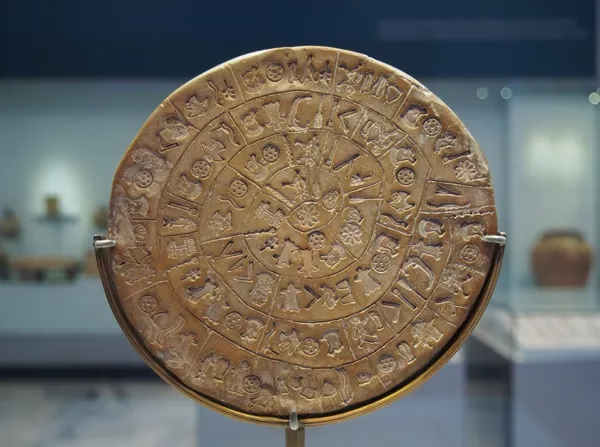
Discovered in 1908 by Italian archaeologist Luigi Pernier during excavations at the Minoan palace of Phaistos in Crete, the Phaistos Disc remains one of archaeology’s most enduring enigmas. Dating back to the second millennium BC, this baked clay artifact is inscribed with 241 mysterious symbols arranged in 45 groups on both sides. Despite over a century of scholarly study, its purpose and meaning remain a mystery, fueling debate and fascination among linguists, historians, and enthusiasts worldwide.
Discovery and the Minoan Civilization
The discovery of the disc came at a time when excavations at Knossos and Phaistos were revealing the sophistication of the Minoan civilization, regarded as Europe’s first advanced culture. The disc’s unique symbols and spiral layout provide rare insight into the writing systems and symbolic traditions of Bronze Age Crete, yet they also highlight how much about the Minoans remains unknown.
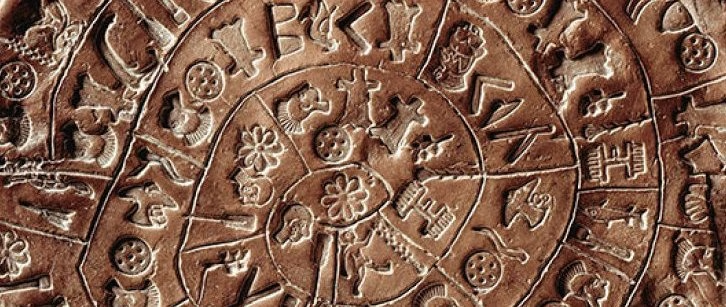
Symbols and Theories: A Forgotten Language?
The 241 individual symbols were stamped into the wet clay rather than carved, leading some researchers to suggest that this may represent the earliest known example of movable type printing. Theories about its function range widely:
- A religious hymn or prayer
- A royal decree or legal record
- A game board or calendar
- Evidence of a lost writing system unrelated to Linear A or Linear B
A Global Attraction at Heraklion Museum
Today, the Phaistos Disc is displayed at the Heraklion Archaeological Museum in Crete, where it continues to draw thousands of visitors every year. Its undeciphered symbols have become an icon of ancient mystery, bridging archaeology, linguistics, and cryptology.
Ongoing Academic Interest
More than a century after its discovery, the disc continues to inspire research and speculation. Scholars from multiple disciplines are working to decode its secrets, making it not only a valuable archaeological artifact but also a cultural phenomenon that sparks the imagination.