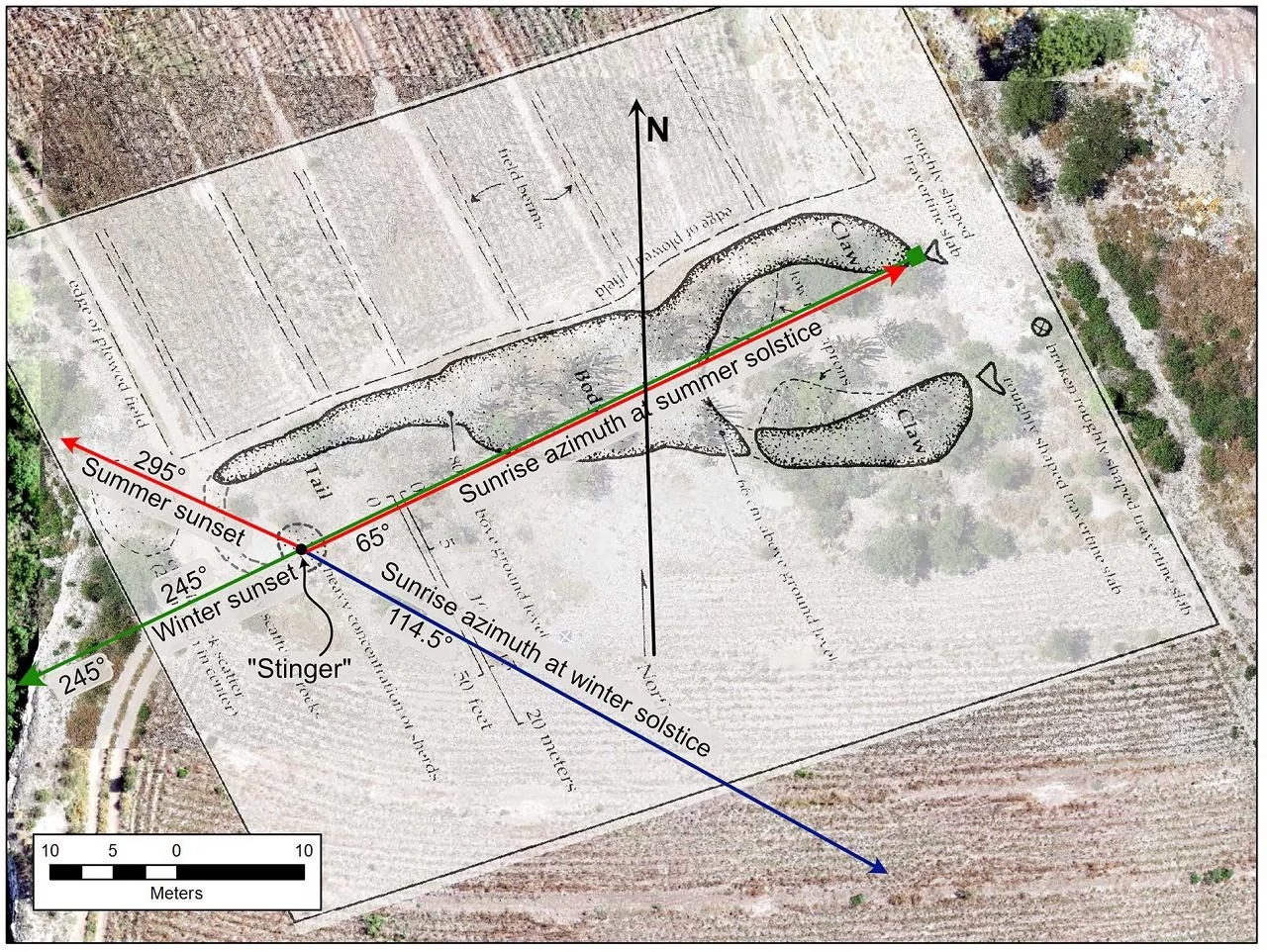
Beneath the dry winds of Mexico’s Tehuacán Valley, archaeologists have uncovered something extraordinary — a 200-foot-long scorpion etched into the earth. For a millennium it lay silent, its curved tail and claws almost swallowed by dust, until researchers realized the creature was not a myth, but a message: a cosmic instrument built by farmers who followed the sun.
The structure, now known as the Scorpion Mound, dates between A.D. 600 and 1100, a time when communities across central Mexico were transforming arid valleys into agricultural landscapes. What at first looked like a pile of stones revealed a deliberate design: a scorpion’s body aligned with the rising and setting points of the summer and winter solstices. When the sun rose at its northernmost point in June, light would have pierced the line between the mound’s claws; six months later, the sunset aligned with its stinger — an ancient calendar written in soil and shadow.
“For ancient farmers, watching the sun wasn’t ritual; it was survival,” says archaeologist James A. Neely, whose study appears in Ancient Mesoamerica. “The Scorpion Mound reflects a worldview where astronomy and agriculture were one.”
Excavations uncovered ceramic jars, incense burners, and intentionally broken tripod bowls — offerings to mark the seasons’ turning. The soil bore traces of burned grain and pigment, signs of ritual feasting and fertility ceremonies. Even today, locals still leave tobacco and chilies near the mound’s head — a quiet continuity between past and present.
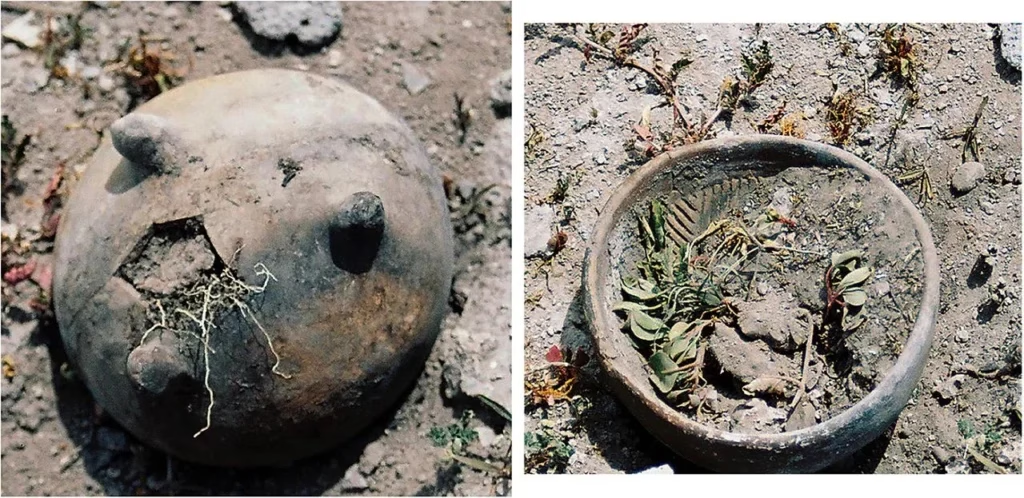
The mound lies within a 22-acre ceremonial and irrigation complex, one of the oldest engineered water systems in Mesoamerica. It connected villages through a network of canals that made survival possible in the parched valley — a blend of hydraulic genius and celestial observation that tied the heavens to the harvest.
The scorpion itself held sacred meaning. In Mesoamerican cosmology, it was linked to Venus as the Morning Star, and to the deity Tlāhuizcalpantēcuhtli, guardian of dawn, fertility, and rebirth. The same symbols appear on murals at Cacaxtla and in pottery from Cholula, suggesting the valley’s farmers shared in a vast cultural dialogue — one that read the stars not as omens, but as instructions for survival.
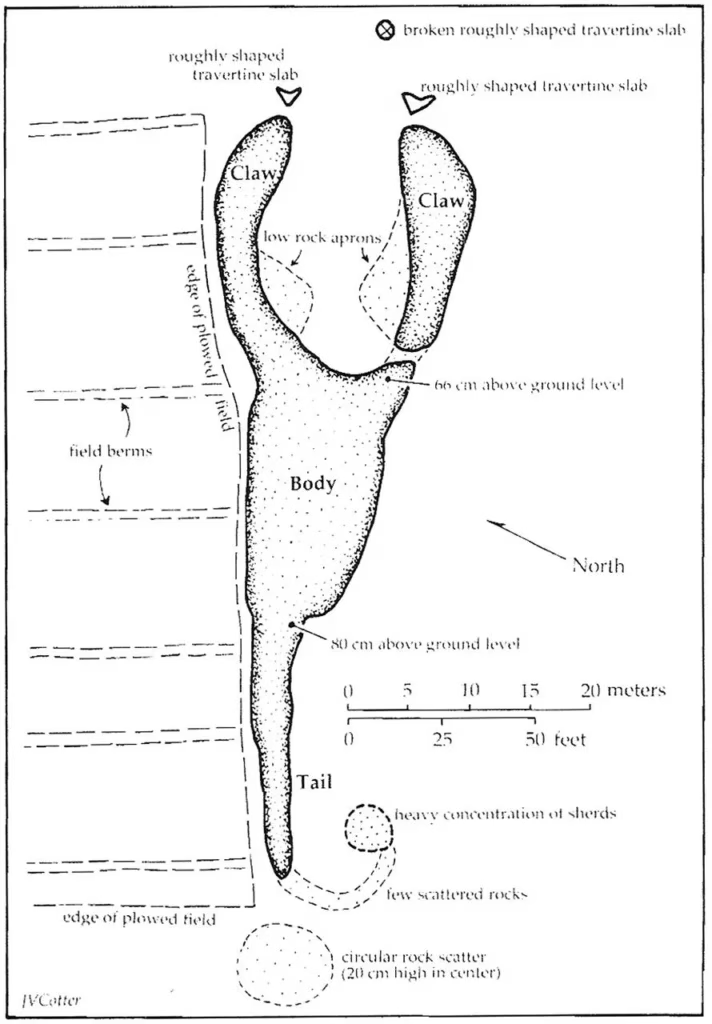
Unlike the grand observatories at Chichén Itzá or Monte Albán, the Scorpion Mound belongs to the anonymous astronomers of the soil — villagers who tracked the cosmos from their fields. Their monument, modest but precise, shows that knowledge was communal, not royal; the cosmos belonged to everyone who watched the light change over stone and earth.
As the research continues, archaeologists plan to verify the mound’s solar alignments with new geospatial data. But already, its meaning feels clear:
in a landscape of scarcity, the scorpion was not a warning — it was a promise that the sun would return.
Neely, J., Castellon-Huerta, B., Wilson, S., Willis, M., & Walker, C. (2025). The Scorpion Mound Complex: An Effigy Mound Site with Possible Functional/Ceremonial Significance in the Tehuacán Valley of Puebla, México. Ancient Mesoamerica, 1–16. doi:10.1017/S0956536125000070
Cover Image Credit: J. Neely et al., Ancient Mesoamerica (2025)