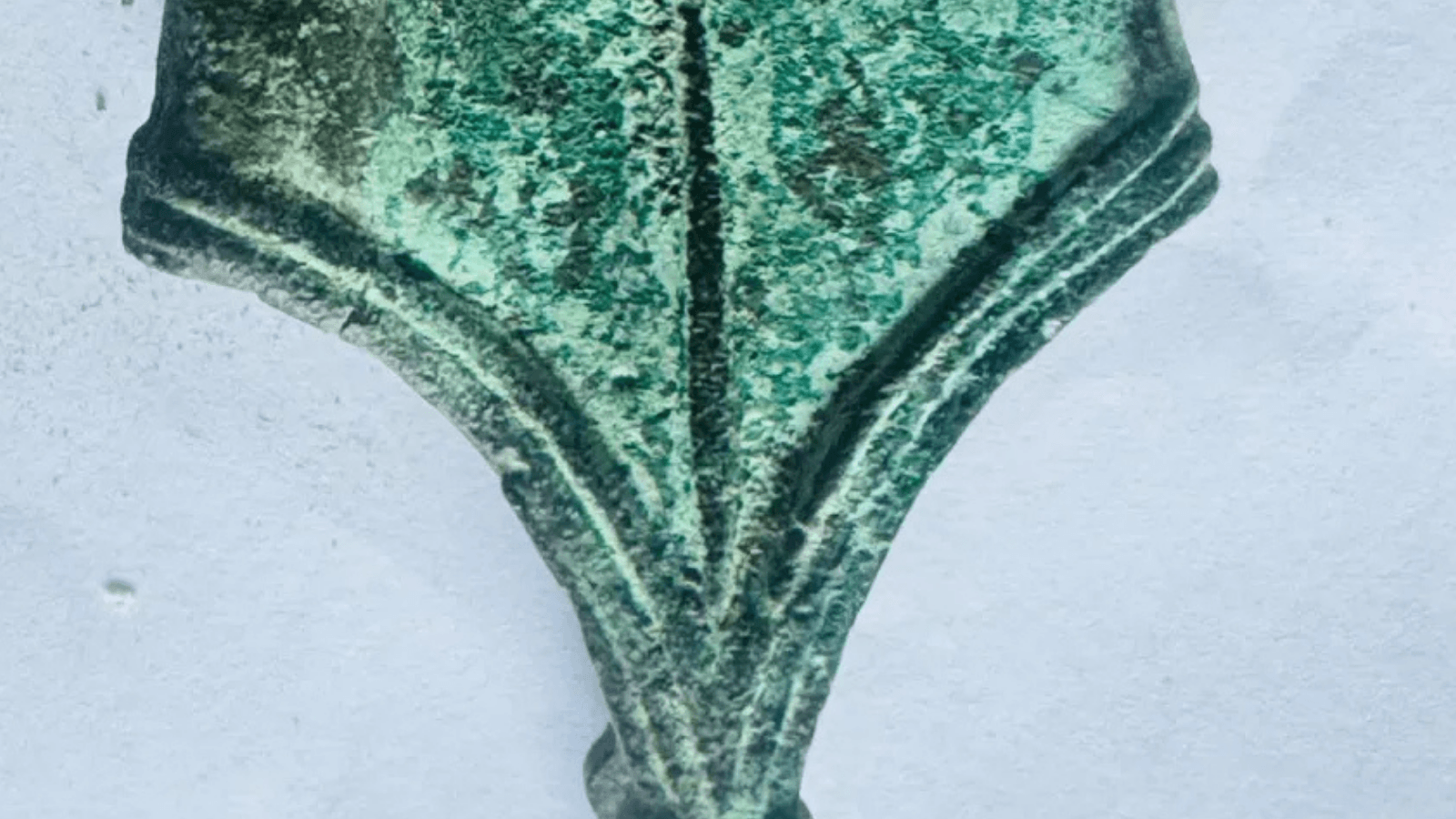
A small metal fitting found almost on the surface of the ground in Poland may be the last surviving part of an 11th-century warrior’s sword equipment. The weapon and its sheath have disappeared, but the object that once protected the scabbard’s lower end survived for approximately 1,000 years.
The artefact was discovered in the Masovian Voivodeship during a legally authorised and officially reported search. The Masovian Provincial Conservator of Monuments has provisionally identified it as a sword-scabbard chape, a metal fitting designed to protect and reinforce the bottom of a sheath.
Despite lying beneath only a shallow layer of soil—practically at ground level—the object remains in remarkably good condition. Heritage officials described its survival as especially valuable for further research.
The Part Designed to Take the Damage
Medieval swords were normally carried in scabbards made primarily from wood and leather. These organic materials rarely survive for centuries, leaving archaeologists to reconstruct their design from metal fittings, images and the occasional waterlogged example.
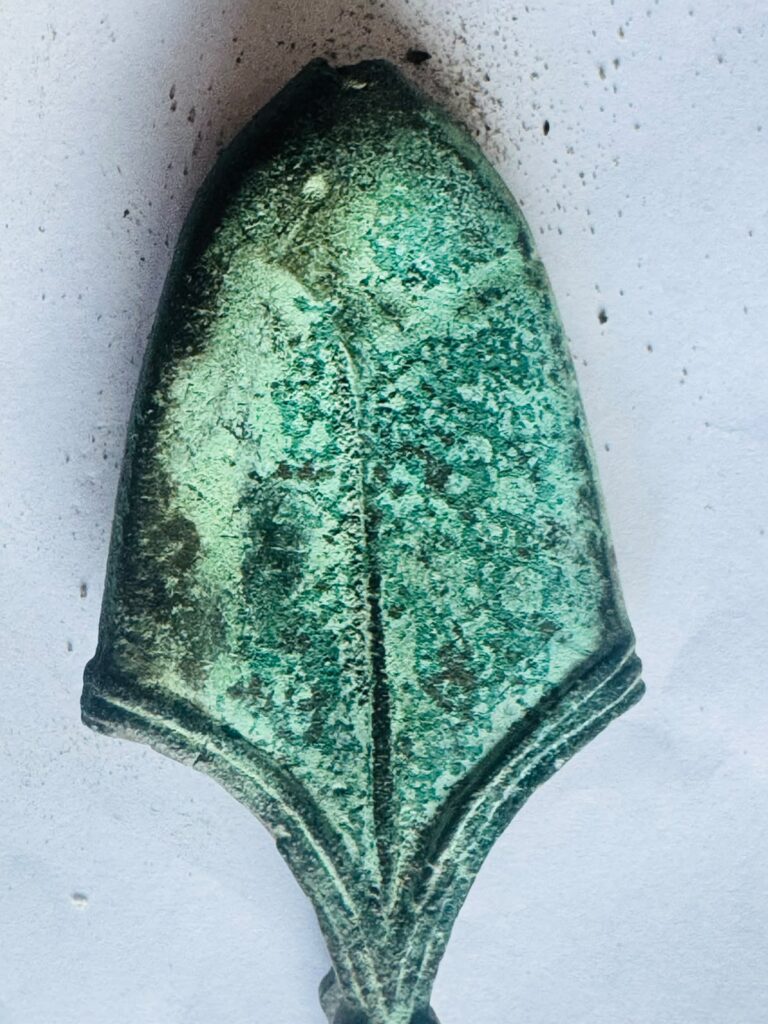
A chape was fixed to the lower end of the scabbard, where it helped prevent splitting and damage caused by contact with the ground or other objects. It could also stabilise the sheath and provide a decorative finish visible when the sword hung from its owner’s belt.
This durability explains why the Masovian fitting survived after the rest of the weapon system vanished. The wooden core and leather covering decayed, while the metal component remained in the soil as a fragment of equipment that was once both practical and visually distinctive.
Specialists have provisionally dated the newly discovered chape to the 11th century. Its precise chronology and origin may become clearer after conservation and detailed comparison with other early medieval examples.
A Rare Discovery in Poland
The detectorist association Zły Szeląg has classified the object as a Type III sword-scabbard chape. Such fittings are rare finds in Poland, while most known examples have been discovered in present-day Lithuania, Latvia and areas once belonging to medieval Rus’.
If that classification is confirmed, the artefact could provide another piece of evidence for the movement of objects and artistic traditions between Mazovia, the eastern Baltic and Eastern Europe. Its presence in Poland does not, however, establish where its owner came from.
Military equipment could travel considerable distances through trade, diplomatic exchange, warfare or personal movement. Craftspeople could also reproduce designs that originated elsewhere. The chape must therefore be studied as evidence of wider contact rather than proof that a Baltic or Rus’ warrior once stood at the discovery site.
Earlier research on another sword-scabbard chape found at the stronghold of Santok in western Poland demonstrated the value of these small objects. That fitting belonged to a form used across the Baltic lands during the second half of the 10th and the early 11th century, although researchers continued to debate aspects of its decoration and origin.
The Masovian discovery may similarly help specialists examine how weapon fittings, decorative ideas and manufacturing traditions circulated across early medieval Europe.
One Object, Much of the Story Missing
Officials have not disclosed the precise location of the discovery. Without information from the surrounding archaeological landscape, researchers cannot yet determine whether the chape was an isolated loss or connected with a settlement, route, burial ground or another type of site.
Its recovery during an authorised search is therefore important. Because the discovery was reported, the findspot and circumstances can be documented instead of the object entering a collection without archaeological context.
No sword was found with the fitting, and no trace of its wooden and leather scabbard appears to have survived. The identity of its owner and the reason it was left behind remain unknown.
What endured was the component made to protect the most vulnerable part of the sheath. Nearly a millennium later, that small piece of metal may reveal more about the routes linking medieval Mazovia with the Baltic world than the missing sword itself.
Cover Image: A close-up of the rare 11th-century sword-scabbard chape discovered during an authorised search in Poland’s Masovian Voivodeship. (Photo: Zły Szeląg Detectorist Association)