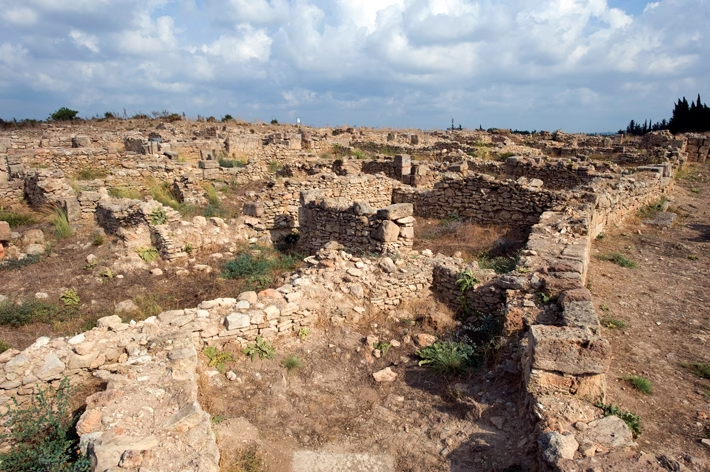
On the northern edge of Latakia, the windswept hill of Ras Shamra hides a city that changed the course of human history: Ugarit. Flourishing during the 15th and 14th centuries BCE, this ancient city was more than the capital of a kingdom — it was a hub where languages converged, trade flourished, and knowledge was transformed into the building blocks of civilization.
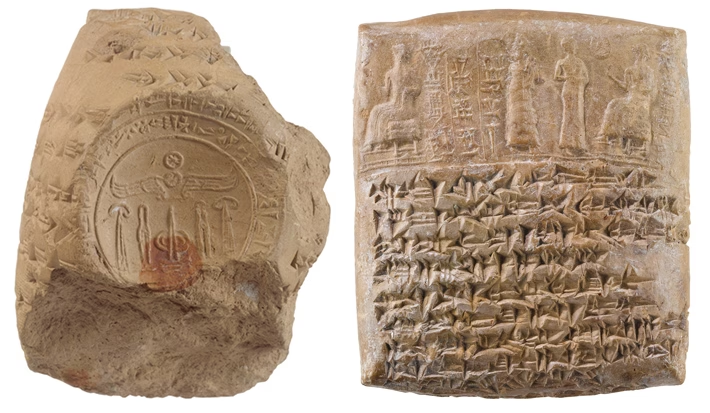
Today, Ugarit is celebrated as the birthplace of the world’s first phonetic alphabet. Archaeologist Dr. Bassam Jamous emphasizes that this 30-letter writing system, inscribed on clay tablets, remains the earliest known alphabet and one of humanity’s most significant intellectual achievements.
But Ugarit’s contributions did not stop with writing. The city also holds a place in music history. The earliest known musical notation — the hymn known as “Negal,” featuring oriental tonalities — was discovered among its ruins, earning Ugarit a reputation as the cradle of classical music.
A Name and a Discovery That Changed History
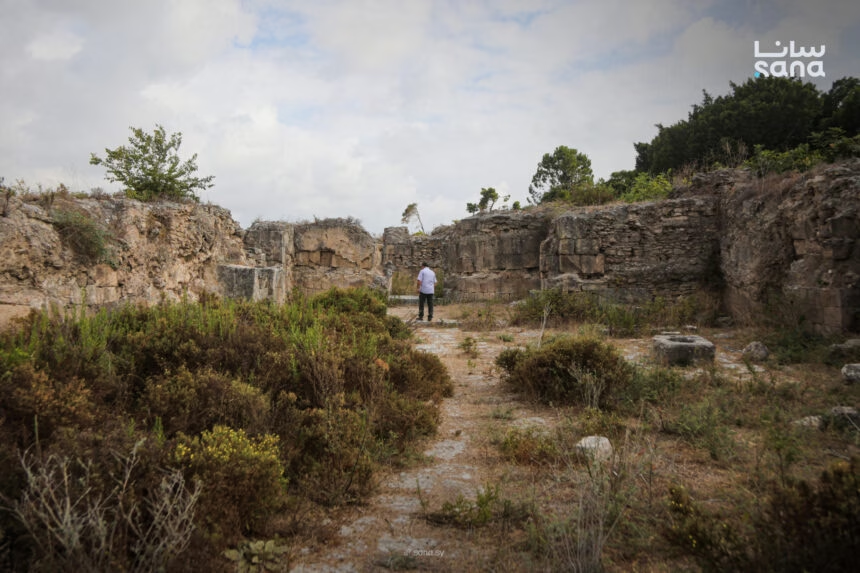
The name “Ugarit” derives from the Akkadian word ugaru, meaning “field” or “fortified wall.” The site was uncovered by chance in 1928, when a farmer’s plow struck massive stones that turned out to be the roof of an ancient burial chamber. This accidental discovery led archaeologists to one of the greatest cultural treasures of the ancient Near East.
(Image: RMN-Grand Palais / Art Resource, NY)
Libraries, Diplomacy, and Innovation
Ugarit was far more than a trading post; it was a center of knowledge and diplomacy. Its libraries housed thousands of clay tablets that recorded every aspect of life — from political treaties and trade agreements to religious rituals. These texts were written in seven different cuneiform scripts, including Akkadian, Hittite, Sumerian, and Egyptian hieroglyphs, making Ugarit a true crossroads of civilizations.
Economically, the city thrived on maritime trade and craftsmanship. Shipbuilding, ivory carving, jewelry production, textiles, and seal-making were among its main industries. The use of advanced weighing and measuring systems reflected a sophisticated approach to commerce and governance.
Soft Power Over Military Might
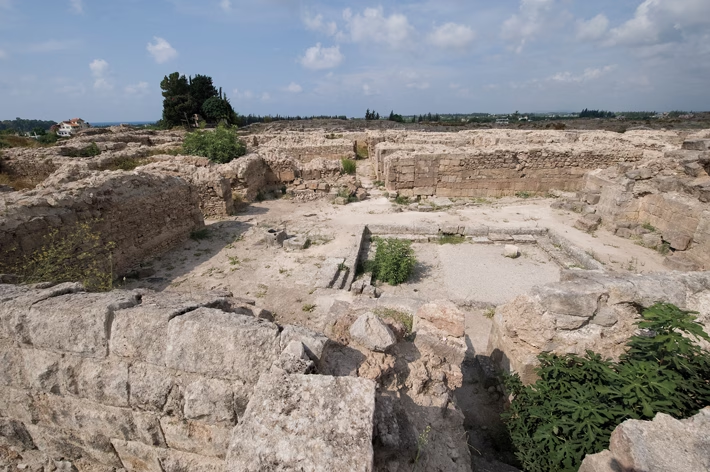
Unlike many of its contemporaries, Ugarit was not a militaristic kingdom. Instead, its influence spread through diplomacy, intellectual exchange, and cultural achievements. Scholars, artisans, and scribes ensured the city’s prominence across the Eastern Mediterranean during the Late Bronze Age.
(Photo: Dick Osseman / Wikimedia Commons)
New Discoveries, New Questions
Excavations continue to shed light on Ugarit’s complex history. A recent find by Dr. Hazami Bahlul’s team includes a clay artifact inscribed with legal texts outlining border agreements and trade contracts — evidence of a sophisticated administrative and diplomatic system.
According to Dr. Jamous, most of Ugarit’s archives remain buried:
“When these archives are fully uncovered, they may change the way we understand the birth of civilization.”