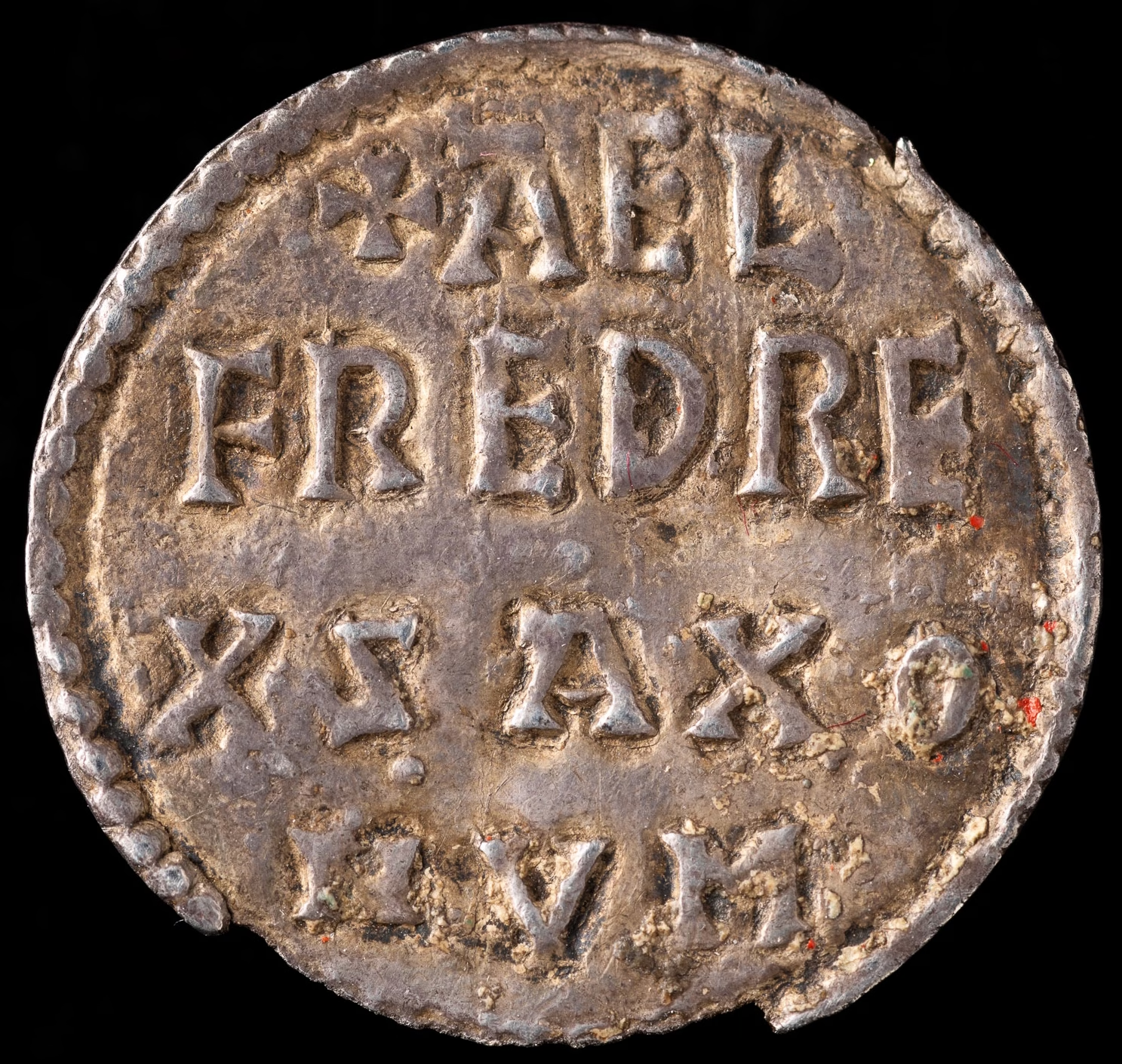
Exeter’s Royal Albert Memorial Museum & Art Gallery (RAMM) has secured an extraordinary piece of the city’s history: an Anglo-Saxon silver penny featuring the earliest known use of the name “Exeter.” Only three such coins are known to exist worldwide, with the other two held by the British Museum. This acquisition marks the first time the coin has returned to Exeter, symbolically restoring a piece of the city’s early identity.
Minted in Exeter between 895 and 899, the coin was struck shortly after King Alfred the Great successfully defended the city against Danish forces from Northumbria and East Anglia. One side of the penny bears the inscription AELFRED REX SAXONUM (“Alfred King of the Saxons”), while the other reads EXA, denoting Exeter. This coin reflects Alfred’s recognition of Exeter—alongside Winchester—as a strategic center to consolidate his rule.
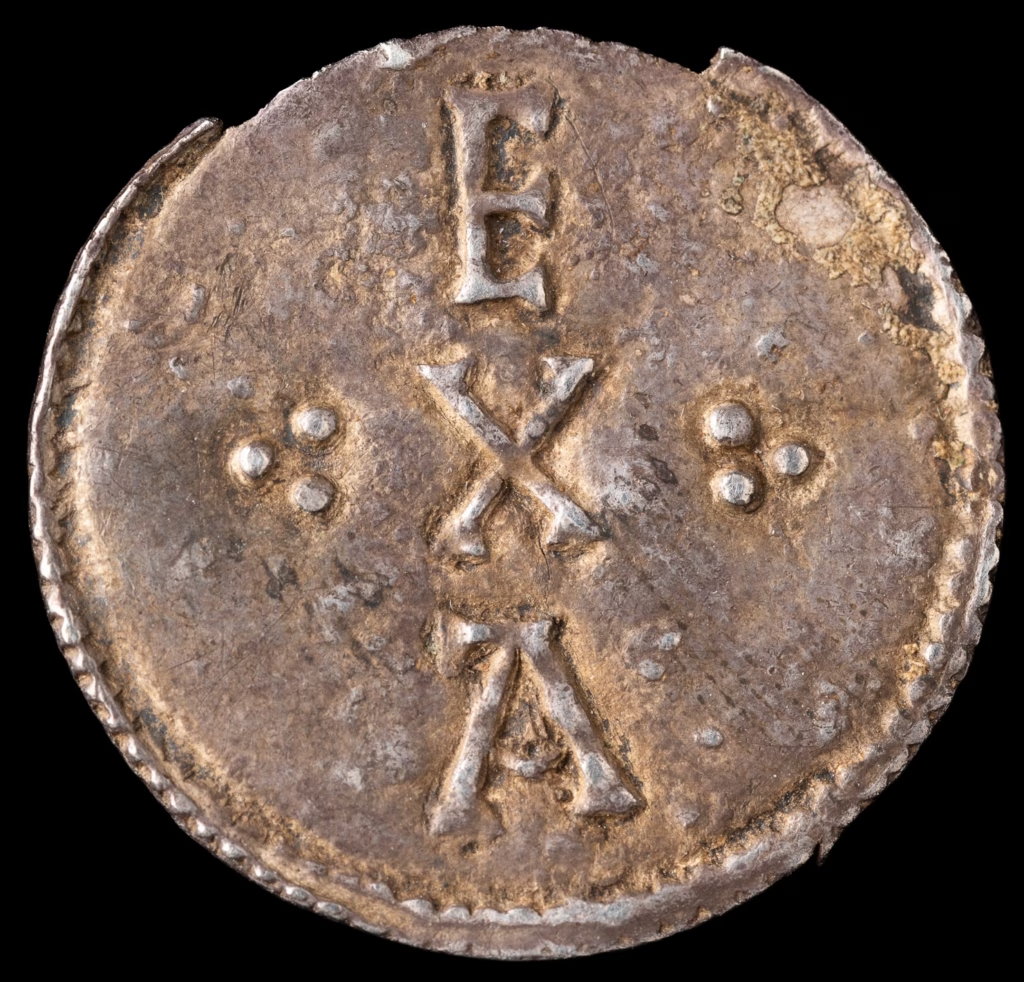
Alfred’s investment in Exeter marked a pivotal moment in the city’s revival. Once largely abandoned since Roman times, Exeter’s city walls were repaired, and a new street layout replaced the old Roman grid. By the year 1000, Exeter had grown to become one of Britain’s six most prosperous cities.
The coin, along with one of the British Museum examples, was originally discovered in 1840 as part of the Cuerdale Viking Silver Hoard near Preston, Lancashire. The hoard—the largest Viking silver discovery in Britain—contained over 8,600 items, including jewelry, ingots, hacksilver, and coins from both Danelaw kingdoms and Wessex, among them the two Exeter pennies. The third known example was found in 1958 at Morley St Peter, Norfolk.
This particular penny remained in private hands from 1844. Its most recent owner, Dr. Irving Schneider, a podiatrist and avid collector from Utica, sold the coin in 1989. In May, RAMM successfully acquired it at auction in Zurich, thanks to generous donations from supporters and charitable trusts.
With its return, Exeter regains a tangible connection to its Anglo-Saxon past, a small but significant reminder of the city’s resilience and historical importance.