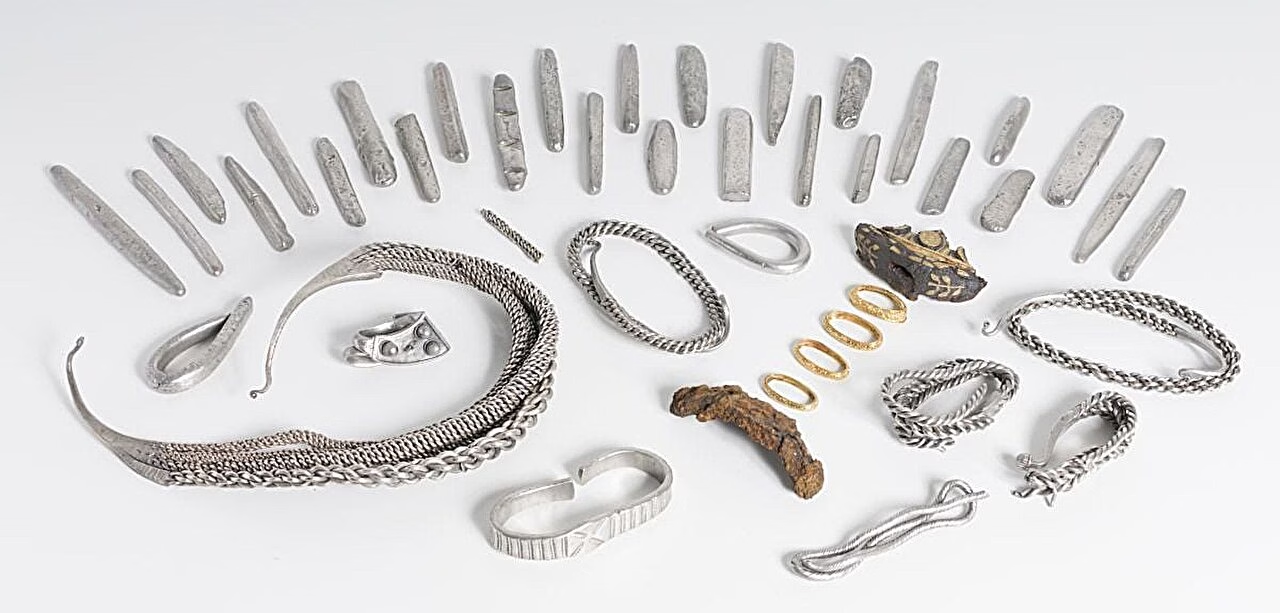
New research into a spectacular Viking-Age silver hoard uncovered in North Yorkshire has reshaped our understanding of Viking wealth, revealing that much of it came not from local plunder but from far-reaching trade routes stretching deep into the Middle East and Central Asia.
The study, led by Dr. Jane Kershaw of the University of Oxford, examined the “Bedale Hoard,” discovered in 2012 and comprising 29 silver ingots and ornate neck-rings. Geochemical analysis traced most of the silver to Western European sources—likely Anglo-Saxon and Carolingian coinage acquired through raids or ransom—but found that nearly a third originated from Islamic dirhams minted in regions corresponding to modern-day Iran and Iraq. These coins traveled along the eastern trade route known as the Austrvegr, reaching Scandinavia before continuing on to England.
Dated to the late ninth or early tenth century, the hoard reflects the blending of cultural and economic influences in Viking-Age England. According to Dr. Kershaw, the findings confirm that the Vikings were “not just raiders but also international traders,” and that towns like Bedale—today a quiet English market town—once stood at the crossroads of a vast Eurasian economy.
Researchers identified three main sources of silver in the hoard: Western European coinage, Islamic dirhams, and blends of the two. Some of the silver was refined using locally sourced lead from the North Pennines, pointing to advanced metalworking skills and local production. One standout artifact—a large neck-ring made from multiple twisted rods—appears to have been cast in northern England from a mix of eastern and western silver.
The findings challenge the traditional image of Vikings as solely plunderers, revealing a more complex strategy that combined military campaigns, trade, melting down imported coins, and recasting silver into standardized ingots and jewelry for circulation in the Scandinavian bullion economy.
The study, published in Archaeometry, highlights how modern scientific techniques can illuminate the economic foundations of Viking settlement and integration in England.
Jane Kershaw et al, The Provenance of Silver in the Viking-Age Hoard From Bedale, North Yorkshire, Archaeometry (2025). DOI: 10.1111/arcm.70031