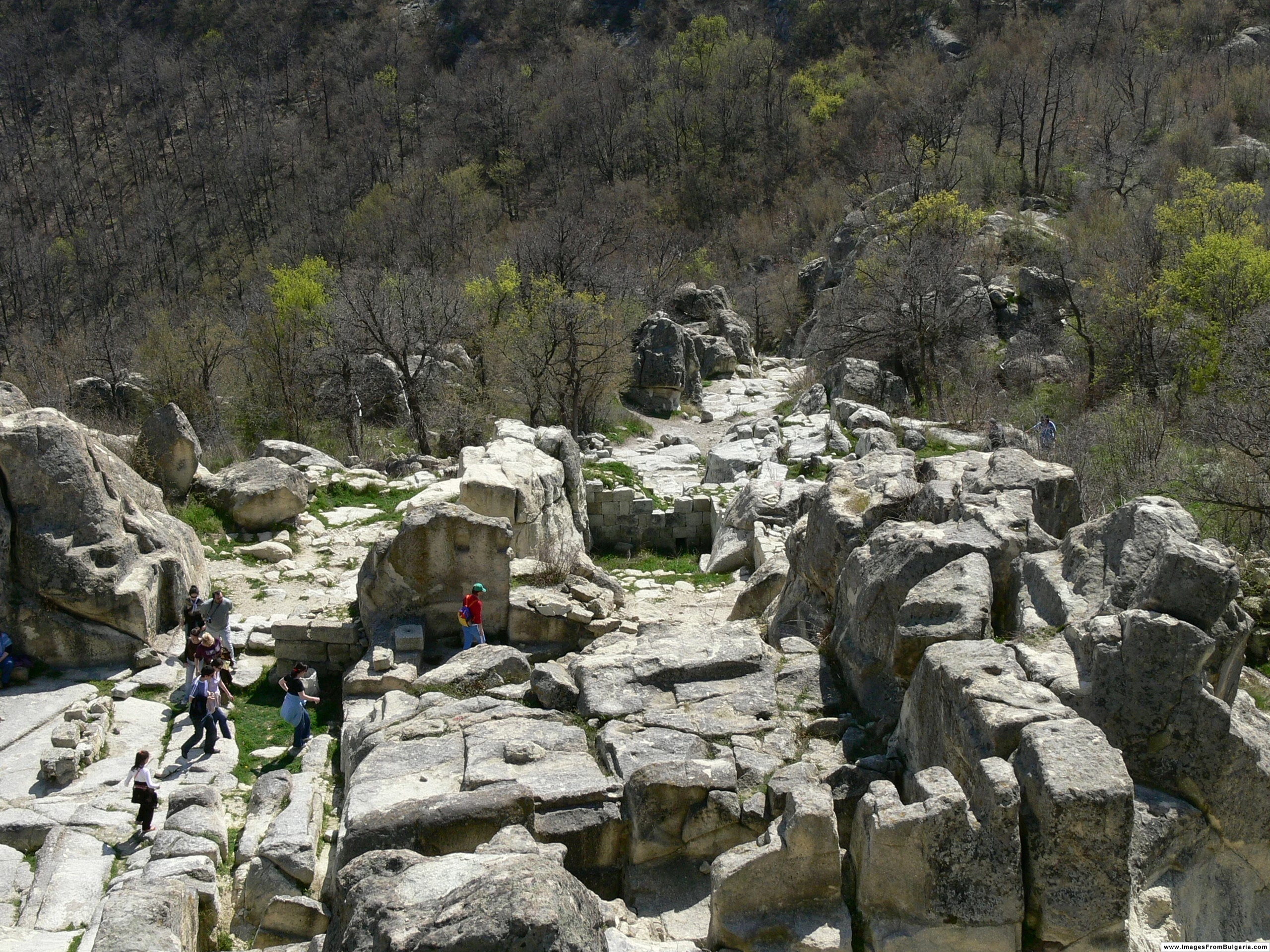
Archaeologists working at the ancient Thracian city of Perperikon in Bulgaria have uncovered a fascinating medieval settlement nicknamed the “City of the Hobbits” alongside war artifacts that reveal the site’s turbulent past. Led by Professor Nikolay Ovcharov, the excavation team is shedding new light on this 8,000-year-old archaeological treasure nestled in the Eastern Rhodope mountains.
Discovery of the ‘City of the Hobbits’
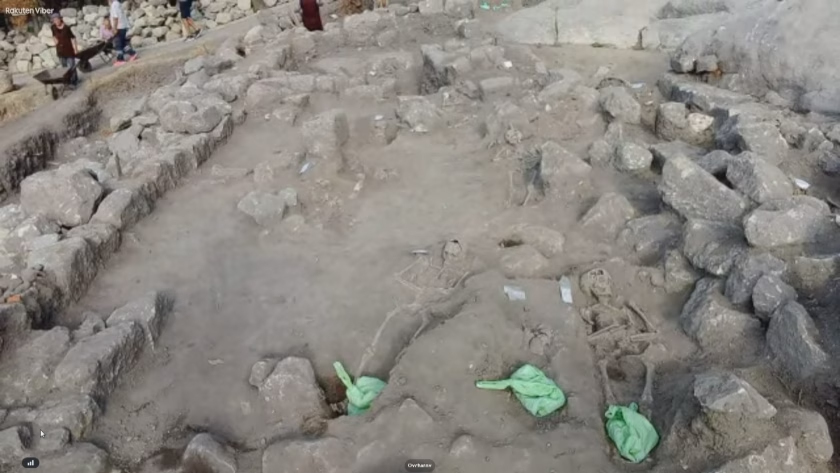
In the southern district of Perperikon, researchers have uncovered a cluster of small, earth-dug dwellings dating back to the 13th and 14th centuries. These humble homes were constructed using stones repurposed from ancient temples, highlighting how local residents adapted the ruins around them. The excavation team affectionately calls this area the “City of the Hobbits” due to the homes’ compact size and simple nature.
What makes this discovery even more poignant is the finding that many of the inhabitants’ graves were located within their own dwellings, indicating harsh living conditions and poverty among this community. A large necropolis found nearby further confirms that this part of Perperikon was home to some of its poorest medieval residents.
Perperikon: A Strategic Medieval Hub
Despite the modest lifestyle of these medieval settlers, Perperikon itself was a significant bishopric and a fiercely contested strategic site in the 14th century. The city’s location atop a 470-meter-high rocky ridge offered a natural fortress, making it a prized possession for both the Bulgarian Empire and the Byzantine forces. Historical records describe repeated battles for control over Perperikon, underscoring its military and religious importance.
Medieval Warfare Artifacts: Stone Projectiles and Ballistae
Adding to the site’s medieval narrative, archaeologists have recovered a 15-kilogram stone projectile believed to have been fired from a ballista — a powerful type of catapult used in medieval warfare. According to Professor Ovcharov, these stone projectiles were the medieval equivalent of modern missile systems, capable of causing devastating damage upon impact by shattering into lethal fragments.
Such weapons were described by Byzantine historian Niketas Choniates, who detailed their use in battles during the 13th and 14th centuries. The discovery of these projectiles provides concrete evidence of the intense military activity that once surrounded Perperikon.
Ongoing Excavations and Layers of History
Currently, the excavation team is focusing on clearing the area between Perperikon’s Acropolis and the Great Basilica, Bulgaria’s largest archaeological campaign of the year. Although the medieval layers have been the primary focus, beneath them lie even older Roman and early Christian structures, including paved streets, public squares, and a monumental basilica dating back to the 6th century.
Fascinating Facts About Perperikon
Ancient Origins: Perperikon is not just a medieval city; it is an 8,000-year-old megalithic complex, making it one of the oldest sacred sites in Europe. Its continuous occupation by Thracians, Romans, Byzantines, and medieval Bulgarians speaks to its enduring spiritual and strategic significance.
Megalithic Complex: The site is the largest megalithic ensemble in the Balkans, consisting of massive stone constructions thought to have served religious and astronomical purposes in prehistoric times.
Mythical Connections: Some researchers believe Perperikon was the legendary sanctuary of the Thracian god Dionysus, where ancient rituals and oracles were performed, adding a layer of myth to its archaeological importance.
Unique Architecture: The use of earlier temple ruins in medieval dwellings shows an unusual continuity and recycling of sacred spaces, reflecting changing social and religious dynamics over centuries.
Why Perperikon Matters
Perperikon offers a unique window into the complex tapestry of Balkan history, from prehistoric spirituality to medieval warfare and everyday life. The discovery of the “City of the Hobbits” enriches our understanding of the social fabric of medieval towns, revealing not only the lives of rulers and soldiers but also the struggles of the poorest residents.
As excavations continue, Perperikon promises to unveil even more secrets, highlighting Bulgaria’s crucial role at the crossroads of ancient civilizations.
Cover Image Credit: Public Domain