
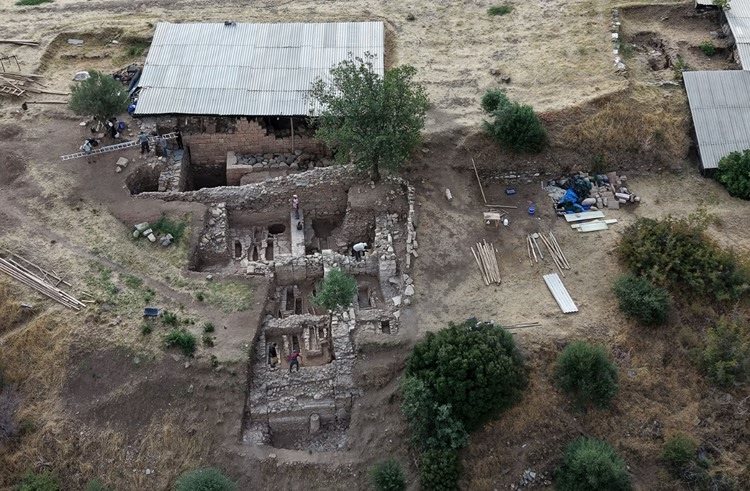
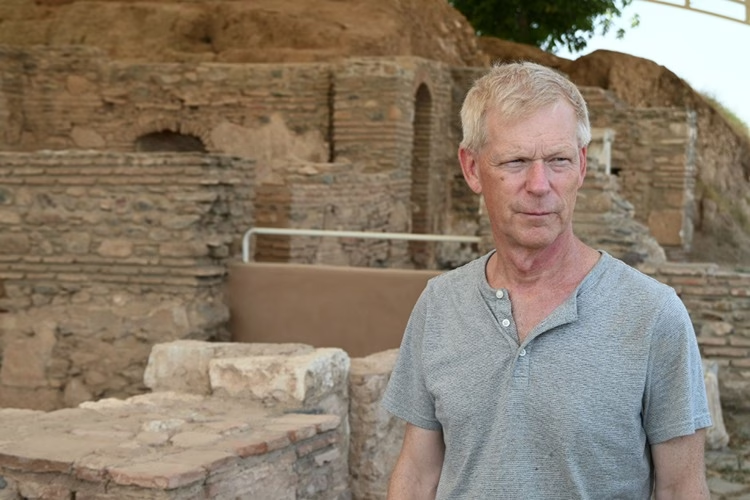
Archaeological excavations at Sardis Ancient City have uncovered the remains of a Lydian palace dating back to the 8th century BCE. This historic site, recognized as a UNESCO World Heritage Site, has been the focus of archaeological and restoration efforts for nearly 120 years, led by Professor Dr. Nicholas Cahill from the University of Wisconsin-Madison.
A Journey into History
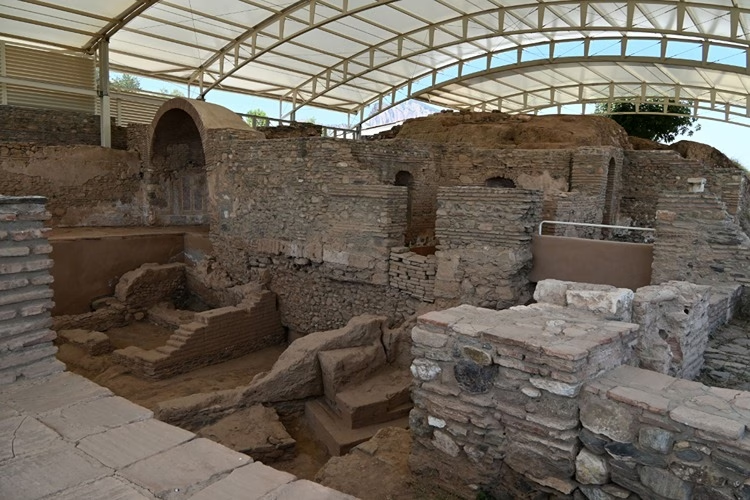
Sardis is known as the capital of the Lydian Kingdom and is historically significant as the place where the first coins were minted under state protection. With a history dating back to the 1200s BCE, this ancient city houses numerous structures and artifacts from various civilizations. Visitors to the site can explore Lydian burial mounds, the Temple of Artemis, the largest synagogue recorded in antiquity, and remnants of monumental Roman baths.
Details of the Excavation
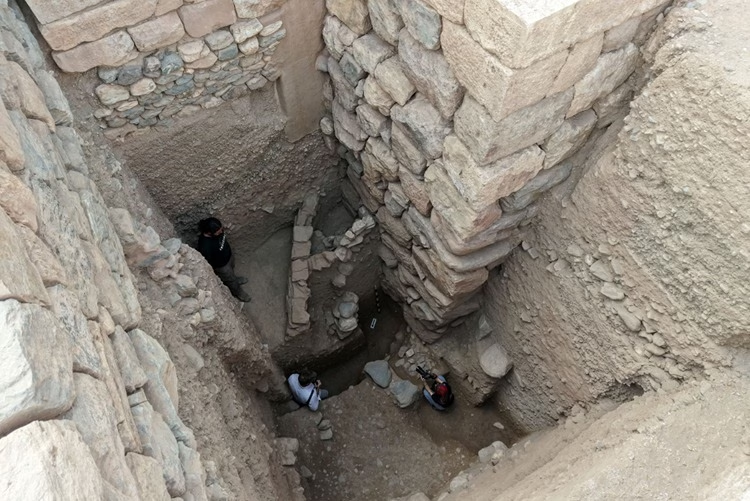
This year’s excavations reached a depth of approximately 8 meters, revealing the remains of a palace from the Lydian period. Professor Dr. Cahill highlighted the challenges of reaching the Lydian layer due to the presence of overlying strata from Persian, Hellenistic, Roman, and Byzantine periods. The excavation site is located about 1 kilometer east of the gymnasium, where significant efforts were made to penetrate through the layers of other civilizations to uncover the Lydian period.
Significant Findings
During the excavations, approximately 30 bronze arrowheads, human skeletal fragments, and 9 silver coins were discovered. These coins are among the oldest known silver coins in the world and suggest an earlier phase dating back to the early 6th century BCE. Additionally, a layer dating to the 8th century BCE was identified, indicating that a palace was constructed in the same direction. The structure is characterized by monumental stone walls measuring 1.5 to 2 meters in width and standing over 6 meters high.
Historical Significance
Professor Dr. Cahill emphasized the historical importance of this discovery. He noted that while Greek cities were only constructing small houses in the 8th century, the Lydians began building monumental terraces and structures much earlier. This architectural style may have been inspired by the monumental buildings of the Phrygians from the 9th and 10th centuries BCE. Historians previously believed that the Lydians began urbanization in the 7th century BCE, but these new findings reveal that Sardis was a significant monumental city as early as the 8th century BCE.
The discoveries at Sardis Ancient City provide a fresh perspective on the Lydian civilization’s place and influence in Anatolia, demonstrating that the Lydians were an essential Anatolian civilization looking eastward, rather than merely a precursor to Greek civilization.