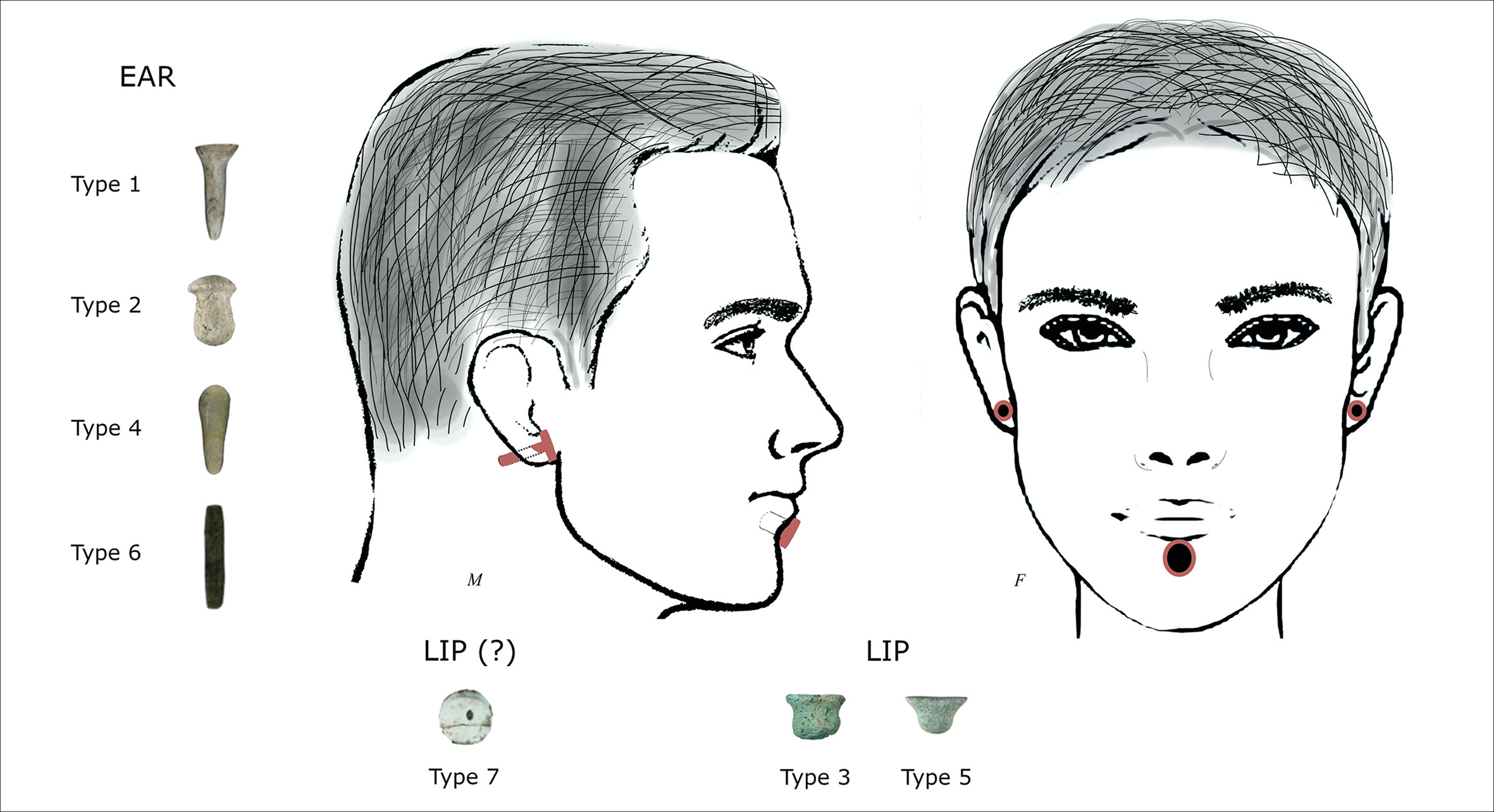
Boncuklu Tarla Neolithic piercing evidence from southeastern Türkiye suggests that people were modifying their bodies with lip and ear ornaments thousands of years earlier than many might expect.
Piercing may seem like a modern form of self-expression, but finds from Boncuklu Tarla in Mardin reveal a much older story. At this Pre-Pottery Neolithic settlement near the modern town of Dargeçit, archaeologists have identified small stone, obsidian, limestone and copper objects that were likely worn through piercings in the ear and lower lip.
The study, published in Antiquity by Ergül Kodaş, Emma L. Baysal and Kazım Özkan, does not treat these objects as simple beads or decorative curiosities. Instead, it argues that they offer some of the earliest contextual evidence for body piercing in Southwest Asia.
Small objects, a larger human story
Boncuklu Tarla has long been known for its rich Neolithic material culture. More than 100,000 ornaments have been recovered from the site, making it one of the most important early centers for studying personal adornment in the region.
But the new research focuses on a more specific and intimate practice: the deliberate alteration of the human body.
The researchers examined 106 objects that may have been used as body ornaments. Of these, 85 were complete enough to be classified by type. They were made from materials including limestone, obsidian, serpentine, chlorite, flint and native copper.
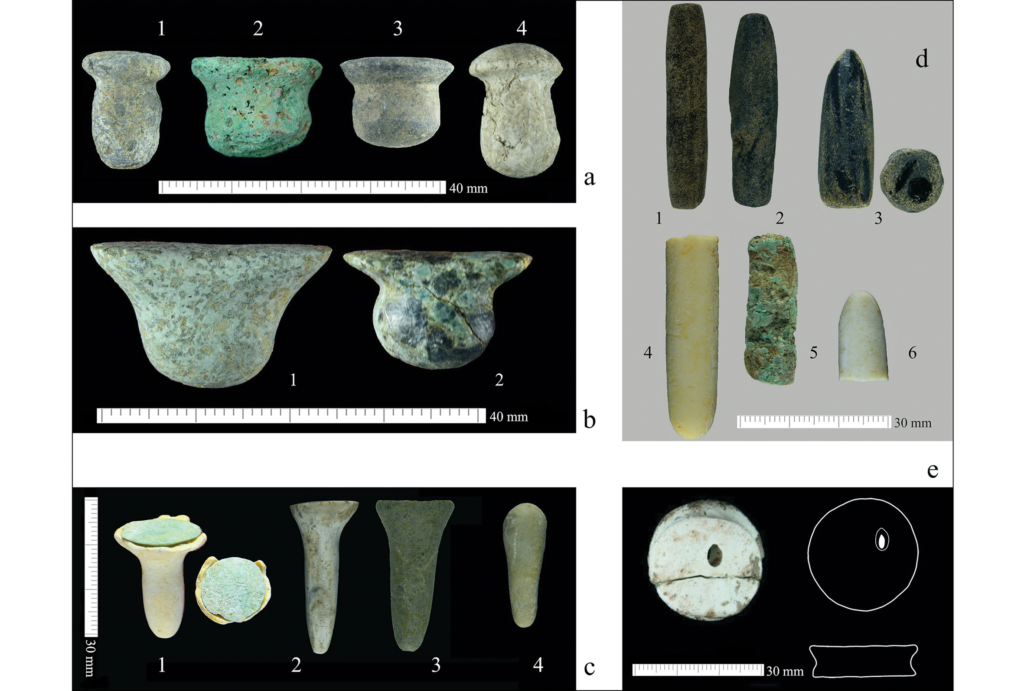
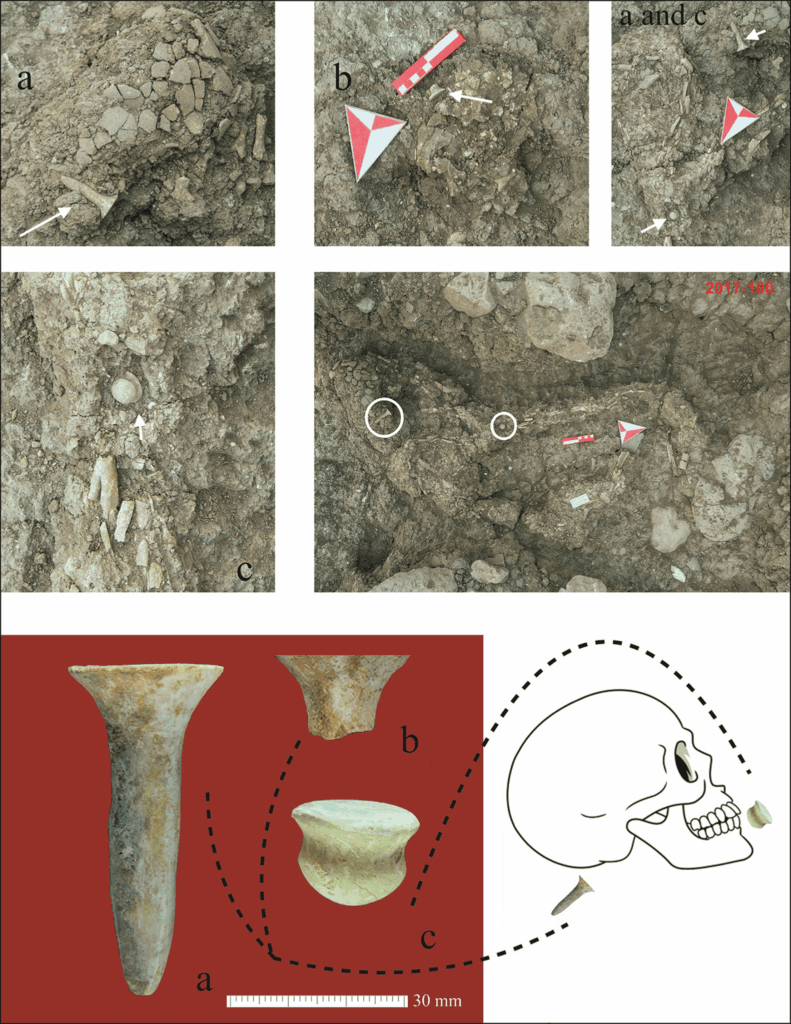
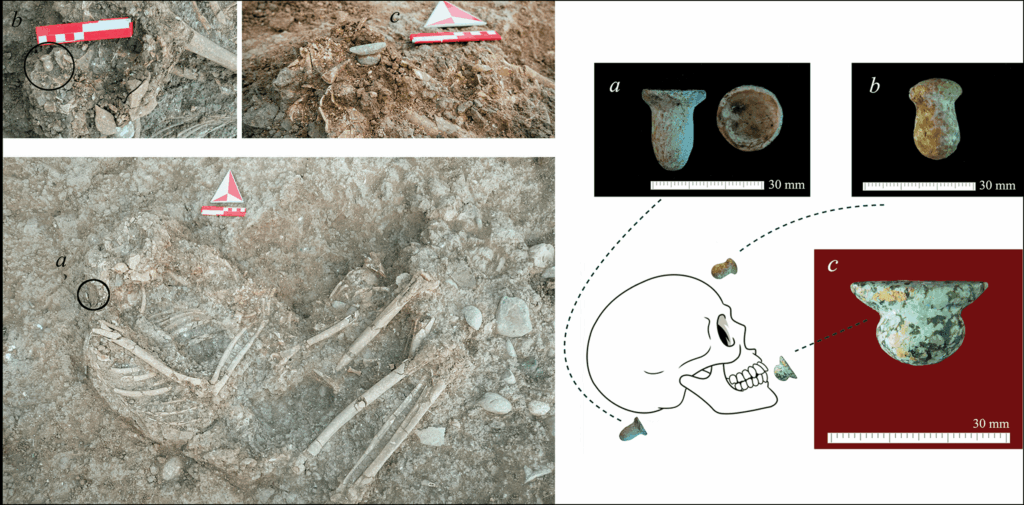
Their importance lies not only in their shape, but also in where they were found. Some were recovered near the skull, close to the position of the ears. These examples are interpreted as possible ear ornaments. Others were found near the lower jaw, inside the mouth area or close to the chest, suggesting a link with labrets, ornaments inserted through or near the lower lip.
A labret is not simply a bead. It is a body ornament worn in a piercing, usually below or around the lip. In Neolithic Boncuklu Tarla, such objects may have marked age, identity or social position.
Tooth wear gives the strongest clue
The most persuasive evidence comes from the teeth.
In one burial, archaeologists found a labret-like object inside the mouth area, together with unusual wear on the lower front teeth. This pattern is difficult to explain through diet or everyday work. The researchers suggest that it may have been caused by long-term contact between the teeth and a hard object worn in the lower lip.
That detail matters. It moves the interpretation beyond speculation. These objects were probably not just placed in graves as symbolic gifts after death. At least some appear to have been worn during life.
In other words, the people of Boncuklu Tarla were not only making ornaments. They were placing them into the body, altering the body itself and carrying visible signs that others in the community could read.
A practice linked to adulthood
One of the most important points in the study is that these lip and ear ornaments were not found in child burials. So far, they appear to be associated with adults.
That pattern suggests that piercing may have been connected to maturity, social status or a recognized stage of life. A necklace can be removed. A pierced lip or ear leaves a more lasting mark. Some of the Boncuklu Tarla ornaments measured at least 7 millimeters in diameter, meaning they would have required a visible and deliberate bodily modification.
This makes the discovery more than a story about prehistoric fashion. It points to a society where the body itself could become a social surface, carrying signs of identity, age and belonging.
A more personal view of the Neolithic world
The Neolithic period is often described through farming, settlement, architecture and ritual buildings. Boncuklu Tarla adds something more personal to that picture.
As communities in Southwest Asia moved toward more settled forms of life, they were also developing new ways to shape appearance and social identity. Houses, burials and communal spaces were part of that transformation, but so was the human body.
Lip and ear ornaments may have helped individuals show who they were, what stage of life they had reached or how they belonged within the group. The practice was visible, durable and probably socially meaningful.
This is what makes the Boncuklu Tarla evidence so important. It shows that early Neolithic identity was not expressed only through tools, architecture or burial customs. It could also be carried on the face.
Boncuklu Tarla’s growing significance
Boncuklu Tarla was excavated as part of rescue work linked to the Ilısu Dam project. The site has a long sequence of occupation, extending from the Epipalaeolithic into the Pre-Pottery Neolithic B period. That makes it a key place for understanding early communities in southeastern Türkiye and the wider Fertile Crescent region.
The new study strengthens its role in debates about symbolism, social life and personal appearance in early settled societies.
The ornaments from Boncuklu Tarla are small, but their meaning is large. They suggest that 11,000 years ago, people were already using the body as a place of identity, memory and social expression. The Neolithic world, often imagined through stone buildings and early farming, also had a deeply human face.
Cover Image: Illustration of hypothetical use of the PPN labrets and ear ornaments at Boncuklu Tarla (figure by authors).
Kodaş, E., Baysal, E. L., & Özkan, K. (2024). Bodily boundaries transgressed: corporal alteration through ornamentation in the Pre-Pottery Neolithic at Boncuklu Tarla, Türkiye. Antiquity, 98(398), 323–342. https://doi.org/10.15184/aqy.2024.28