Peruvian Hairless Dogs were more than familiar animals in the ancient Andes. New research from Castillo de Huarmey in Peru suggests that some of them lived close to people, received special care as puppies, and may have entered the world of the dead as symbolic companions.
Archaeologists studying animal remains from the Wari-period site on Peru’s northern coast have identified dogs that likely belonged to the ancient lineage of the Peruvian Hairless Dog, a breed now recognized as part of Peru’s cultural heritage. The remains date back about 1,300 years and come from one of the most important elite burial landscapes known from the Wari world.
The discovery adds an unusually intimate layer to Castillo de Huarmey, a site better known for royal tombs, fine textiles, ceramics, ornaments, and evidence of Wari political power. This time, the story comes not from gold or high-status burials, but from teeth, bones, skin, and the chemical traces left behind by ancient meals.
Dogs inside a Wari funerary world
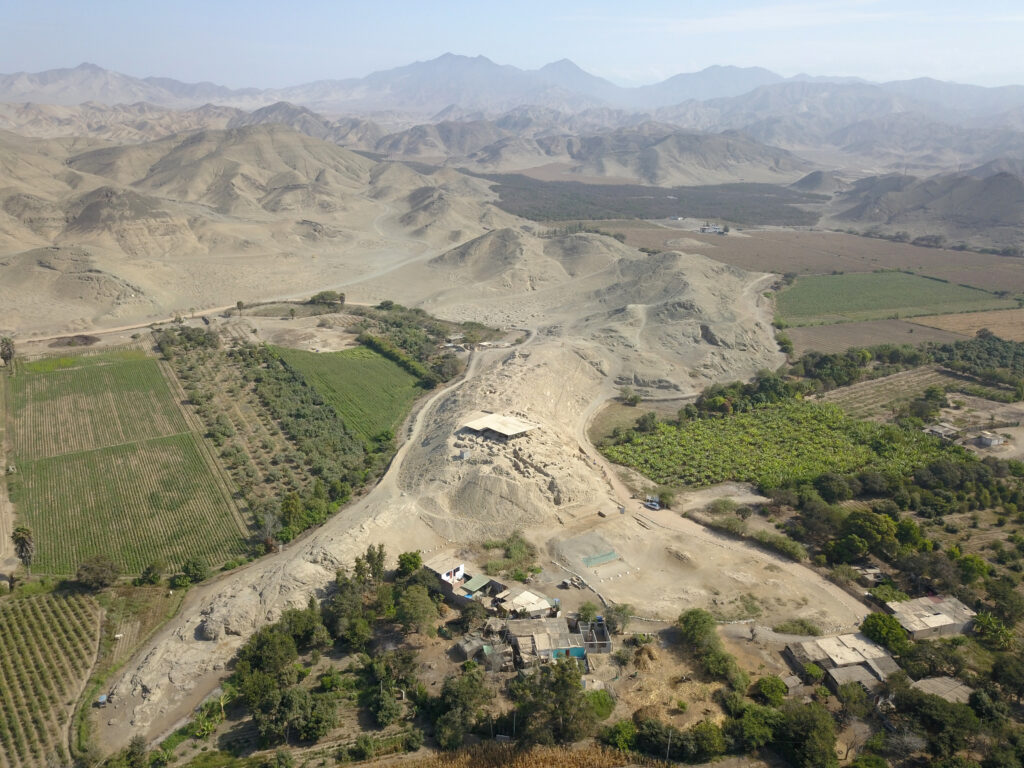
Castillo de Huarmey functioned more than 1,300 years ago as a major necropolis linked to the Wari culture, one of the most influential societies of the ancient Andes before the rise of the Inca. Excavations led by researchers from the University of Warsaw have shown that the site belonged to a world of elaborate burial customs, skilled craft production, and long-distance connections.
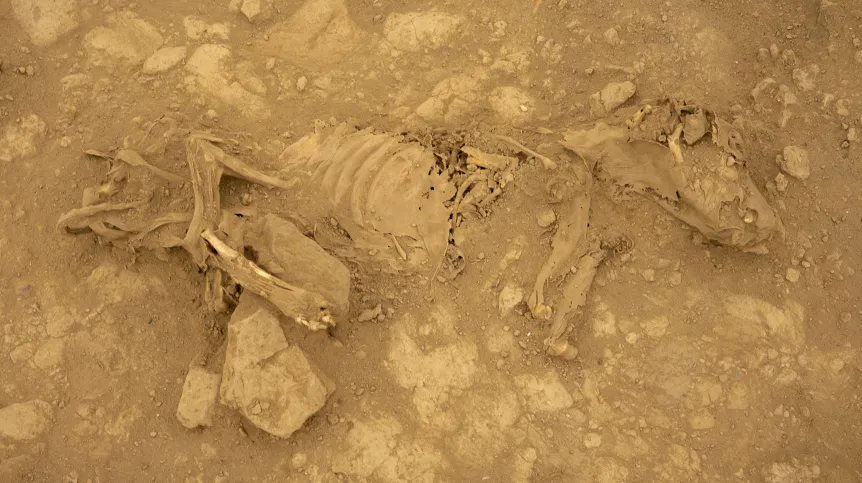
Within this setting, researchers identified the remains of at least 20 dogs. Some were adults. Others were very young puppies only weeks old. The material included partially preserved skeletons and naturally mummified animals found in different parts of the site.
That range matters. It suggests that dogs were not present at Castillo de Huarmey for one simple reason. Some lived around people. Some may have traveled with herds or caravans. Others appear to have been placed deliberately in burial spaces.
Teeth helped identify the hairless dogs
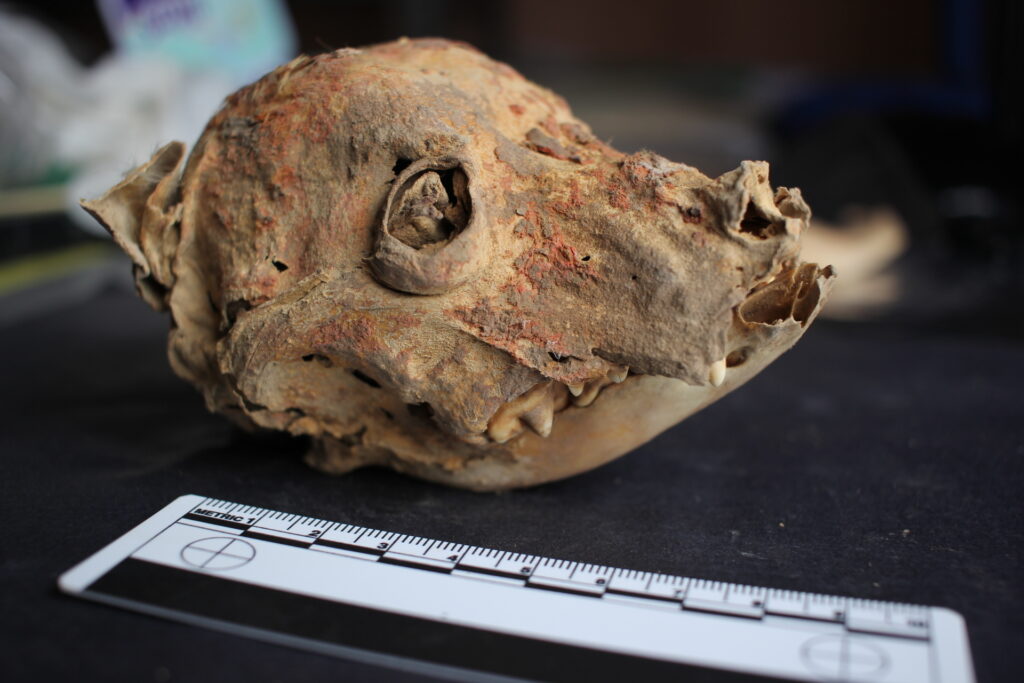
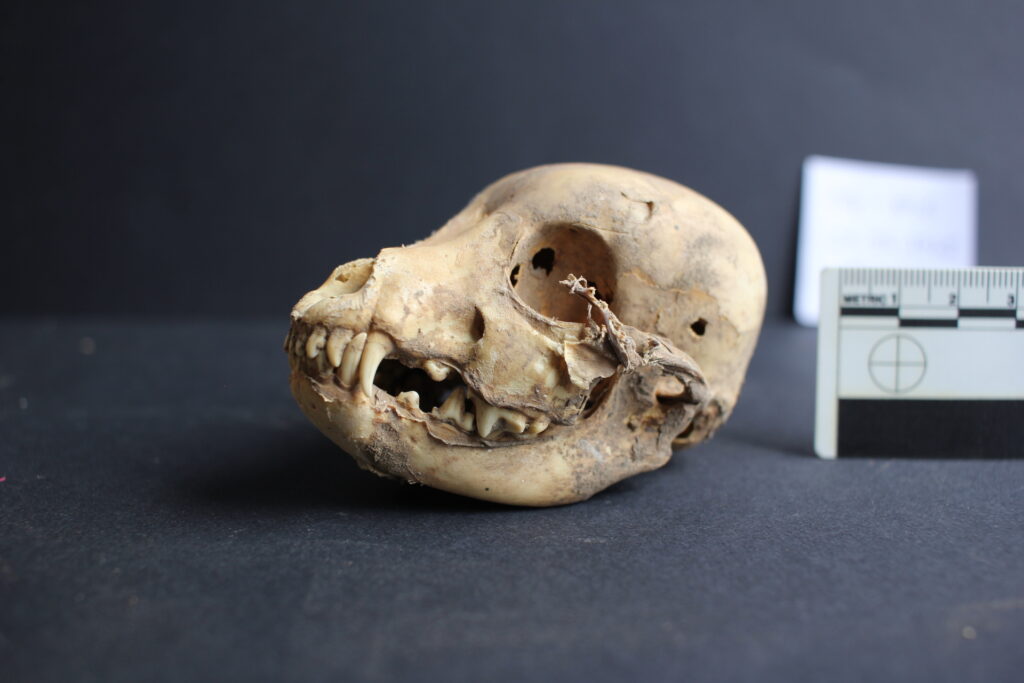
The identification of Peruvian Hairless Dogs came from a combination of evidence. Several animals had a distinctive pattern of missing teeth, a trait linked to the same genetic mutation that causes hairlessness in the breed.
The evidence did not stop there. Microscopic study of preserved skin from a naturally mummified dog showed that the animal had very sparse hair. Together, the dental pattern and skin analysis support the idea that the Wari community at Castillo de Huarmey kept or encountered dogs closely related to the Peruvian Hairless Dog.
One of the oldest individuals associated with the breed has been dated to between 688 and 870 CE. That places the animal deep within the Wari period and gives physical weight to a canine tradition already visible in Andean art, where hairless dogs appeared on ceramics centuries ago.
Puppies with a childlike diet
The most striking part of the study comes from isotope analysis. By examining chemical signatures in the bones, researchers reconstructed what the dogs ate and how their diets compared with those of humans and other animals.
Many of the dogs consumed food similar to people. Their diet included maize or meat from animals that had been fed maize. Some also showed signs of animal protein, possibly from fish, meat scraps, or other food remains available in the settlement.
But the young hairless dogs stood apart. Their early diet resembled that of children. This does not prove that they were treated exactly like human infants, but it strongly suggests a level of care that went beyond casual feeding.
In other words, some puppies were not simply surviving on refuse near a human settlement. They were likely being fed deliberately during early life. For a breed associated in Andean traditions with warmth, healing, and close contact with the body, that detail is especially suggestive.
Not every dog lived the same life
The study also avoids a simple “ancient pet” story. The dogs at Castillo de Huarmey seem to have lived different kinds of lives.
Some probably stayed close to people and shared food with them. Others may have scavenged near the settlement. One dog had a diet closer to llamas and alpacas than to humans, raising the possibility that it moved with herds, seasonal routes, or trade caravans.
That fits the wider Andean world, where llamas were essential for transport and exchange. Dogs could have helped guard animals, warned against predators, or accompanied people across difficult terrain.
Companions in life and death
The burial evidence gives the discovery its deeper force. Some dogs were found with human burials. One puppy lay near a highly valued craftsperson. Another was associated with a man thought to have served as a guardian of the main mausoleum. An adult dog was found with an adolescent.
These placements do not look accidental. In Andean belief systems, dogs could be linked to the journey after death. They were sometimes seen as guides between the world of the living and the world of the dead. Black dogs, in particular, held strong symbolic meaning as spiritual companions.
At Castillo de Huarmey, the dogs seem to have occupied several spaces at once. They were useful animals, nearby companions, possible herd helpers, and figures with ritual significance.
The discovery changes how we look at the ancient relationship between people and dogs in Peru. It was not only practical. It was also emotional, symbolic, and carefully shaped by age, diet, movement, and death.
At a site famous for elite Wari burials, the bones of dogs now tell one of its most human stories.