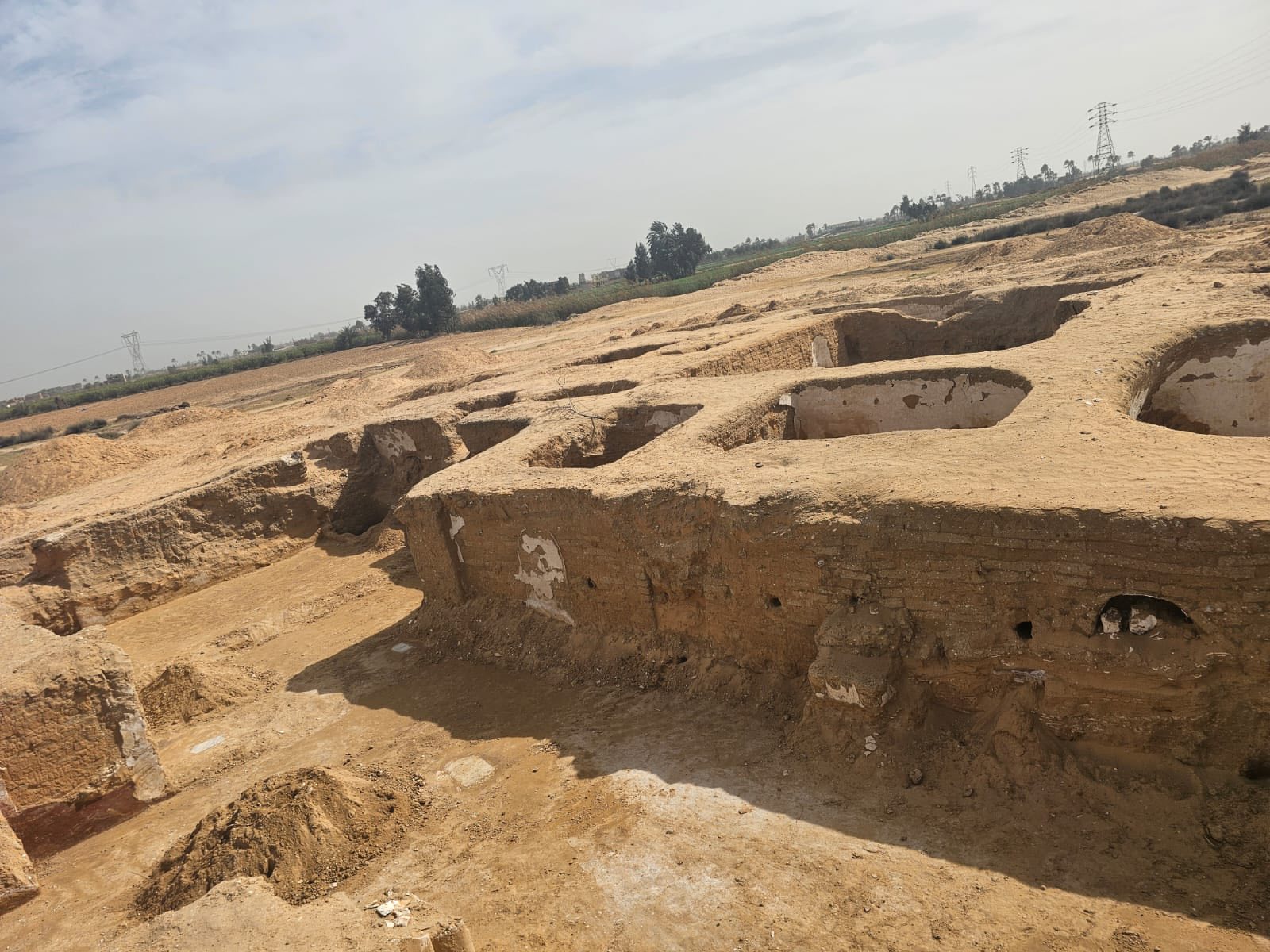
A newly uncovered 5th-century building at Egypt’s Al-Qalāyā archaeological site is drawing renewed attention to one of the Nile Delta’s most significant early Christian centers, after officials indicated that the wider complex ranks among the largest monastic clusters in Christian history.
The discovery was announced by Egypt’s Ministry of Tourism and Antiquities following excavations carried out by an Egyptian mission working under the Supreme Council of Antiquities in Beheira Governorate. Archaeologists identified the structure as part of a much larger monastic landscape that flourished during the formative centuries of Coptic monasticism.
A major monastic center in the Nile Delta
For decades, the story of early Christian monasticism has largely been framed through the monasteries of Upper Egypt’s deserts. Al-Qalāyā, however, is now emerging as a powerful counterpart in the Nile Delta—suggesting that organized religious life in early Christian Egypt was far more geographically diverse than previously assumed.
Dr. Hisham El-Leithy, Secretary-General of the Supreme Council of Antiquities, emphasized that the site reflects one of the earliest known stages in the architectural development of monastic communities. Rather than isolated hermitages, Al-Qalāyā appears to represent a structured and semi-communal model of religious life, marking a key transition in the evolution of Christian monasticism.
Officials have described the site as the second-largest organized monastic cluster in Christian history, a characterization that underscores its exceptional importance while continuing to attract scholarly attention.
What the newly discovered building reveals
The newly excavated structure offers a clear window into this transformation. Dating to the 5th century CE, the building consists of 13 interconnected rooms designed for multiple functions.
These include individual monk cells, shared living areas, teaching spaces, and dedicated hospitality sections for receiving visitors. The presence of such varied spaces suggests that Al-Qalāyā was not an isolated retreat, but an active spiritual center that welcomed pilgrims, religious figures, and new initiates.
At the heart of the structure lies a prayer space oriented eastward, featuring a limestone cross embedded within a niche—an architectural detail closely aligned with early Christian liturgical traditions.
In another section of the building, archaeologists identified a large hall fitted with stone benches decorated with plant motifs, likely used for gatherings or receiving guests. Together, these features point to a community that was organized, outward-facing, and institutionally developed.
Early Coptic art and symbolic expression
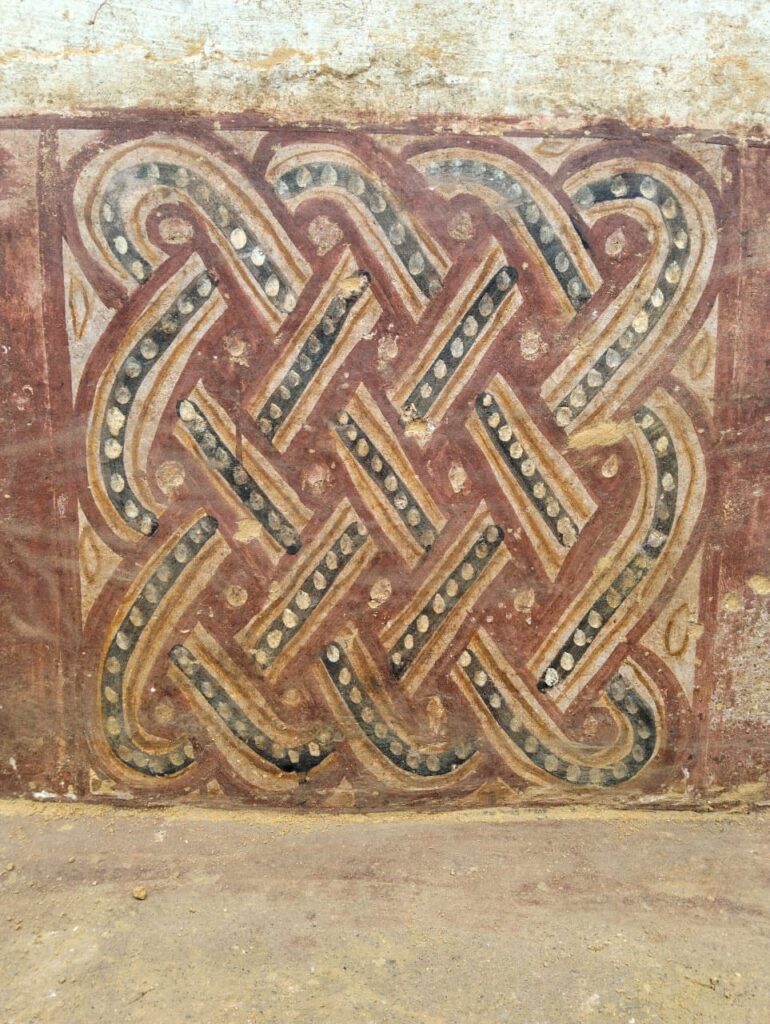
The site is also yielding important evidence for the study of early Coptic art. Wall paintings discovered within the complex depict monastic figures alongside plant and geometric motifs, offering rare insight into the symbolic and visual language of early Christian communities.
One of the most striking compositions features two gazelles surrounded by botanical decoration, framing a circular design rich in symbolic meaning. These artistic elements appear to reflect a blend of spiritual symbolism and natural imagery, reinforcing the connection between faith and environment in early monastic culture.
Such discoveries position Al-Qalāyā not only as a religious center, but also as a significant hub of early Christian artistic production.

Daily life inside the monastic complex
Artifacts uncovered during excavations provide a vivid glimpse into everyday life within the settlement. Pottery vessels, inscribed ceramic fragments, animal bones, and seashells point to dietary habits, economic activity, and daily routines.
A limestone funerary inscription written in Coptic and referring to an individual named “Apa Kyr, son of Shenouda” adds a personal dimension to the site. It confirms that the complex was not only architecturally significant, but also deeply human—inhabited by individuals whose identities and stories are beginning to re-emerge.
Since excavations began in 2023, archaeologists have uncovered multiple clusters of monk cells—known as manshubiyyat—alongside service buildings and artistic remains. The growing body of evidence confirms that Al-Qalāyā was a large, organized religious complex rather than a minor settlement.
A site reshaping the map of early Christianity
The recognition of Al-Qalāyā as one of the largest monastic centers in Christian history challenges long-standing assumptions about the distribution of early monastic life.
While Upper Egypt remains central to the narrative, the Nile Delta is now emerging as a region of comparable importance—one that played a vital role in shaping the development of organized religious communities.
As excavations continue, Al-Qalāyā is steadily redefining our understanding of how monastic life evolved, expanded, and interacted with the wider world. Its scale, complexity, and state of preservation offer a rare opportunity to explore the foundations of communal religious life in early Christianity.
Ministry of Tourism and Antiquities
Cover Image Credit: Ministry of Tourism and Antiquities via Facebook