
Early dogs identified in Turkey are now reshaping what scientists know about dog domestication. New ancient DNA evidence from the Pınarbaşı site reveals that dogs were already living alongside humans around 16,000 years ago—thousands of years earlier than previously confirmed.
The discovery, based on full genome analysis of Upper Palaeolithic remains, places central Anatolia at the heart of one of the earliest known chapters in the human–dog relationship. It also suggests that domestication began during the Ice Age, long before the rise of agriculture.
The findings come from an international research team led by scientists at the University of Oxford, with contributions from 17 institutions worldwide, and have been published in the journal Nature.
Researchers analyzing ancient DNA from Upper Palaeolithic sites have identified what may be the oldest confirmed dogs, dating back between 16,000 and 14,000 years ago. The findings push the genetic record of dogs back by roughly 5,000 years, offering the clearest evidence yet that the human–dog bond began deep in the Ice Age.
A genetic signal hidden in Ice Age bones
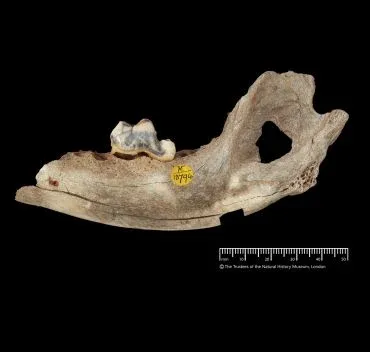
The breakthrough comes from full genome analysis of animal remains recovered from sites across western Eurasia. Among the most striking examples are specimens from Pınarbaşı in central Turkey (≈15,800 years ago) and Gough’s Cave in the United Kingdom (≈14,300 years ago).
For decades, archaeologists struggled to distinguish early dogs from wolves. Their skeletons often appeared nearly identical, especially in the early stages of domestication.
This time, however, researchers relied on complete genomic data, comparing ancient samples with more than a thousand modern and ancient canids.
The result is unusually clear: these animals were not wolves.
They were already dogs.
Dogs were everywhere—before farming even existed
One of the most striking aspects of the study is not just how old these dogs are, but how widely distributed they were.
By around 14,000 years ago, dogs had spread across large parts of Europe and Anatolia—at a time when all human societies were still hunter-gatherers.
This suggests that domestication was not a localized or isolated event. Instead, once dogs emerged, they appear to have spread rapidly alongside human populations moving across the continent.
Even more surprising: these early dogs were genetically similar despite being separated by distances of over 4,000 kilometers.
The first companion species in human history
The findings reinforce a long-held idea—but now with much stronger evidence:
Dogs were the first animals ever domesticated by humans, long before agriculture, livestock, or settled life.
Genetic data indicates that the divergence between wolves and dogs had already occurred by at least 16,000 years ago. In other words, by the end of the last Ice Age, dogs were not just emerging—they were already a distinct population.
Their descendants would eventually give rise to many modern lineages, particularly those found today in Europe and the Middle East.
More than hunting partners?
What role these early dogs played remains an open question—but clues are beginning to emerge.
At the Pınarbaşı site in Turkey, isotopic analysis suggests that humans may have fed dogs fish, indicating deliberate care rather than opportunistic scavenging.
There is also evidence that some dogs were intentionally buried, hinting at a relationship that may have gone beyond simple utility.
Similar patterns appear at other sites in Europe, suggesting that dogs may already have held social or symbolic significance within Ice Age communities.
A shared journey across the Ice Age world
Perhaps the most compelling implication of the study lies in how dogs spread.
The animals are found alongside different human groups—genetically and culturally distinct populations such as Epigravettian and Magdalenian communities.
This suggests that dogs may have moved not just with one group, but across networks of interaction, migration, and exchange.
In other words, dogs were not just companions—they may have been part of a broader system connecting human groups across Ice Age Eurasia.