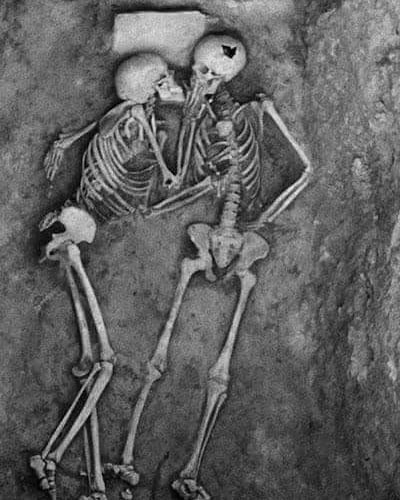
In northwestern Iran, archaeologists uncovered two intertwined skeletons frozen in what looked like a final embrace. For decades, they were known worldwide as the “Hasanlu Lovers.” Yet modern analyses reveal a twist: the pair were not lovers — but two men who died together in fire nearly 2,800 years ago.
A Moment Sealed by Fire
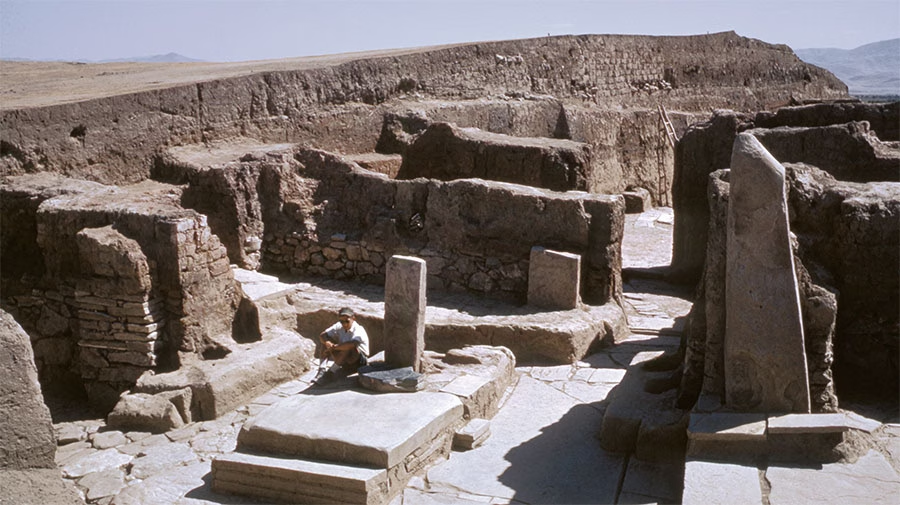
In 1973, excavators from the University of Pennsylvania Museum unearthed the remains inside a mud-brick room at the Iron Age site of Teppe Hasanlu, located in Iran’s West Azerbaijan Province.
The two skeletons were lying side by side, one with an arm across the other’s neck, as if caught in a final, desperate moment. The discovery quickly made headlines and became one of archaeology’s most famous “love stories.”
But what looked like a tragic romance was, in fact, something far more complex — and far more human.
The Truth Beneath the Ashes
Recent osteological and DNA analyses conducted by Dr. Janet Monge and Page Selinsky of the Penn Museum confirmed that both skeletons were male, aged approximately 19–22 and 30–35 years old.
Neither showed signs of trauma or weapon injuries. The evidence suggests they died of asphyxiation, trapped beneath the debris when their city burned.
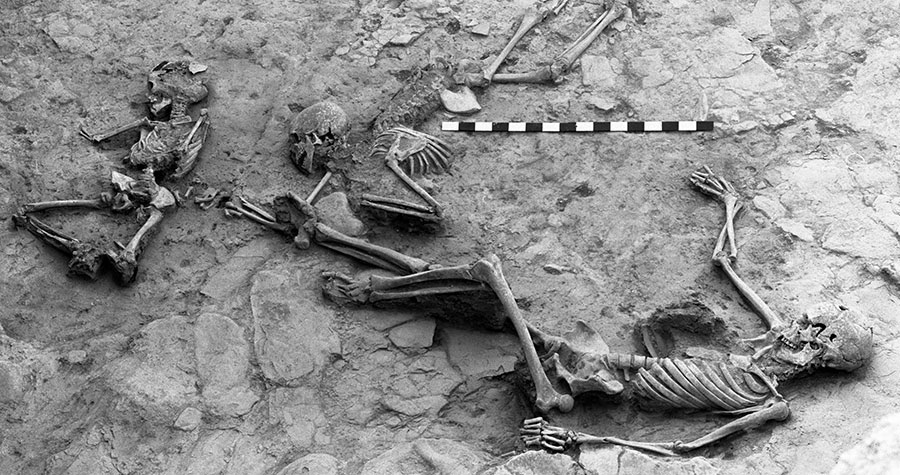
The pair were part of a broader catastrophe: more than 200 individuals perished in the same destruction layer — known to archaeologists as Hasanlu IVB, dated to around 800 BCE.
War, Fire, and Unanswered Questions
Who burned Hasanlu remains a mystery.
Some scholars link its destruction to a Urartian invasion, others to internal warfare or regional conflict.
The site yielded weapons, charred architecture, and unburied bodies — evidence of a city violently and suddenly destroyed.
“We may never know who they were — lovers, brothers, strangers — but they shared the same fate. That alone makes their story universal.”
— Dr. Monge, Penn Museum
From Myth to Archaeology
The “Hasanlu Lovers” became an icon of ancient affection, their photograph displayed in museums and textbooks for decades. Yet the latest findings remind us that archaeology often rewrites even its most poetic myths.
Their embrace may not symbolize romantic love, but rather the human instinct to seek connection, even in the face of death.
Hasanlu: The Lost City Beneath Lake Urmia’s Shadow
Hasanlu lies south of Lake Urmia, within the fertile Solduz Valley.
Once a thriving Iron Age center — home to master metalworkers and traders — the city was abandoned after the great fire of 800 BCE.
Among the finds were gold bowls, bronze vessels, ivory inlays, and ornate jewelry — artifacts that now stand among the Penn Museum’s most prized Iron Age treasures.
Cover Image: The 2,800-year-old “Hasanlu Lovers” discovered at Teppe Hasanlu, northwestern Iran, in 1973. Photo: Penn Museum / Robert H. Dyson Expedition.