
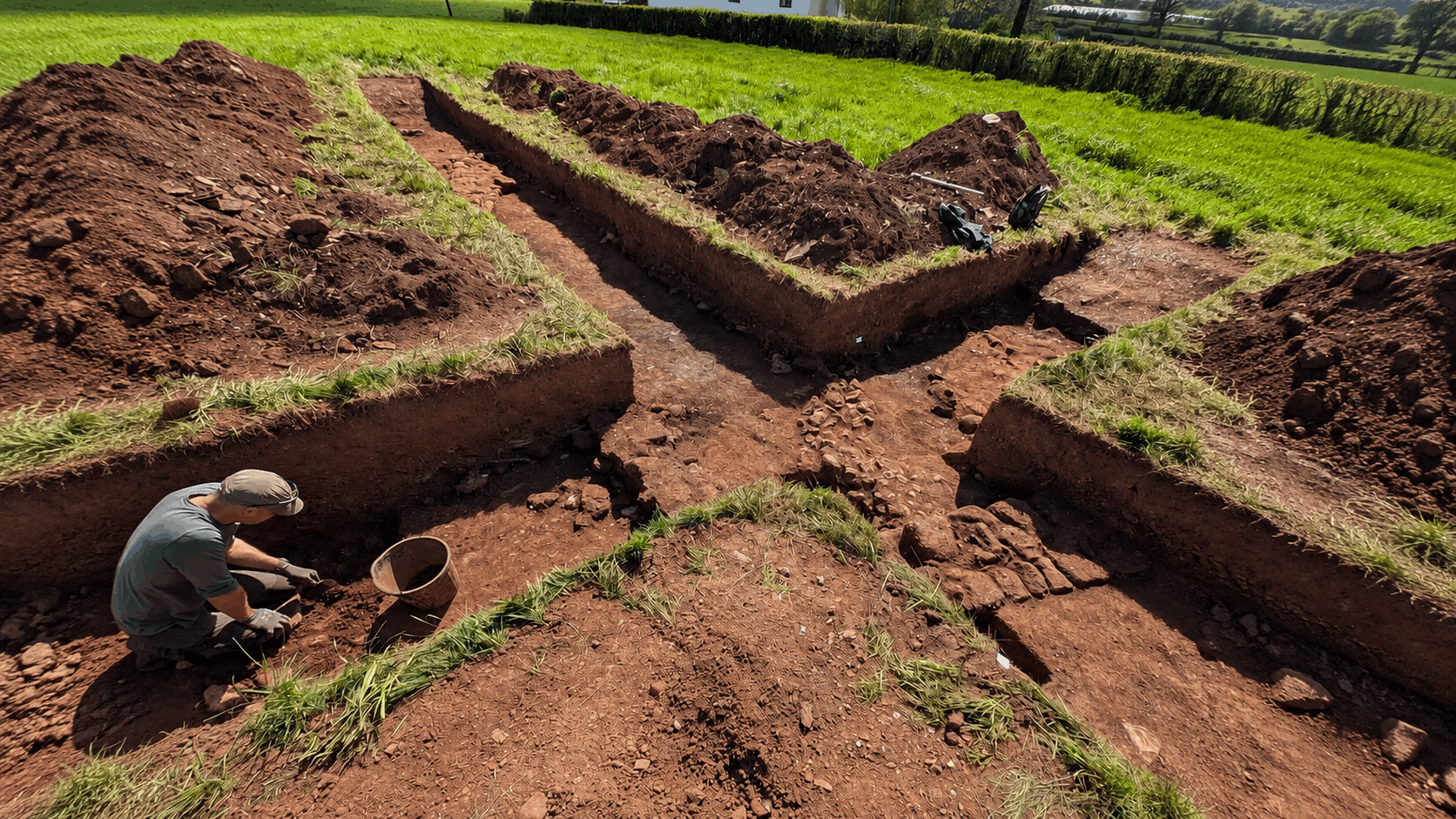
Archaeologists excavating a Roman villa in Devon, southwest England, have uncovered a 1,700-year-old Constantinople commemorative coin dating to between AD 330 and 340.
The coin was issued during the reign of Emperor Constantine I to mark Constantinople becoming the new capital of the Roman Empire.
A coin marking the new imperial capital
Constantine rebuilt the ancient city of Byzantium and inaugurated it as the empire’s new capital in AD 330. The city later became known as Constantinople and is now modern-day Istanbul.
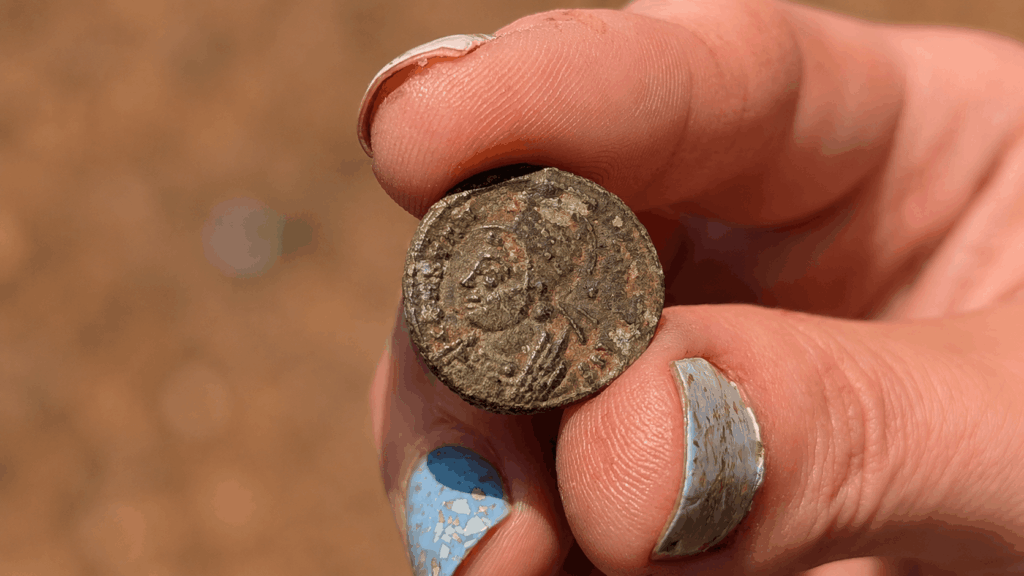
The reverse of the coin depicts Victory standing on the prow of a ship. According to the excavation team, the image refers to the Battle of the Hellespont in AD 324.
During the battle, a fleet commanded by Constantine’s son Crispus defeated the naval forces of the rival emperor Licinius. The victory helped Constantine secure control of the empire before the establishment of his new capital.
The discovery of the coin in Devon shows that commemorative issues connected with Constantinople circulated as far as Roman Britain.
Finds from the Devon Roman villa
The Roman coin was found during a community excavation conducted as part of the SHARE Project, which is approaching its final week.
Other discoveries include large fragments of a Dressel 20 amphora, a vessel type produced in the Guadalquivir Valley of southern Spain between the mid-1st and late 3rd centuries AD. Such amphorae were commonly used to transport olive oil across the Roman Empire.
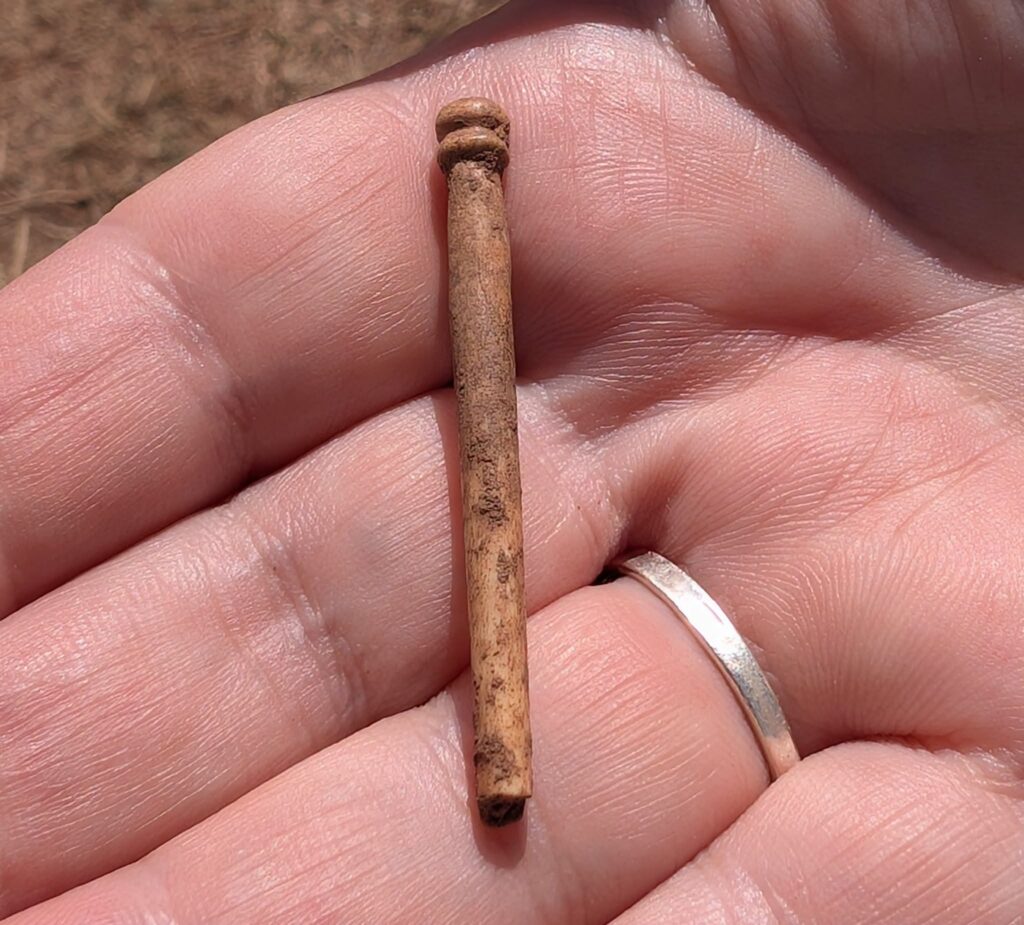
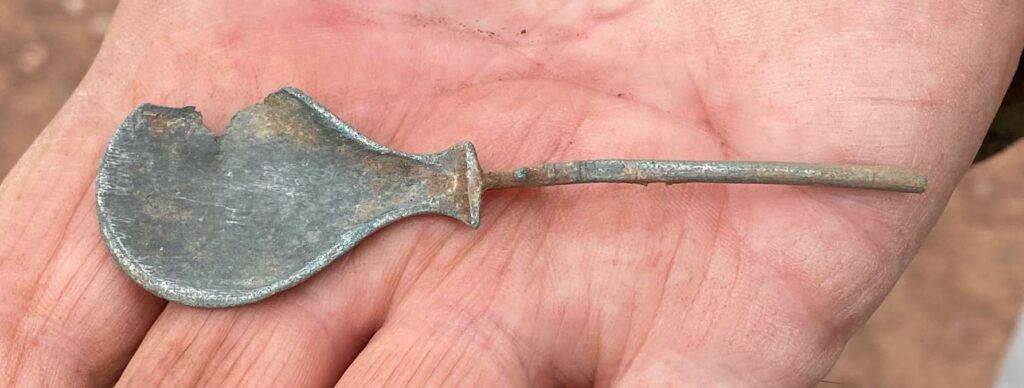
Excavators also recovered a silver-plated copper-alloy spoon with a mandolin-shaped bowl and a decorated bone pin. Similar pins were used to secure hair, clothing or bags.
Together, the finds provide evidence of daily life at the Devon villa and its connections with the wider Roman world.
Cover Image: The excavation site in Devon, England, where the Constantinople commemorative coin was discovered. Credit: Cotswold Archaeology