
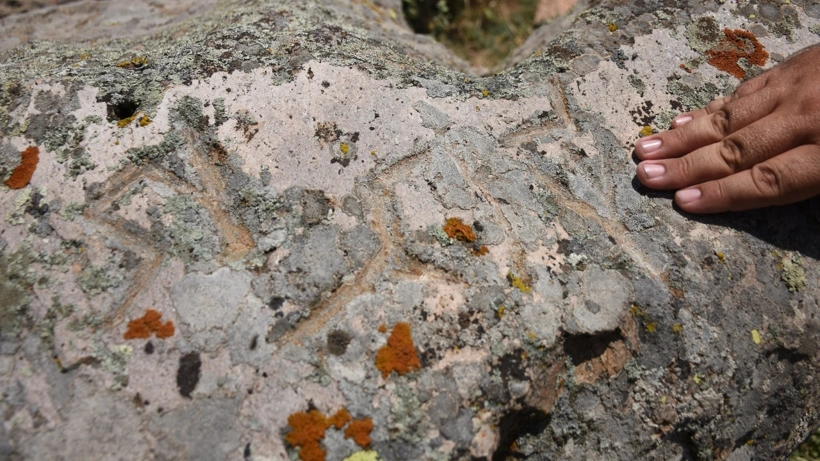
Angular symbols associated with early Turkic writing traditions have been discovered on a rock beside a medieval church in the Binbir Kilise archaeological region of central Turkey.
The carvings were recorded during the third season of surveys across Karadağ, an extinct volcanic massif north of Karaman. Researchers identified both runiform characters and tamgas linked to Turkic groups, adding a new historical layer to an area best known for its Byzantine churches and monasteries.
Carvings found near a medieval church
The discovery was made by a survey team led by Associate Professor İlker Mete Mimiroğlu of Necmettin Erbakan University.
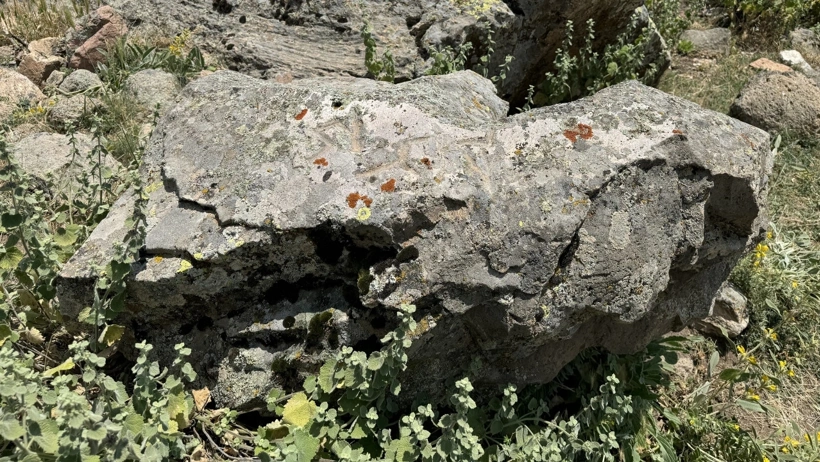
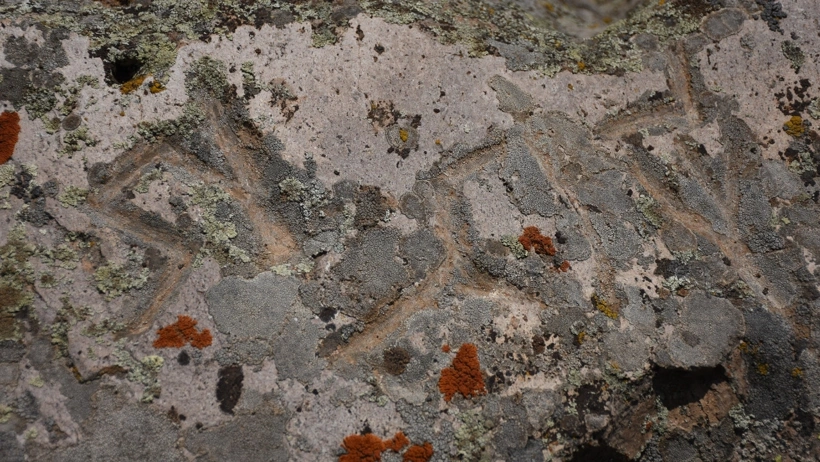
The markings were carved into a large rock near a church and differ from the graffiti recorded during earlier work in the area. Their straight, angular forms resemble characters used in early Turkic writing traditions across Central Asia.
Researchers also identified several of the symbols as tamgas, compact emblems used by Turkic families, clans and tribal groups. More than one group may be represented on the rock.
The carvings were found near a settlement documented during the previous survey season. Archaeologists recorded around ten churches and chapels close to a large Roman-period reservoir. One of the buildings is an 11th-century church with a closed Greek-cross plan, dating to the final centuries of Byzantine rule in central Anatolia.
Binbir Kilise on Karadağ
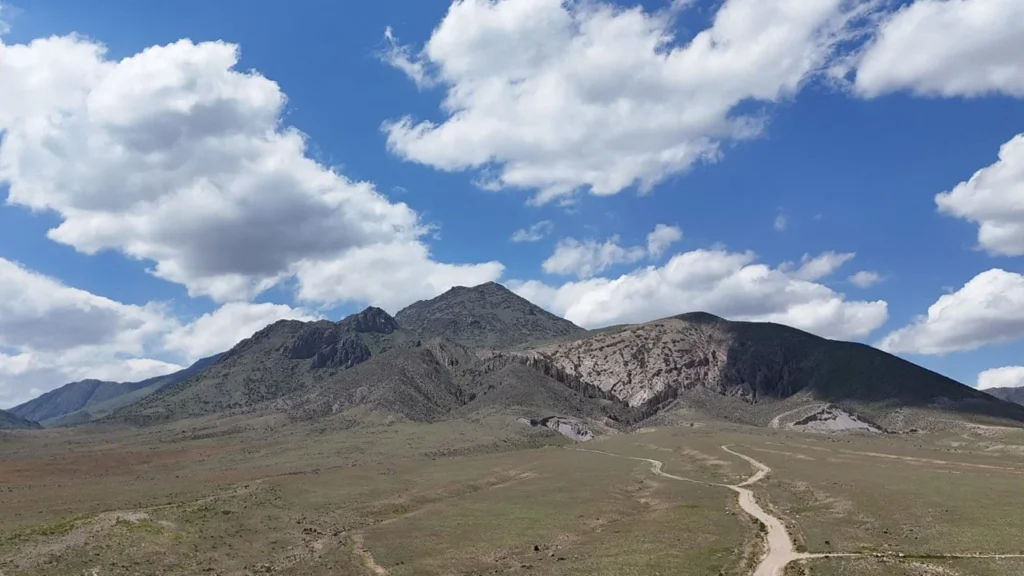
Binbir Kilise means “Thousand and One Churches,” a name inspired by the large number of ruined Christian monuments scattered across Karadağ rather than an exact count of buildings.
The archaeological region lies about 45 kilometres north of Karaman. Its remains include basilicas, chapels, monasteries, houses, tombs, cisterns and fortified structures.
Important concentrations of ruins survive at Madenşehir, Değle and Başdağ. Many of the churches were built between the fourth and ninth centuries, when Karadağ developed into a major Christian religious and settlement centre.
The mountain’s history reaches further back. Hittite hieroglyphic inscriptions and rock reliefs survive in the area, alongside Roman waterworks and later Byzantine buildings. Seljuk-period material also records the continued use of Karadağ after Turkish rule expanded across central Anatolia.
Old Turkic writing and tamgas
Old Turkic, also known as the Göktürk or Orkhon script, is the earliest writing system known to have recorded a Turkic language.
Its most famous examples are the eighth-century memorial inscriptions dedicated to Kül Tigin and Bilge Khagan in Mongolia’s Orkhon Valley. These texts describe military campaigns, political struggles and the restoration of the Second Turkic Khaganate.
The script is often called “runiform” because its characters consist largely of straight lines and sharp angles. Although they resemble northern European runes, the two writing traditions developed in different cultural settings.
Old Turkic texts were commonly written from right to left. Their angular characters were especially suitable for carving into stone or wood, and examples have been found across Mongolia, southern Siberia and Central Asia.
Tamgas served a different purpose. Rather than forming sentences, they marked family, clan or tribal identity. They appeared on rocks, monuments, animals and personal belongings, sometimes alongside written inscriptions.
Turkic traces within a Byzantine setting
Mimiroğlu connected the Binbir Kilise carvings with Turkic groups that reached central Anatolia during the medieval period.
Karadağ offered open land, water sources and space suitable for horses and livestock. The Roman reservoir near the settlement would also have remained valuable to communities occupying the plateau.
The newly documented carvings now stand alongside the Hittite inscriptions, Roman water structures, Byzantine churches and Seljuk remains preserved across the mountain.
Each belongs to a different period, but together they reflect the repeated use of Karadağ by communities that reshaped the region while leaving earlier monuments in place.