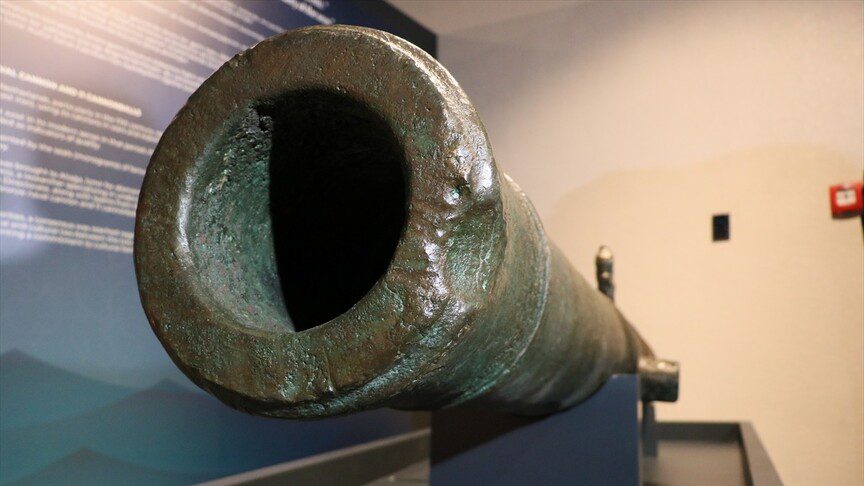
A routine shipbreaking operation in İzmir has uncovered something no one expected: a 17th-century Dutch bronze cannon, hidden inside a dismantled vessel and forgotten for centuries. Now displayed together with its ammunition, the find opens a rare window onto the maritime world of early modern Europe.
An Unexpected Find During Shipbreaking
The vessel arrived in İzmir in 2025 for routine dismantling. Nothing initially suggested it carried anything unusual. As workers began stripping down the interior, they encountered an object in a section previously used as a restaurant.
Its form immediately raised suspicion.
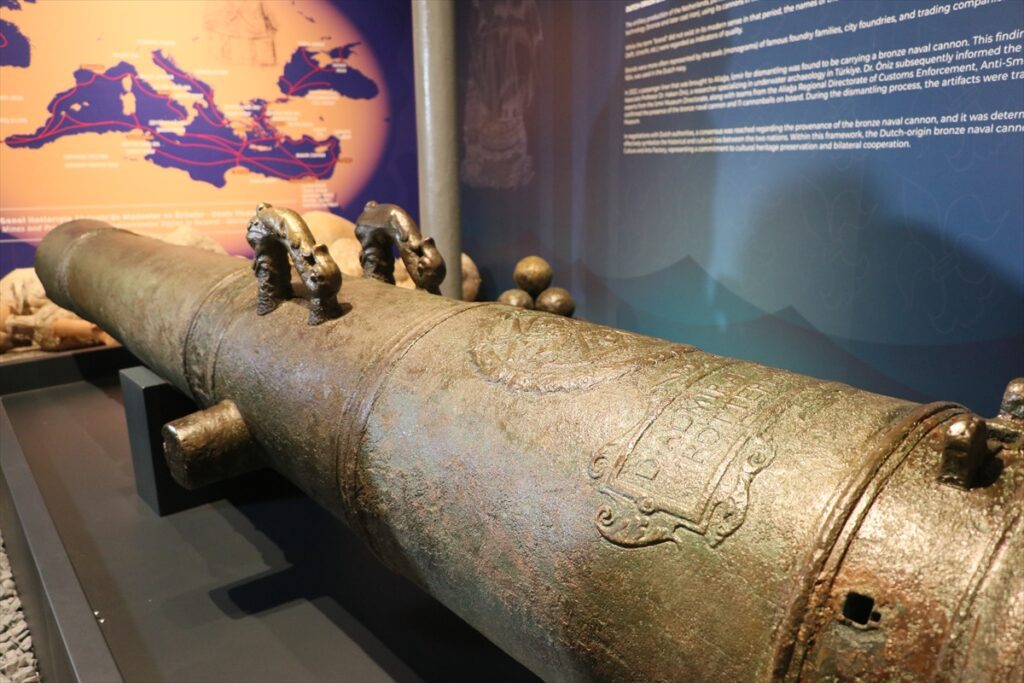
Museum specialists were called to the site. What they uncovered was a bronze naval cannon accompanied by 11 cannonballs, carefully secured and transferred under protection. Early assessments confirmed that the objects were not decorative or modern replicas. They were authentic historical artifacts.
A Weapon from the Age of Expanding Empires
Further examination identified the cannon as Dutch in origin, dating to the first half of the 17th century. This was a period when maritime powers competed fiercely for control of global trade routes.
Bronze cannons were a strategic choice at the time. They resisted corrosion better than iron and could endure repeated firing without cracking. These qualities made them essential for long-distance naval expeditions and armed merchant fleets.
The cannon found in İzmir reflects that broader system. It belongs to an era defined by oceanic trade, naval conflict, and expanding commercial networks.
A Decision Shaped by Cooperation
After confirming the cannon’s origin, Turkish authorities contacted officials in the Netherlands. The discussion focused on whether the artifact should be returned or remain in Turkey.
The outcome highlighted cooperation rather than dispute.
According to Birol İnceciköz, Director General of Cultural Heritage and Museums, both sides agreed that the cannon could be exhibited in İzmir. He emphasized that the decision supports cultural exchange and reflects a constructive dialogue between the two countries.
Dutch Ambassador to Ankara Joep Wijnands described the case as a positive example of long-standing relations. He noted that the artifact is preserved under appropriate conditions and represents a shared historical connection.
Now on Display in İzmir
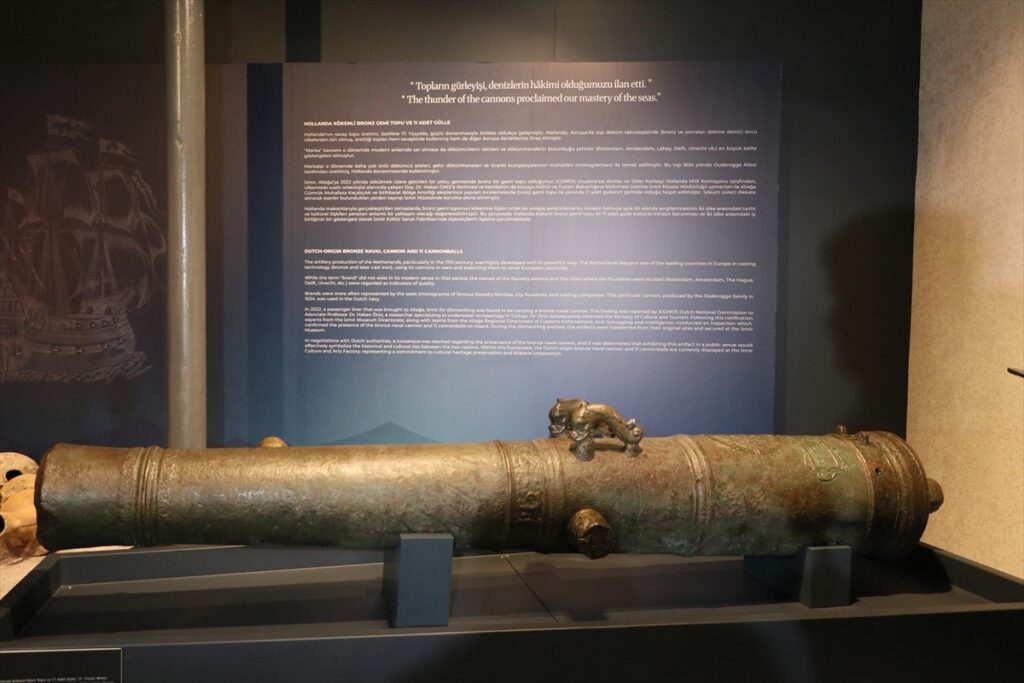
The cannon and its ammunition are now exhibited at the İzmir Culture and Arts Factory, within a gallery dedicated to maritime heritage. The display presents more than a single object. It connects visitors to a wider historical landscape shaped by naval technology, trade routes, and international interaction.
The story of the cannon is as notable as the object itself. It survived centuries, remained hidden within another vessel, and reappeared during a routine industrial process.