
Archaeologists in southeastern Türkiye have brought to light an 1,800-year-old chamber tomb in the ancient city of Tharsa, near Kuyulu village in Adıyaman — a discovery that sheds new light on the region’s Roman-era burial traditions and artistic culture.
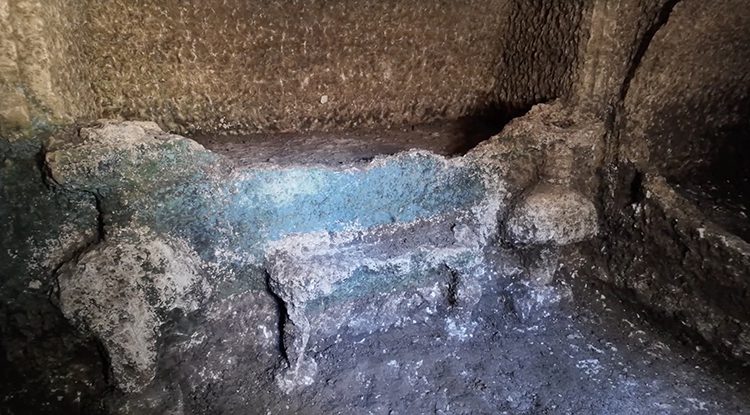
The find was announced by Adıyaman Museum Director Mehmet Alkan, who described the structure as one of the most refined examples of Roman funerary architecture ever uncovered in the province. The tomb, carved into bedrock and carefully sealed, was found to contain a banquet relief (kline scene), a female bust, and a ceramic vessel, all in situ, untouched since antiquity.
A glimpse into Roman life and death in Adıyaman
“This is the first time we’ve encountered a chamber tomb of this kind in Tharsa,” Alkan told reporters. “The ceiling features an intricate network of cross-shaped ornaments, which is unlike anything previously found in the region. The presence of a female bust alongside banquet imagery may reflect the status of a distinguished local family — perhaps one of the city’s early Roman citizens.”
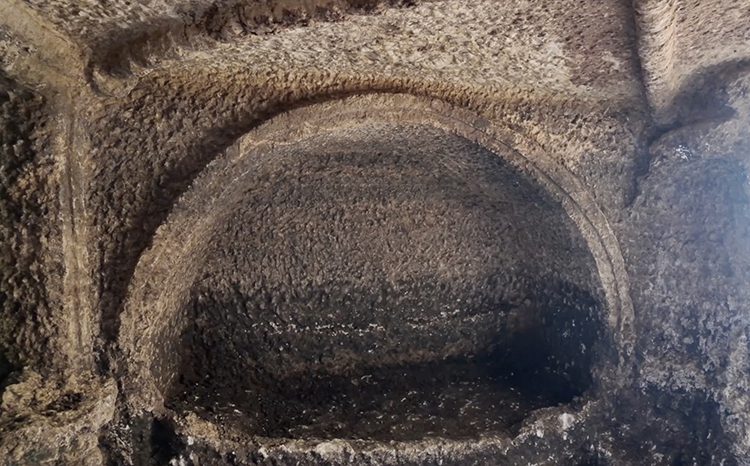
While modest in scale, the tomb’s craftsmanship and symbolic details suggest it belonged to an elite household during the 2nd or 3rd century CE, a period when Roman influence across Commagene was at its height.
Archaeologists note that the reclining banquet motif — known as the kline scene — was widely used across the Roman Empire to symbolize the continuation of social life in the afterlife. Similar scenes appear in the necropoleis of Antioch, Zeugma, and Hierapolis, but the Tharsa example stands out for its well-preserved form and the combination of sculptural and painted elements.
Rediscovering Tharsa — a forgotten Roman city
Located on the route linking ancient Samosata and Perre, Tharsa was once a thriving Roman settlement integrated into the Commagene region, serving both as a trade post and a local administrative hub. The city is believed to have flourished between the 1st and 3rd centuries CE, during which it developed monumental necropoleis, paved roads, and public buildings.
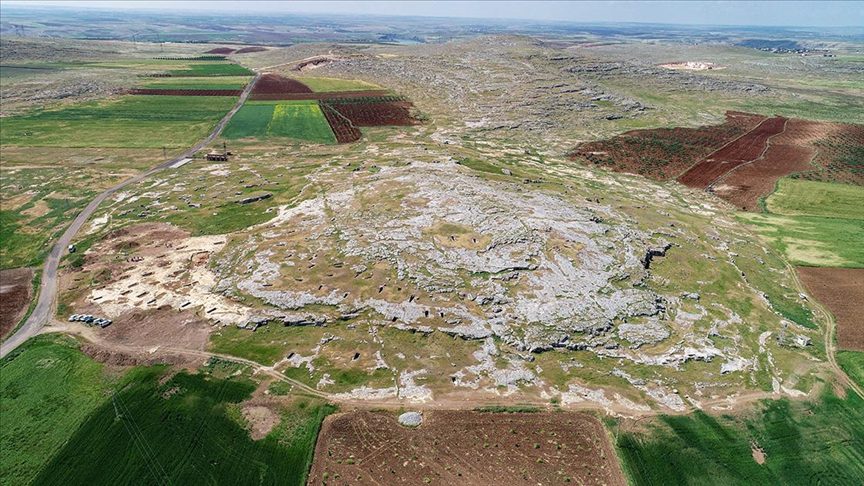
Although much of the city remains unexcavated, scattered ruins and surface pottery indicate a continuous urban occupation. Latin and Greek inscriptions discovered in earlier surveys suggest Tharsa maintained close ties to both local Anatolian cults and the broader Roman provincial system.
From obscurity to recognition
For decades, Tharsa lay largely forgotten, overshadowed by nearby sites like Arsameia and Mount Nemrut. However, renewed archaeological attention over the past decade has begun to reposition the city as a key node in understanding how Rome’s eastern provinces absorbed imperial culture while maintaining local identity.
“Each discovery here adds a new layer to Adıyaman’s history,” Alkan noted. “We’re not only uncovering tombs; we’re uncovering how people lived, what they believed, and how they wanted to be remembered.”
Local authorities, including the Adıyaman Museum Directorate and the Provincial Directorate of Culture and Tourism, have increased preservation and promotion efforts at Tharsa. With growing tourist interest in Commagene’s archaeological heritage, the site is now being included in cultural routes that connect Adıyaman’s ancient cities.