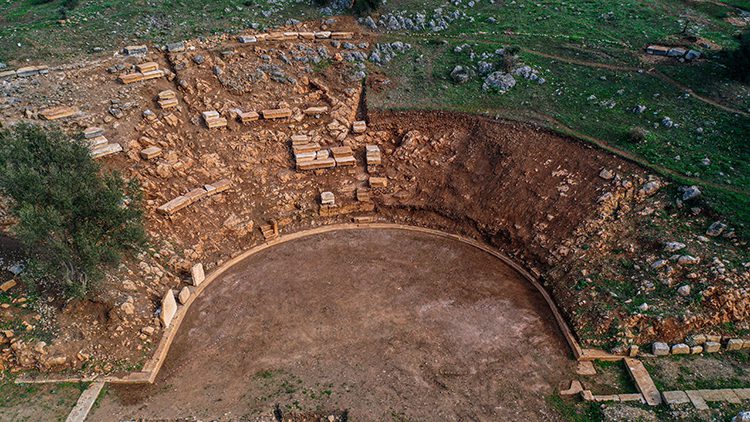
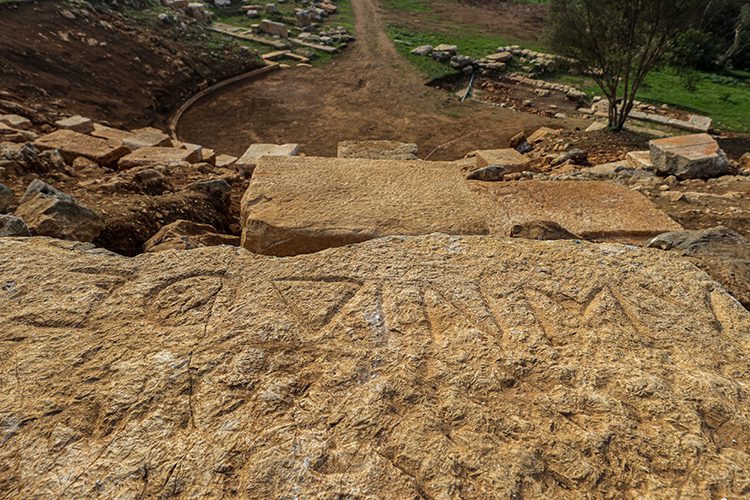
A seat bearing the inscription “Lonidos” has emerged from the ruins of the 5,000-year-old Apollonia ad Rhyndacum Ancient Theatre in Bursa, Turkey. Excavation director Prof. Dr. Derya Şahin highlights that reinstating these ancient seats to their original positions is revealing the theatre’s lost grandeur and shedding light on its social and cultural history.
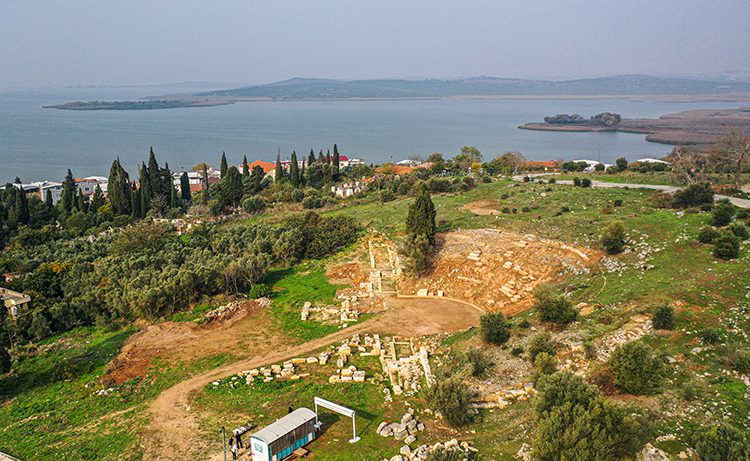
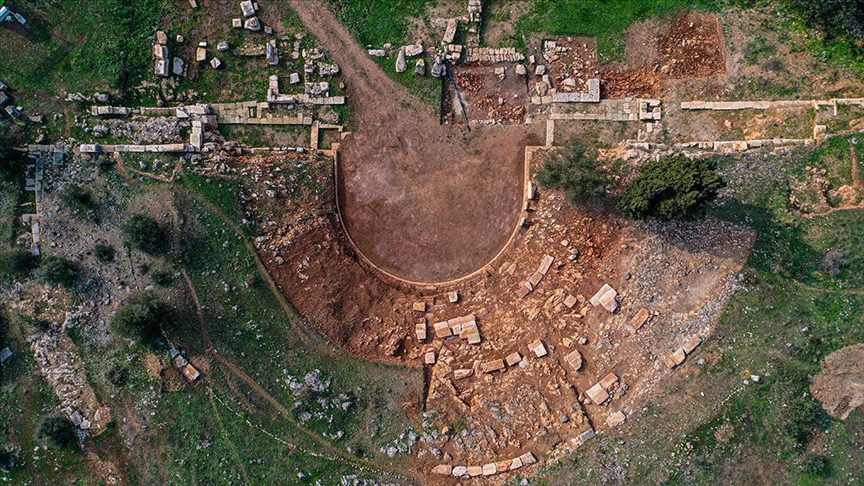
Excavations at Apollonia ad Rhyndacum, underway since 2021 under the guidance of Prof. Dr. Derya Şahin of Bursa Uludağ University, are revealing remarkable insights into this Hellenistic theatre’s transition into the Roman era. With the support of Nilüfer Municipality, archaeologists are relocating 42 displaced seating blocks, reconstructing the theatre’s original form and uncovering the roles its audience once played.
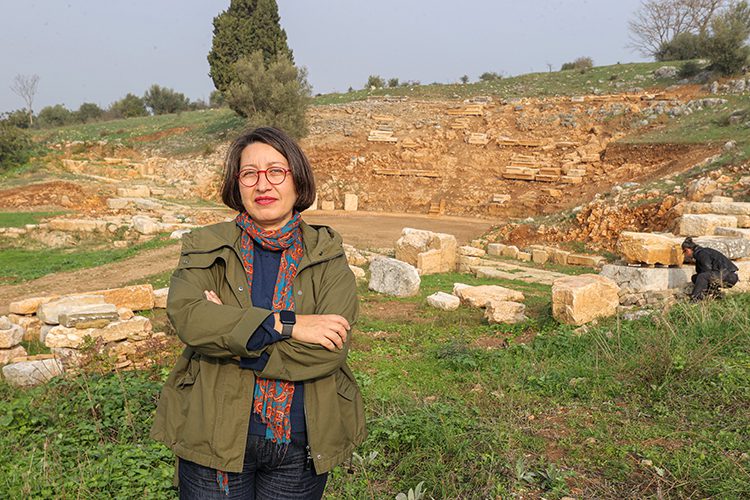
“The discovery of the ‘Lonidos’ seat is particularly exciting,” Prof. Dr. Şahin said. “It may have belonged to a female priest or a distinguished figure. Restoring it to its original location allows us to connect the physical structure with its historical and social context.”
The theatre, perched above Uluabat Lake, spans an 80-meter-wide cavea and a 28-meter orchestra, including VIP-style boxes. Prof. Dr. Şahin emphasized: “Understanding the layout, scale, and design of this theatre is crucial to revealing how ancient communities experienced performance, ritual, and public life.”
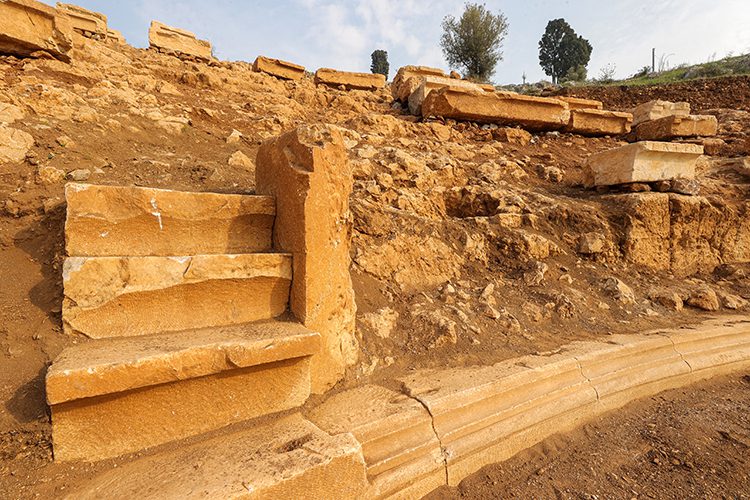
This season, careful excavation revealed structural blocks beneath the upper cavea, allowing archaeologists to identify construction phases. “By matching the seats to their original foundations, we can accurately place the ‘Lonidos’ seat and others. This process not only restores the architecture but also preserves its historical story,” Şahin explained.
Looking ahead, Prof. Dr. Şahin noted that long-term restoration plans aim to return all 42 displaced blocks to their authentic positions. “This will help future generations experience the theatre as it was, highlighting the intersection of Hellenistic design and Roman adaptation,” she said.
Gölyazı, where the theatre sits, is a protected Ramsar site with immense archaeological value. “Excavations have virtually eliminated damage to city walls, necropolises, and theatre structures,” Şahin added. “Through the Heritage for the Future Project, the site is preserved scientifically and opened for cultural tourism.”
Investigations into potential religious structures continue. “Ancient theatres often intersected with religious practice. We are examining possible remains linked to Apollo or Dionysus, but so far, no conclusive evidence has emerged,” Şahin noted.