After more than a decade of silence, the ancient city of Ugarit—one of the most influential centers of the Late Bronze Age—has returned to the spotlight. According to reporting by Arkeonews, international archaeologists have resumed excavations near Latakia in northwestern Syria, reopening a window into a civilization that transformed trade, politics, and the very foundations of written language.
Ugarit: A Crossroads of Ancient Civilizations
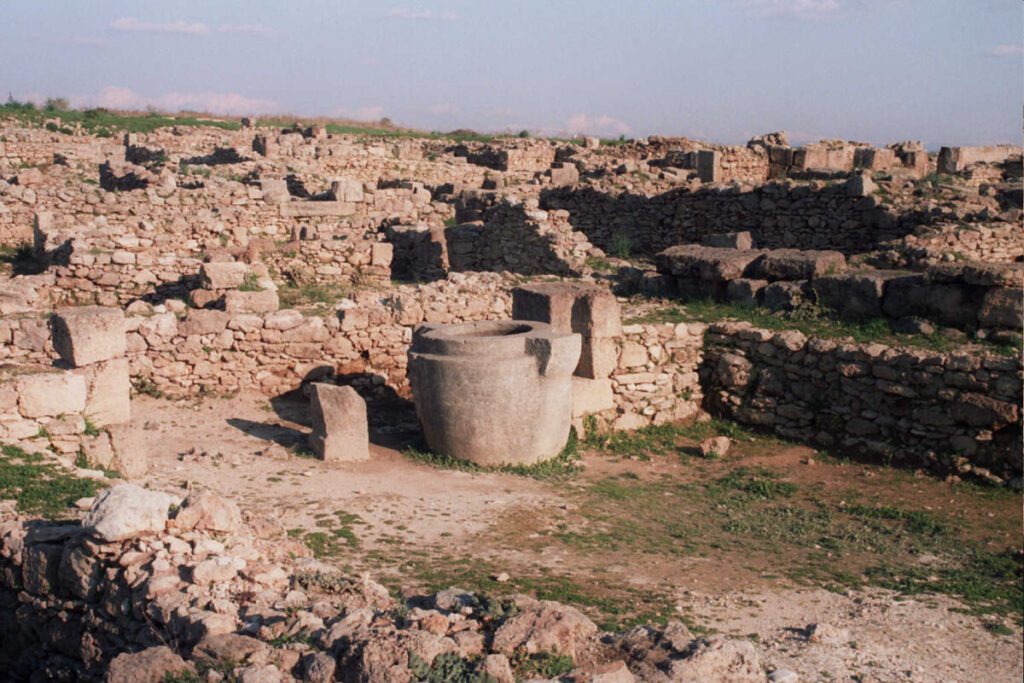
Located at modern-day Ras Shamra, roughly 12 kilometers north of Latakia, Ugarit flourished between 1450 and 1195 BCE as a major coastal trade hub. Its strategic location linked Egypt, Anatolia, Cyprus, and Mesopotamia, making it one of the most interconnected urban centers of the Eastern Mediterranean.
Historical evidence suggests that Ugarit met a sudden end around 1190 BCE, likely due to the arrival of the enigmatic Sea Peoples, whose invasions reshaped regional power structures during the Bronze Age collapse.
Archaeological Work Resumes After a 14-Year Hiatus
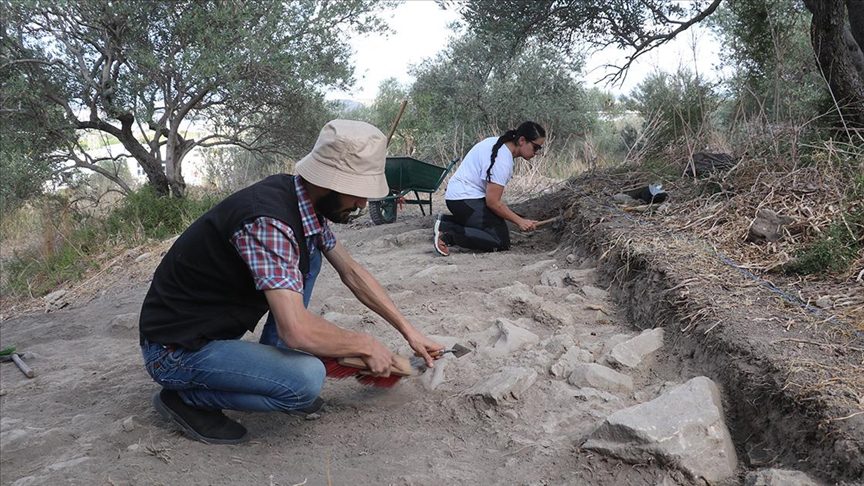
As Arkeonews reports, archaeological research in Syria had been largely suspended following the civil conflict that erupted in 2011. Now, a new chapter is beginning. A joint Italian–Syrian archaeological team has launched a fresh excavation campaign near Latakia, marking the first fieldwork in the area in 14 years.
The mission is led by Assoc. Prof. Lorenzo d’Alfonso of the University of Pavia, a respected specialist in Ancient Near Eastern archaeology and art history. Speaking to local media, d’Alfonso explained that the team is conducting intensive excavations at Tell Semhane, a previously unstudied mound believed to be connected to the wider Ugaritic kingdom.
“We are excavating Bronze Age layers in Tell Semhane,” d’Alfonso noted. “No earlier archaeological work has been carried out here, which makes every layer and artifact particularly valuable.”
The project is being carried out in collaboration with the Latakia Museum, the Syrian Directorate of Antiquities, and is expected to include students from Damascus University in future seasons.
A New Look at the Ugaritic World
According to Muhammad al-Hasan, head of the Latakia Department of Antiquities, the site’s location—only five kilometers from Latakia’s city center—suggests that it may have served as a satellite settlement within Ugarit’s political and economic system. Findings from this season may clarify how the city’s territories were organized and governed.
Hasan emphasized that Syria aims to revive partnerships with global research teams: “We are providing full support to international missions working in the coastal region. These collaborations restore scientific activity and strengthen cultural relations.”
Ugarit: Birthplace of the World’s First Alphabet
Beyond its commercial power, Ugarit holds a unique place in human history. It is recognized as the birthplace of the earliest alphabetic writing system. First discovered in 1928, the Ugaritic script used a 30-letter alphabet written in cuneiform signs. This groundbreaking system influenced later Semitic alphabets such as Phoenician, which in turn shaped Greek and Latin—the ancestors of many modern writing systems.
The vast Ugaritic archives, found in palaces and temples, contain thousands of clay tablets written in multiple languages, including Akkadian, Hurrian, and Hittite. These documents reveal rich details about diplomacy, trade, religious life, and everyday administration in the Late Bronze Age.
Among the most famous texts are the Baal Cycle mythological poems, which describe the storm god Baal and his battles against chaos—narratives that echo later biblical themes.
A New Generation of Archaeologists
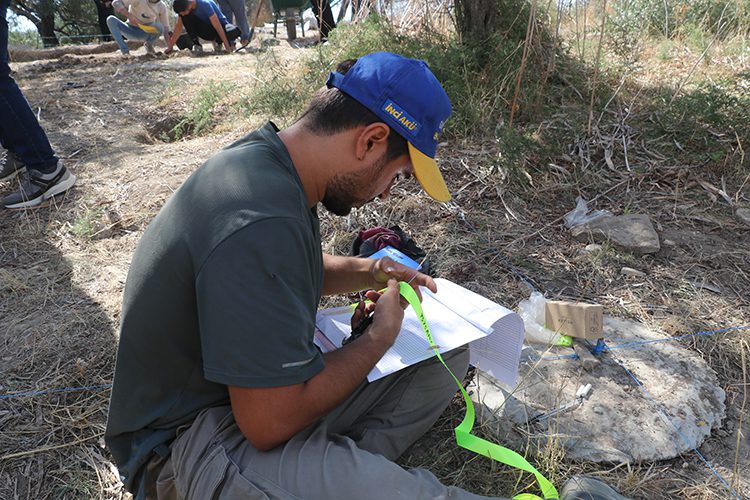
Arkeonews highlights the involvement of young researchers such as Turkish Ph.D. student Adahan Güney, who expressed enthusiasm about the project’s holistic approach. Unlike many Near Eastern excavations that focus solely on monumental structures, this team aims to uncover a complete Bronze Age settlement.
Working across four excavation zones, the researchers are already identifying architectural remains and surface-level artifacts. By the end of the season, the team hopes to understand how the site functioned within Ugarit’s administrative and cultural network.
Reviving a Lost Civilization
The return to Ugarit is more than an archaeological achievement—it symbolizes cultural endurance. Once destroyed by invasion and later silenced by war, the city is again revealing its stories. Each artifact uncovered at Ras Shamra enriches our understanding of the ancient world and reminds us that history continues to speak, even after millennia of silence.
Cover Image Credit: Turkish and Italian doctoral students are leading a month-long excavation at Tell Semhane. Şevket Akça/AA