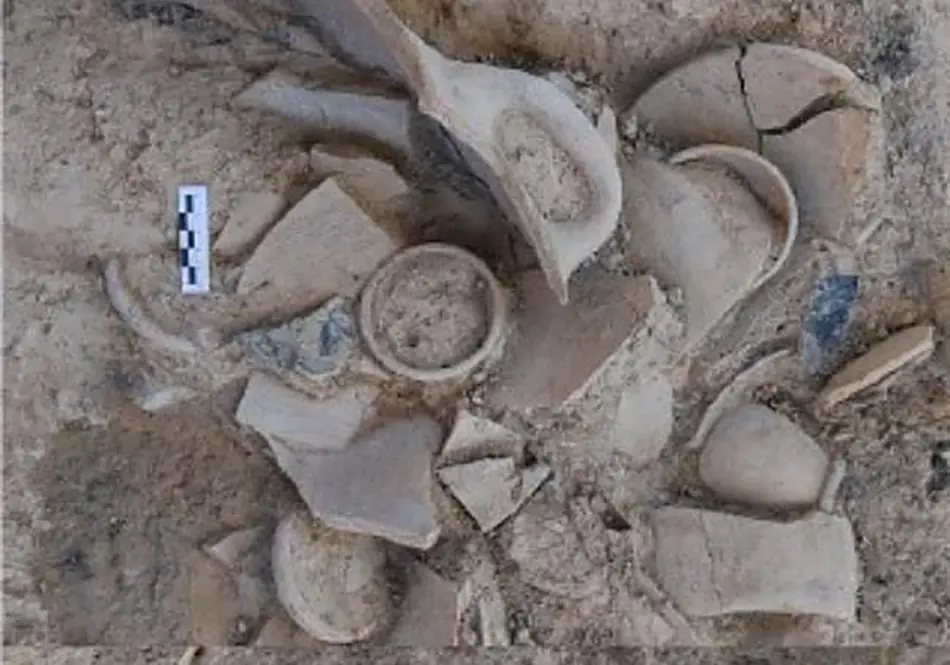
A group of 2,200-year-old Iberian tombs containing curved swords, shields, spears, horse equipment and a female-headed ritual burner linked to the goddess Tanit has been uncovered in Alicante, southeastern Spain.
According to Alicante City Council, the cemetery was discovered during construction work on a privately owned plot in the coastal district of Albufereta. Archaeologists dated the site to the final third of the third century BC, when Carthaginian power under the Barcid dynasty was expanding across southeastern Iberia.
Although the cemetery contains only four tombs, the quantity and diversity of the grave goods have led officials to describe it as an exceptional archaeological site.
The excavation was carried out by archaeologists Jesús Moratalla and Gabriel Segura of Arquealia under the supervision of the city council’s heritage department. The finds are now being stored by Alicante’s city museum while the team prepares a detailed scientific report.
Complete Sets of Iberian Weapons
Weapons form the most prominent group of objects recovered from the tombs.
The assemblages include falcatas, the distinctive curved swords associated with Iberian warriors, as well as knives, spears and shields. Archaeologists also documented long iron javelins known as soliferrea and shorter throwing weapons identified as pila.
In several graves, the weapons appear to represent much of the equipment, or panoply, carried by an Iberian warrior.
Horse bits and spurs were also found among the grave goods. These objects suggest that horses and mounted activity were connected with the status or identity represented in the burials, although the precise roles of the individuals remain unknown.
The weapons were accompanied by numerous bronze dress fittings and personal ornaments, including fibulae used to fasten clothing.
Among the rarest objects were small balance pans recovered from two tombs. Several weights were found with one of the sets. The equipment may have been related to trade or the measurement of valuable materials, but its significance within the cemetery has not yet been established.
A Female-Headed Ritual Burner
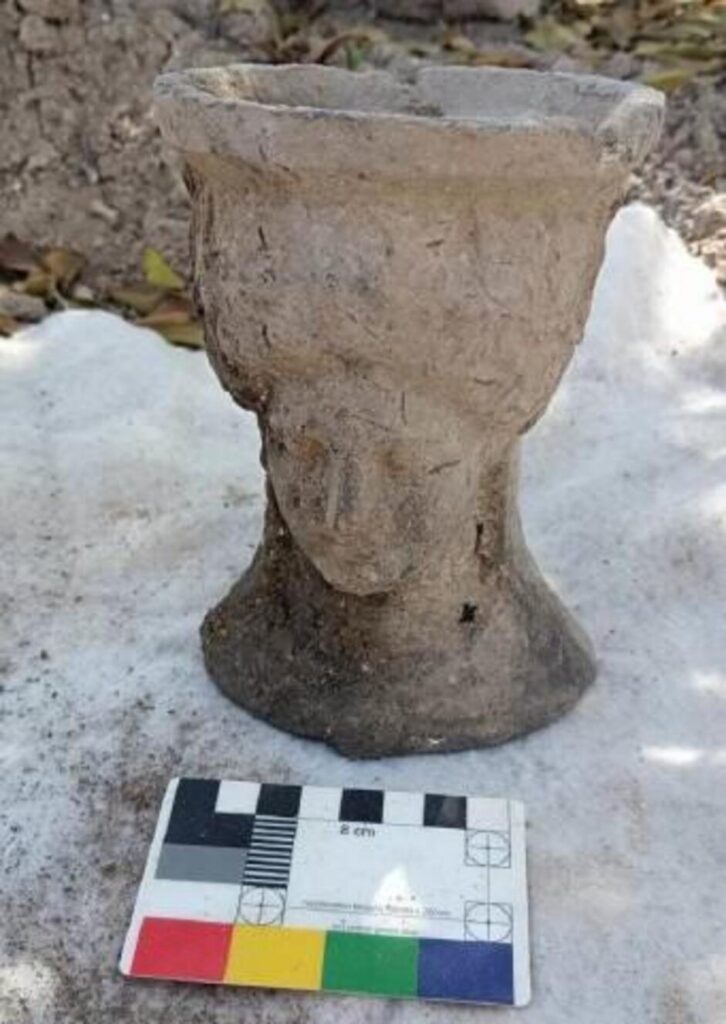
One of the most striking discoveries is a ritual burner shaped like a woman’s head and preserved in unusually good condition.
The excavation team has linked the object to Tanit, one of the most important goddesses of the Punic world. Female-headed burners associated with the deity are known from Punic and Iberian archaeological contexts elsewhere in the western Mediterranean.
The object adds to evidence of cultural contact between local Iberian communities and the Carthaginian world during the late third century BC. It has not yet been determined whether the burner was locally produced or brought to Alicante from another region.
Other finds include part of a cart wheel and a fragment of Iberian stone sculpture identified as the carved hoof of a deer.
Archaeologists also recovered around 30 small ceramic vessels from the tombs and two nearby ritual areas. The vessels are thought to have been used during a collective funerary banquet, indicating that communal eating or drinking formed part of the ceremonies conducted at the cemetery.
Four Tombs Apart from the Main Cemetery
The newly discovered burials lie approximately 300 metres southwest of the principal Iberian cemetery previously identified at Albufereta.
Their separate location, combined with the richness of the grave goods, may indicate that the people buried there occupied a distinctive position within the local community.
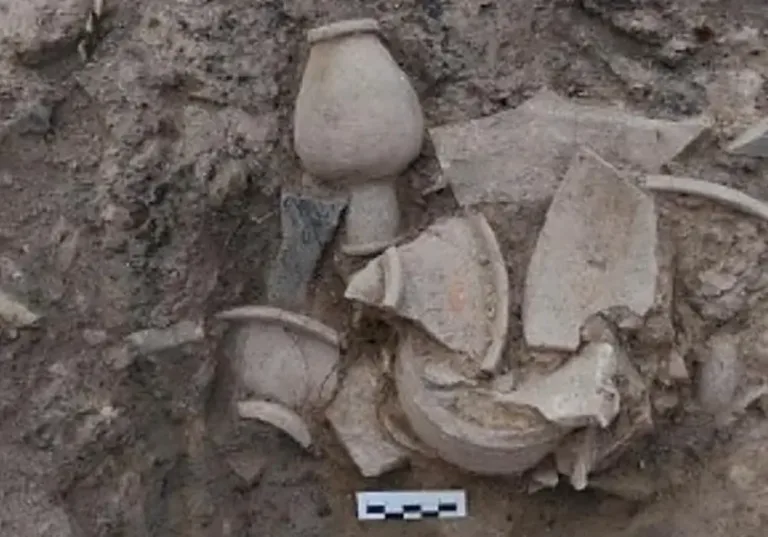
As a preliminary interpretation, the archaeologists have proposed that the four tombs could have belonged to members of the same military lineage or family group. The hypothesis remains unconfirmed, and further analysis of the human remains and funerary objects will be necessary before biological or social relationships can be established.
The cemetery has also been tentatively connected with the nearby settlement of Tossal de Manises, which later developed into the Roman city of Lucentum.
Previous excavations at Tossal de Manises have linked the settlement’s early development to the Barcid period, when Carthage was extending its political and military influence across the Iberian Peninsula in the decades before the Second Punic War.
The newly discovered cemetery may therefore provide a rare view of a local elite living during a period of profound political change. Its weapons point to the importance of military identity, while the ornaments, weighing equipment and ritual objects reveal a burial tradition shaped by wealth, ceremony and wider Mediterranean connections.
The identities of the individuals remain unknown. The forthcoming scientific study may determine whether they were related and clarify how the small cemetery fitted into the broader Iberian community of Albufereta and Tossal de Manises.
Cover Image: Ceramic vessels and other grave goods from the 2,200-year-old Iberian cemetery where a ritual burner linked to Tanit was discovered. Credit: Alicante City Council.