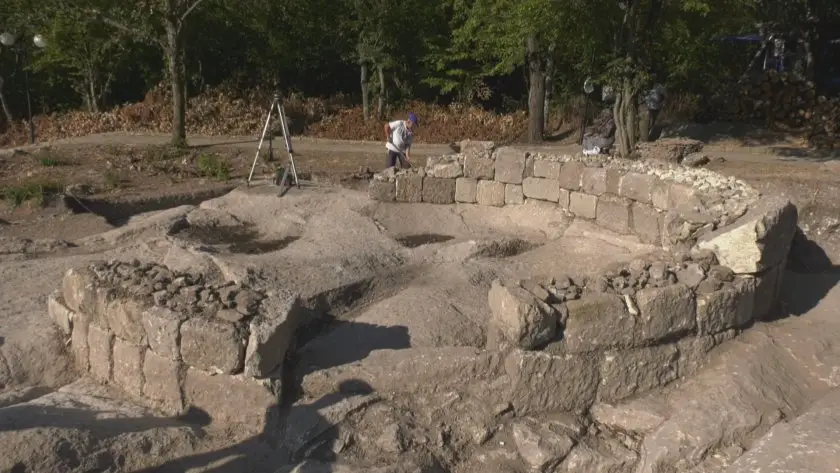
Archaeologists at Perperikon in Bulgaria have uncovered a monumental circular mausoleum and two unusual rock-cut graves, one of which may have belonged to a Thracian ruler worshipped after death.
The discoveries were made in a necropolis beside the ancient road leading toward Perperikon’s acropolis. Excavators say the concentration of circular mausoleums found there has no known equivalent elsewhere in the Roman world.
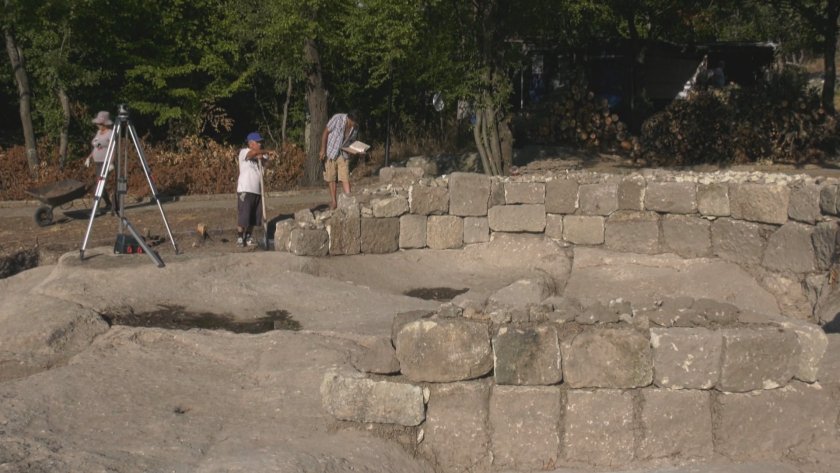
The newly exposed mausoleum dates from between the third and fifth centuries AD. Measuring approximately eight metres in diameter, it has a precise circular plan and an elaborately shaped stone entrance facing east.
It is the eleventh circular tomb discovered in the area during the past six years. Rather than standing in isolation, the mausoleums form an amphitheatre-like arrangement along the main approach to the acropolis, creating a highly visible funerary landscape for those entering the ancient city.
A Roman Necropolis Built in Circles
Prof. Nikolay Ovcharov, who leads the Perperikon archaeological expedition, believes the repeated use of circular architecture was deliberate.
“A necropolis with such a concentration of circular mausoleums from the Late Roman period is, to my knowledge, without parallel anywhere in the Roman world,” Ovcharov said.
He has suggested that the preference for the circular form may have been influenced by the sanctuary traditionally associated with Dionysus at Perperikon, which is also believed to have had a circular design. Ovcharov described the connection as hypothetical, but the repeated architectural pattern indicates that the form carried particular religious or symbolic importance.
The mausoleums are thought to have served members of Perperikon’s wealthy or influential population during the Late Roman period.
A Tomb Resembling the “Tomb of Orpheus”
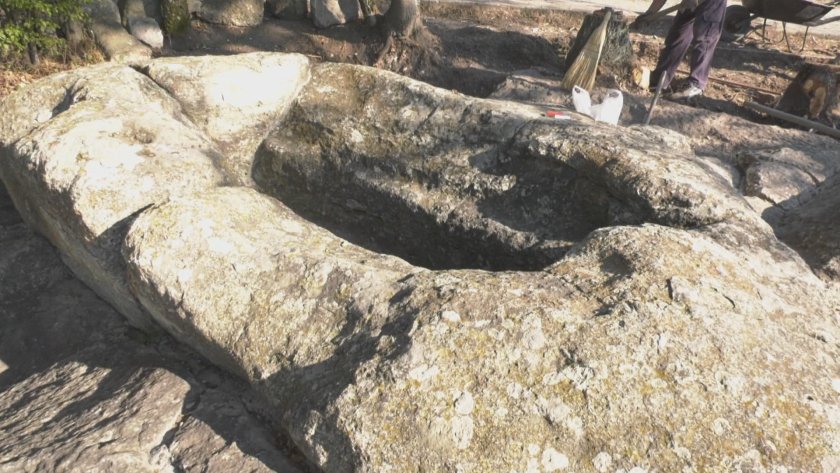
Close to the circular mausoleum, archaeologists found two graves cut directly into the top of a rocky outcrop that once rose prominently above the surrounding ground.
Their form and position resemble the rock-cut monument near the village of Tatul, widely known as the “Tomb of Orpheus.” Archaeologists have interpreted the Tatul structure as a burial place connected with a Thracian ruler who may later have been honoured as a divine or heroic figure.
The newly discovered graves at Perperikon could represent a similar tradition. No inscription has yet identified the person buried there, however, and the connection with a deified Thracian ruler remains an archaeological interpretation rather than a confirmed identification.
Excavation of the rock-cut graves is continuing. Researchers hope the work will establish their date and determine whether this part of Perperikon had already been regarded as sacred long before the Late Roman mausoleums were constructed.
The discoveries add another layer to Perperikon’s long history as a political and religious centre in the Eastern Rhodope Mountains. More importantly, they suggest that the road to its acropolis was not simply an entrance into the city, but a carefully arranged ceremonial route lined with monuments to the powerful dead.