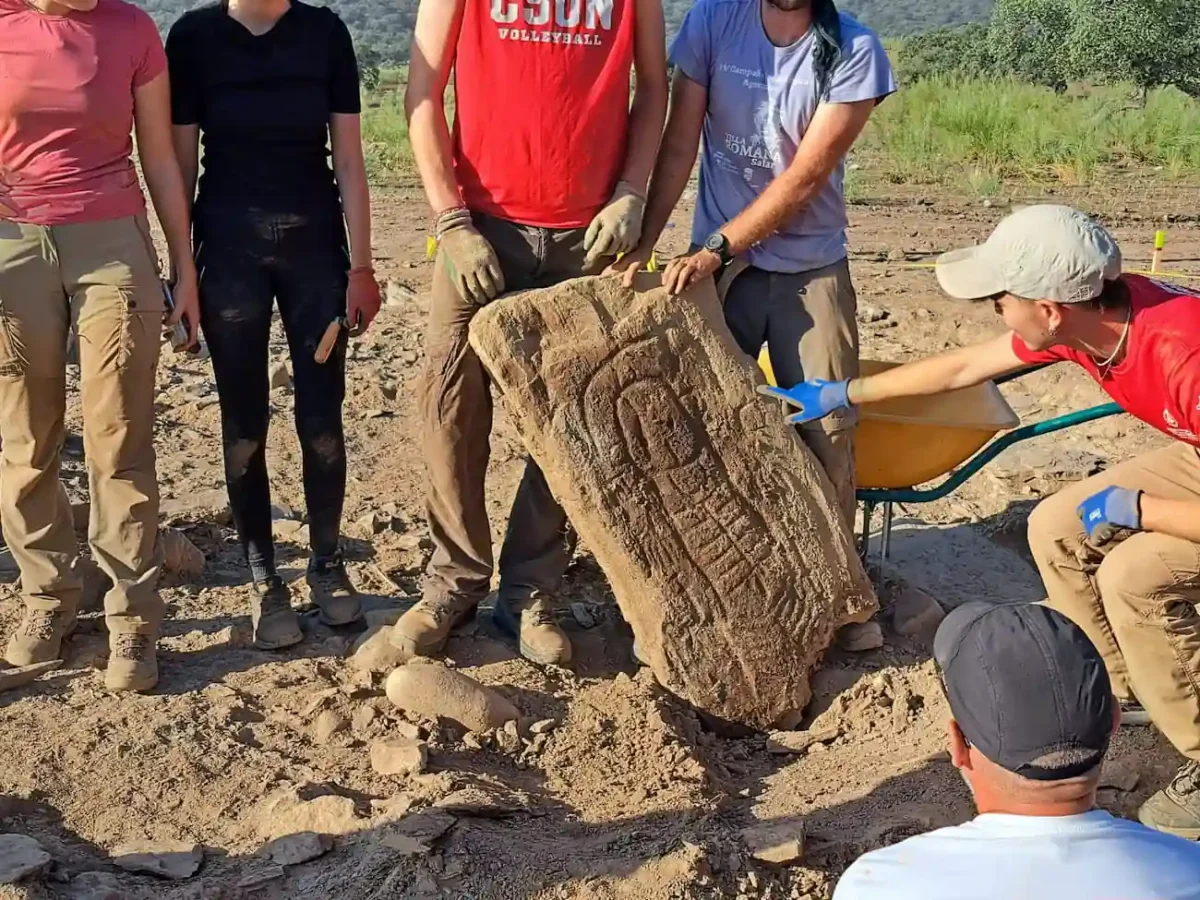
Archaeologists excavating beside an old road in south-west Spain have found rare evidence linking prehistoric stelae directly with burials, movement routes, and changing funerary customs.
The discovery comes from Las Capellanías, near Cañaveral de León in Huelva. The site first drew attention in 2018, when a carved diademated stela was found by chance. Later surveys and excavations revealed that the stone was not an isolated object. It belonged to a broader funerary landscape containing three stelae, multiple burial structures, cremated human remains, grave goods, and a routeway that may have remained important for centuries.
For archaeologists, that context matters. Many prehistoric stelae from Iberia were found without clear archaeological settings, making it difficult to say whether they marked graves, routes, territories, status, memory, or ritual places. Las Capellanías does not answer every question, but it gives researchers a rare chance to study carved stones, burials, and movement through the landscape together.
A cemetery beside an old route
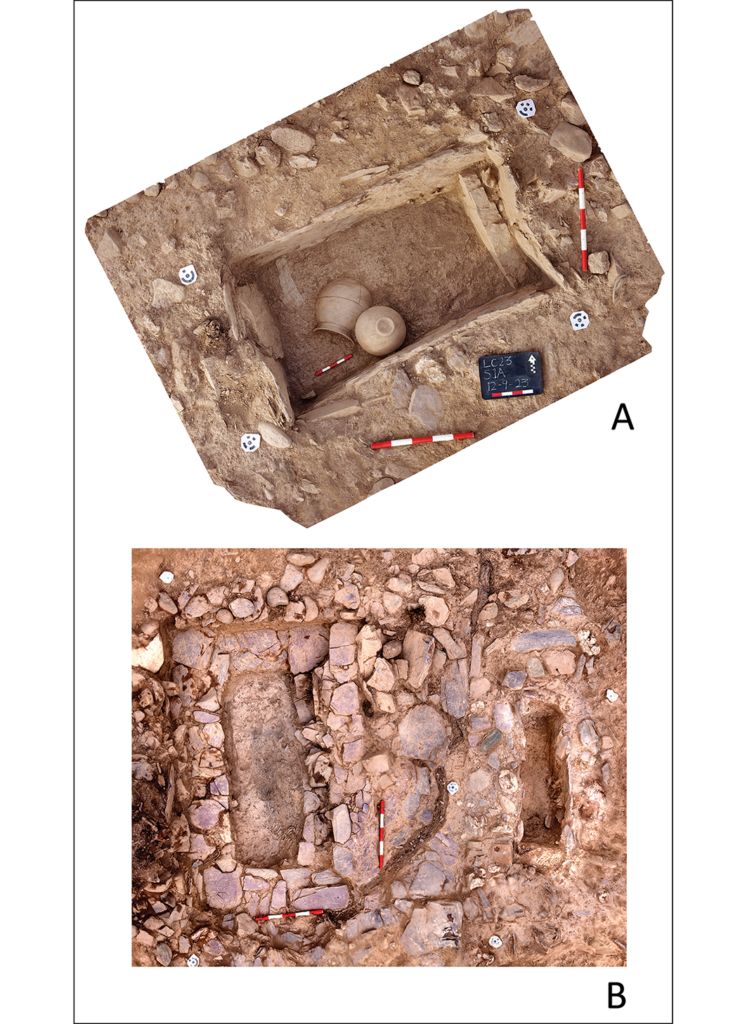
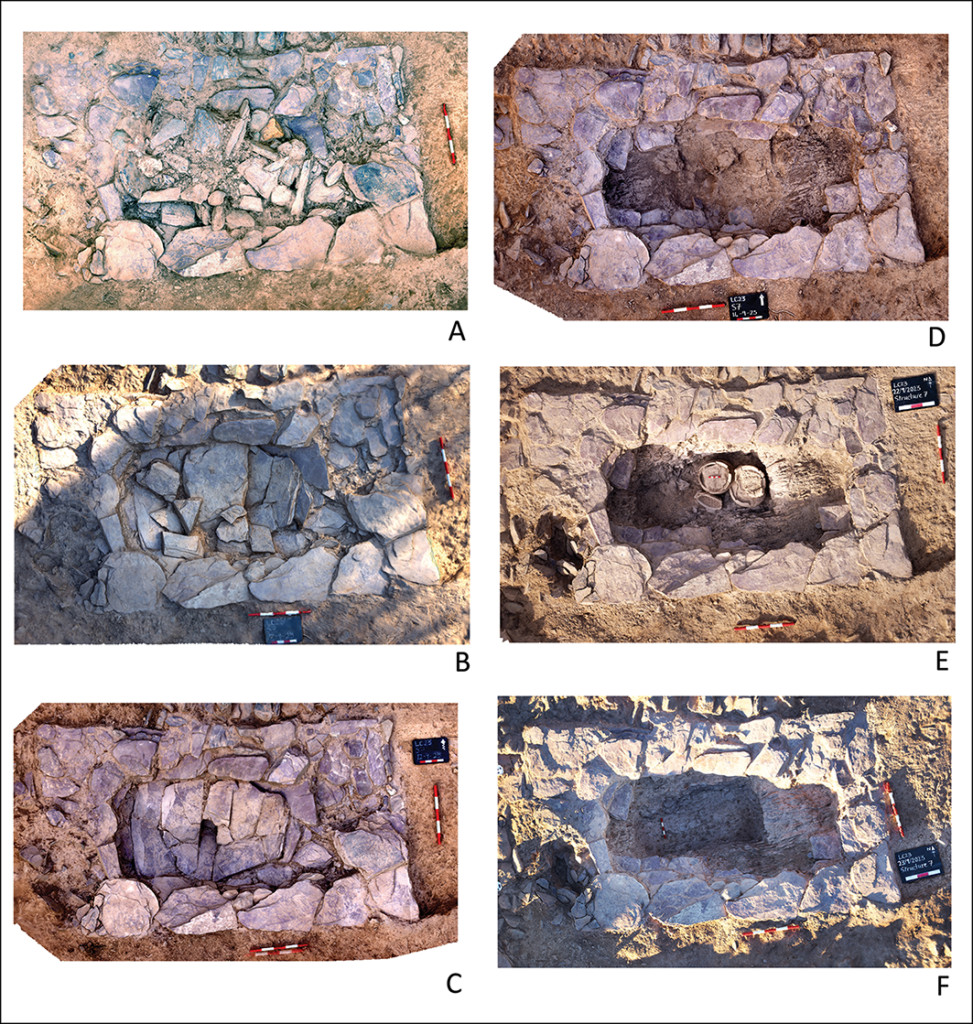
Fieldwork between 2019 and 2023 identified 18 burial structures at Las Capellanías, with several more detected through geophysical survey. Eight were fully excavated. Some were badly disturbed, but others preserved enough detail to show that the cemetery had a long and complex history.
The three stelae were closely connected with both the burials and the road. Stela #1 was found near a burial structure and beneath the road surface. Stela #2 had been placed upside down in the mound of another structure. Stela #3 partly covered a burial feature. All three were also located either under, beside, or very close to the routeway.
That pattern is the strongest part of the study. The stones were not just decorative monuments or loose symbols. At Las Capellanías, they appear to have helped mark a landscape where the dead, the road, and social memory were physically linked.
Older forms, newer customs
The burial structures do not belong to one neat cultural category. Some were cist graves cut into bedrock and lined with slate slabs, a form known from the Early and Middle Bronze Age in south-western Iberia. Others were slab-lined and cairn-covered pits, closer to funerary practices seen in Iron Age contexts, especially in southern Portugal. A third group combined different architectural features.
This mixture is important because it suggests continuity and change rather than a clean break. Las Capellanías seems to have been a place where older local traditions were reused or reworked during the Early Iron Age.
Radiocarbon dates from cremated bone place most of the burials between about 800 and 550 BC, with activity probably peaking around 620 BC. Optical dating from soil beneath one of the stelae points to earlier use of the area, reaching back into the second millennium BC.
The safest reading is that the site already had meaning before the main cremation cemetery developed. Later communities may have returned to an older funerary or symbolic place and adapted it to new practices.
Grave goods and wider contacts
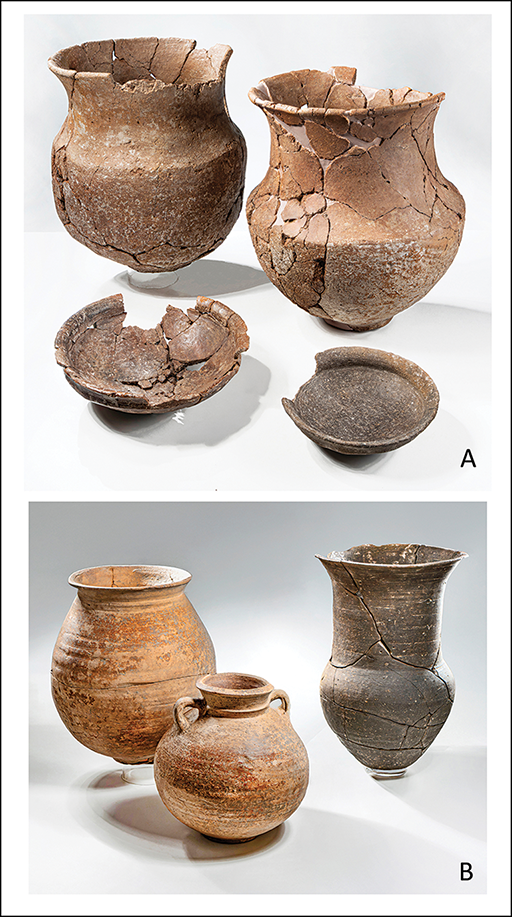
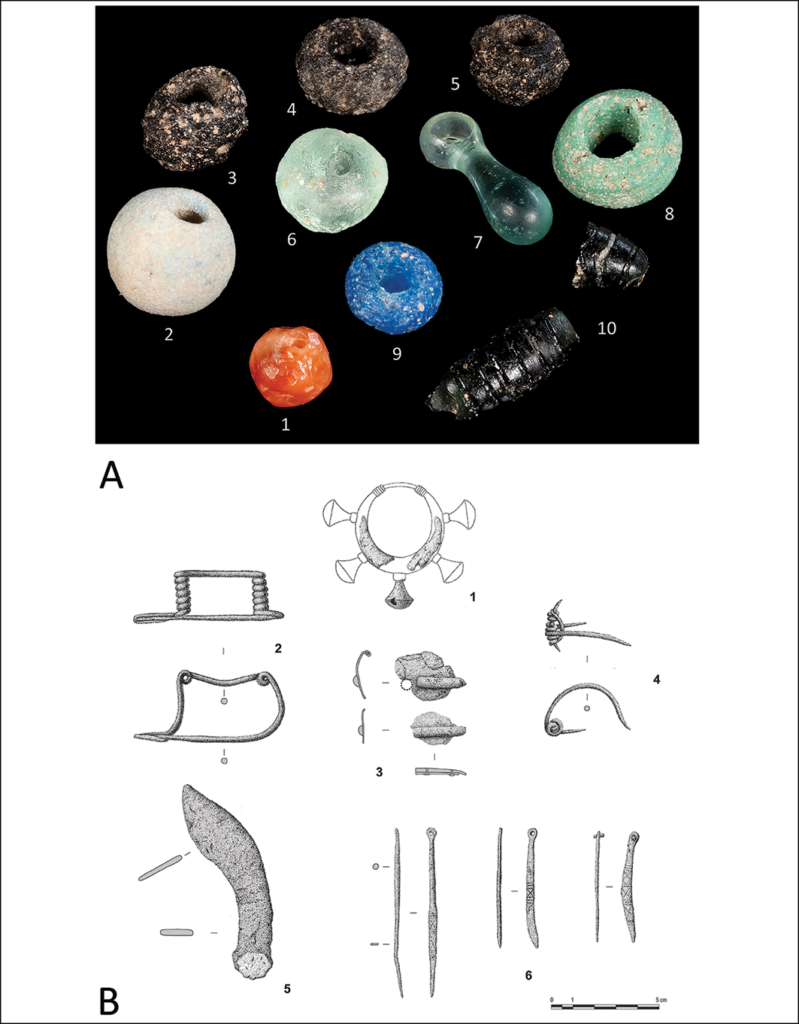
The grave goods are not spectacular in a treasure-hunting sense, but they are archaeologically useful. The excavated burials produced handmade vessels, wheel-thrown urns, bronze objects, iron tools, ornaments, beads, and a toiletry set.
Among the ceramics were La Cruz del Negro-type urns, often associated with Phoenician-linked cultural influence in southern Iberia. Other objects, including a “Tartessian”-type belt buckle and fibulae, point to regional networks of exchange, style, and social display.
This does not prove a simple story of migration, colonization, or ethnic identity. It is better understood as evidence for contact. Local Bronze Age traditions, Iron Age cremation practices, regional prestige objects, and Mediterranean-linked material culture were being used together in one cemetery.
That is what the researchers describe as cultural hybridisation. In this context, the term should be read cautiously. It does not mean that archaeologists can name the identity of each person buried at Las Capellanías. It means the material record shows different traditions being combined in funerary practice.
A road, a cemetery, and long-distance links
The routeway gives the site much of its wider importance. The Las Capellanías road corresponds closely with a route described in the 12th century AD by the geographer al-Idrisi between Seville and Badajoz. That does not prove uninterrupted use from prehistory to the Middle Ages, but it suggests that this corridor remained significant as a line of movement through the landscape.
The stelae also connect Las Capellanías with wider Iberian traditions. Certain motifs are comparable with stelae from the Guadalquivir, Guadiana, and Tagus basins. Stela #2 belongs to the so-called warrior stela tradition and includes weapons, while the diademated stela belongs to another well-known group of Iberian carved stones.
Even diet may hint at broader links. Stable isotope values from some cremated remains are compatible with the consumption of marine fish, although the sea was more than 100 kilometers away. This should not be overstated. It does not prove coastal migration. But it fits the wider picture of a community connected to routes, exchange, and movement beyond the immediate upland setting.
A rare context for Iberian stelae
Las Capellanías is important because it brings several kinds of evidence together. The stelae were found with burials, grave goods, human remains, radiocarbon and optical dates, and a road. That is unusual for Iberian prehistoric stelae, many of which were discovered without secure context.
The study does not turn the stones into a solved mystery. Their exact chronology, meaning, and use remain open to debate. But the site makes one point clearer: these monuments were not only images carved on stone. They were part of lived landscapes.
At Las Capellanías, people buried their dead, reused older forms, adopted new customs, and placed memory along a route used for movement and contact. The result is not a sensational rewrite of Iberian prehistory. It is something more useful: a well-documented case showing how communities in south-western Iberia reused older places, adopted new funerary customs, and connected memory with movement between the Bronze Age and the Early Iron Age.
Rivera Jiménez, T., Díaz-Guardamino, M., Wheatley, D. W., Lozano Rodríguez, J. A., Montero Artús, R., Shaw Evangelista, L., Ruiz Flores, J., Lupión Álvarez, J. J., Bermejo Meléndez, J., Jiménez Ávila, J., Cousseau, F., Ling, J., Sánchez Díaz, F., & García Sanjuán, L. (2026). Road to encounters: stelae, burial practices and cultural hybridisation at Las Capellanías, Spain. Antiquity, FirstView, 1–22. https://doi.org/10.15184/aqy.2026.10369
Cover Image: One of the prehistoric stelae found at Las Capellanías, near Cañaveral de León in south-west Spain. Credit: Durham University