Archaeologists excavating the Königspfalz Salz site in Bavaria have identified a 4.5-metre-deep cistern within the remains of an early medieval building containing at least three rooms.
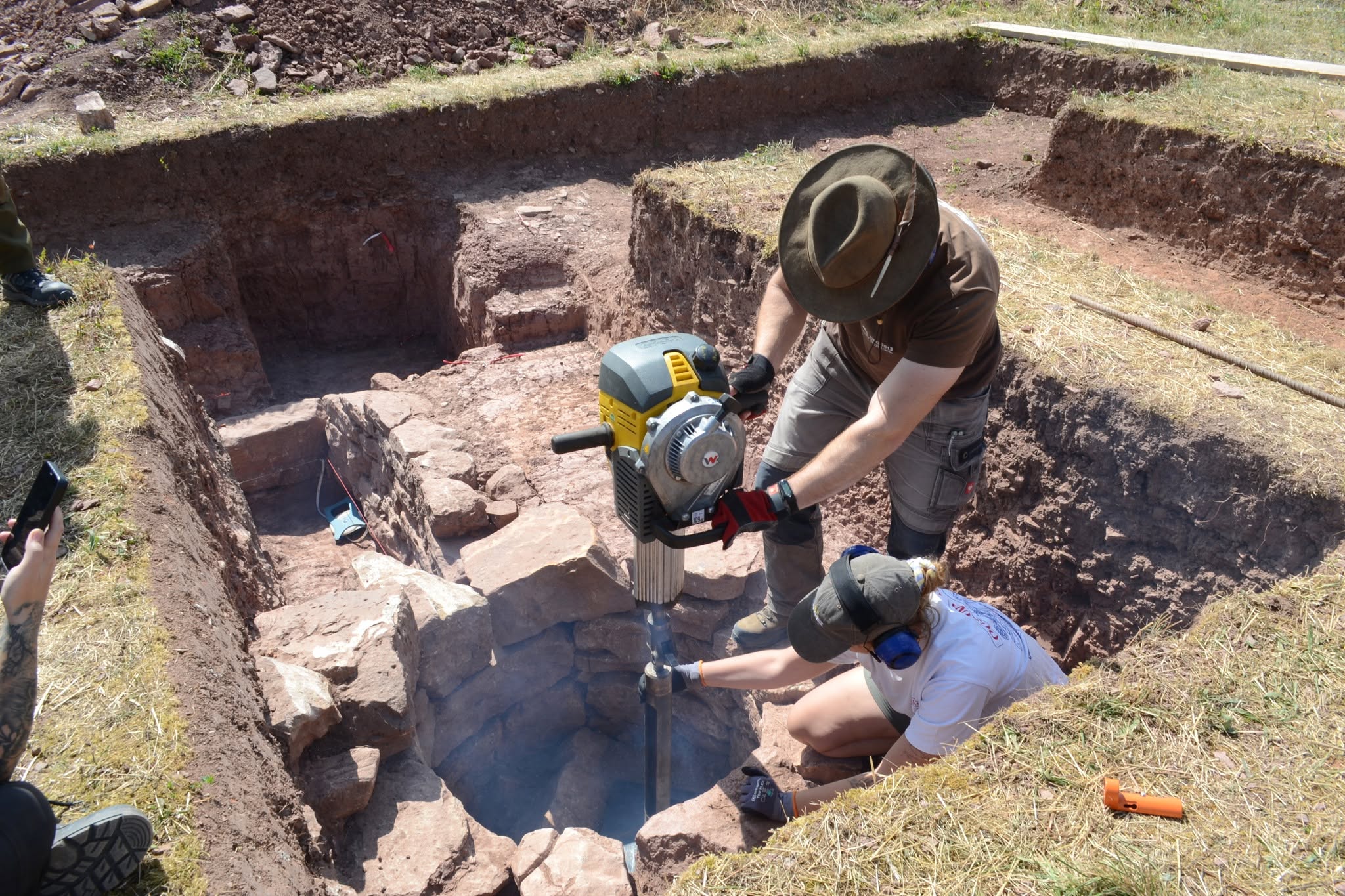
The circular stone structure was initially believed to be a well. Further investigation during the third week of the 2026 excavation season showed that it was instead built to collect and store water.
The discovery was made on the Veitsberg, a fortified hilltop site near Salz and Bad Neustadt an der Saale that researchers associate with one of the most important royal centres in early medieval Franconia.
A Well Turns Out to Be a Cistern
Geographers from the University of Würzburg examined the stone feature using percussion core drilling. Their investigation found that the structure reaches approximately 4.5 metres below the present surface.
At its base is a stone floor covered with a clay seal, a construction method intended to prevent stored water from escaping into the surrounding soil. These features allowed the excavation team to identify the structure as a cistern rather than a well drawing water from underground.
Its position beside or within a substantial building provides a rare glimpse of the infrastructure needed to support life inside the fortified complex. Royal residences had to accommodate not only rulers but also officials, guards, servants, craftspeople and visiting delegations, sometimes for extended periods.
A dependable water supply would therefore have been essential.
A Building with Several Construction Phases
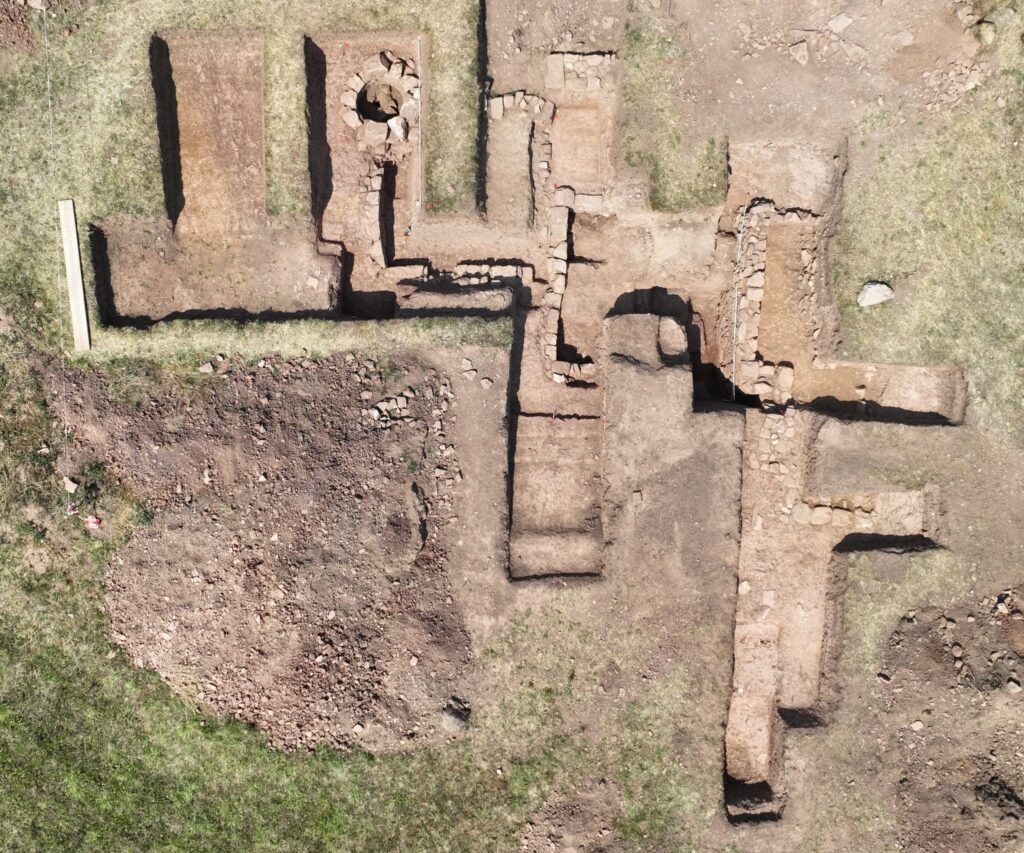
Excavations began on July 13, 2026, and have exposed parts of a building divided into at least three rooms.
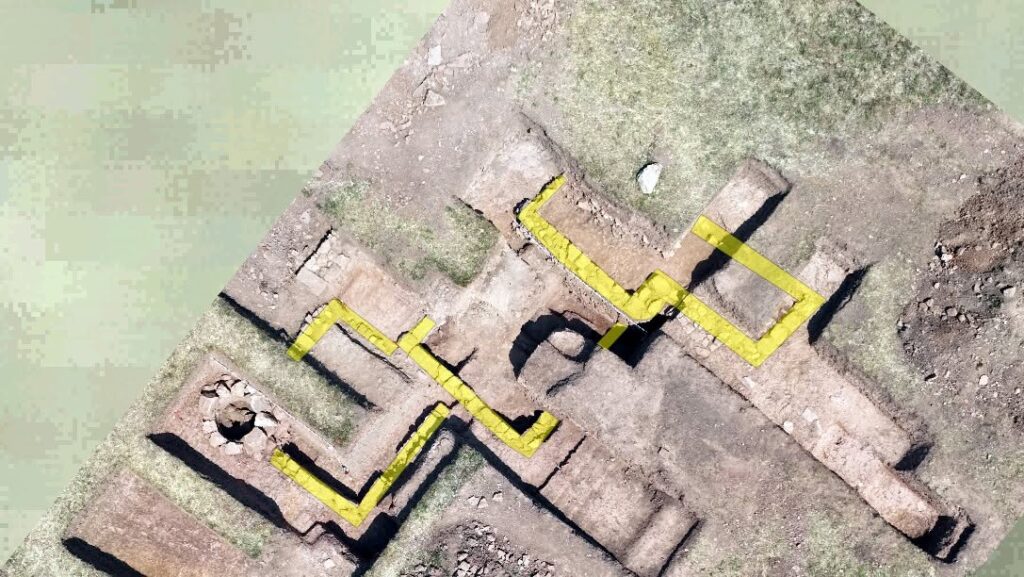
The easternmost room has not yet been fully uncovered, but its walls already show that the building was altered more than once. One wall forms an unusual rounded corner before turning at a right angle and opening into a corridor-like space measuring about 1.3 metres across.
The combination of straight and curved wall sections suggests that the structure developed through several construction phases rather than being completed according to a single plan.
Further excavation will be needed to determine the purpose of the rooms and whether they belonged to a residential, administrative or service building. The current evidence does not establish that Charlemagne personally used the newly discovered structure.
Its location, however, places it within an archaeological landscape closely connected with the Carolingian and Ottonian rulers of medieval Germany.
A Royal Centre Visited by Charlemagne
Königspfalz Salz was part of a network of royal estates used by rulers who travelled continuously through their territories rather than governing from a permanent capital.
These royal centres, known as Pfalzen, provided accommodation, food, administrative facilities and spaces for assemblies, ceremonies and diplomatic meetings.
Historical records document Charlemagne at Salz in 790 and again in 803. During the later visit, he reportedly received delegations connected with Jerusalem, Constantinople and Venice. Other Carolingian and Ottonian rulers continued to use Salz during the following generations.
The precise location of the main palace buildings has nevertheless remained uncertain.
Researchers regard the fortified settlement on the Veitsberg as a leading candidate for the political and residential centre of the wider royal estate. Earlier investigations revealed massive defensive walls, traces of buildings and objects linked to elite occupation and specialised craft production.
The newly discovered multi-room building now adds direct evidence for substantial architecture inside the enclosure.
Everyday Infrastructure Behind Royal Power
The cistern is less visually impressive than a throne room or palace chapel, but it reveals something equally important: how an early medieval royal centre functioned from day to day.
Royal authority depended on practical systems capable of supporting large groups of people. Water had to be collected, food stored, animals maintained and visitors housed. The stone-lined cistern shows that those who constructed the Veitsberg complex invested significant labour in creating a reliable internal water supply.
The 2026 excavation is being conducted as a teaching project with students from Friedrich Schiller University Jena, in cooperation with the Bavarian State Office for Monument Protection. It is supported by the municipalities of Salz and Hohenroth and the town of Bad Neustadt.
Public tours are held during the excavation season, allowing local residents to follow the work as archaeologists gradually uncover the layout of the early medieval royal complex.