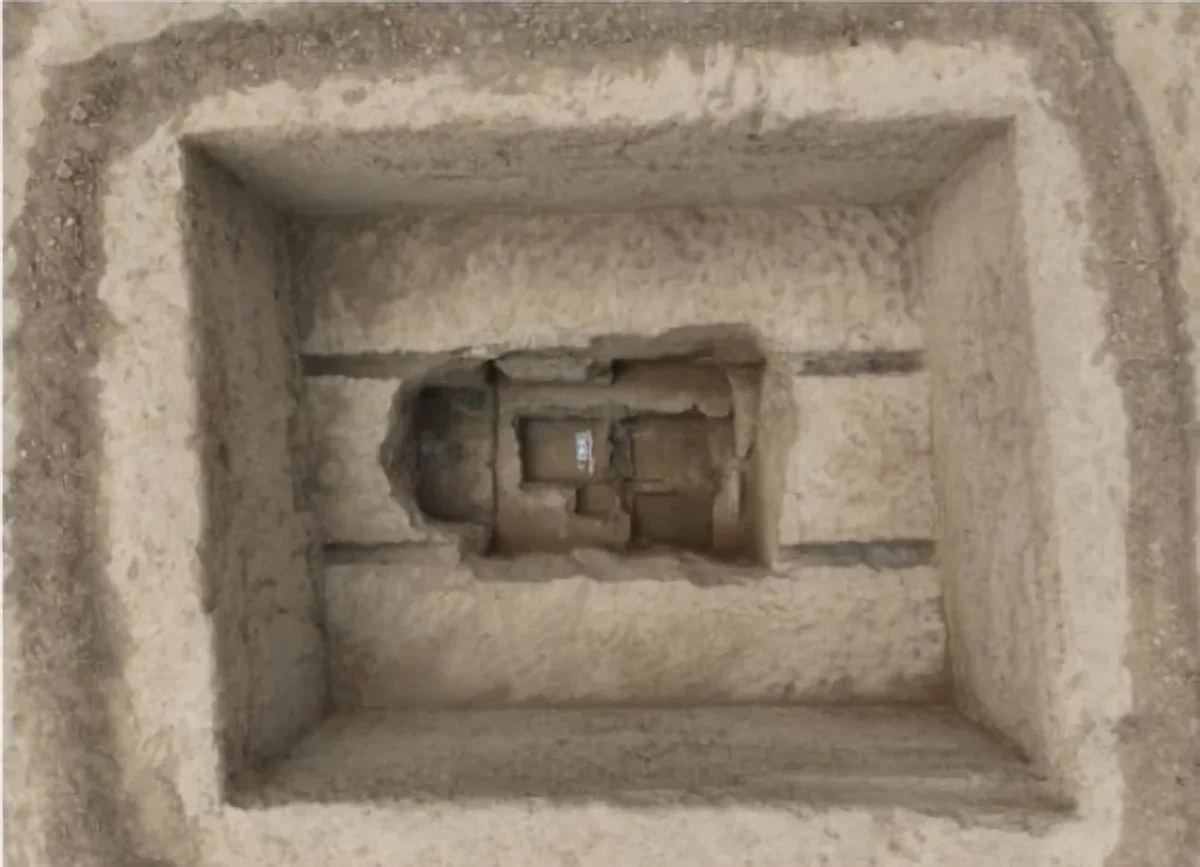
A 2,300-year-old alcoholic beverage discovered inside a sealed bronze vessel in a Qin Dynasty tomb is offering rare scientific insight into ancient brewing techniques. Preserved in near-perfect condition, the liquid provides direct evidence of how early Chinese communities produced and stored fermented drinks long before imperial unification.
A sealed vessel preserved for over two millennia
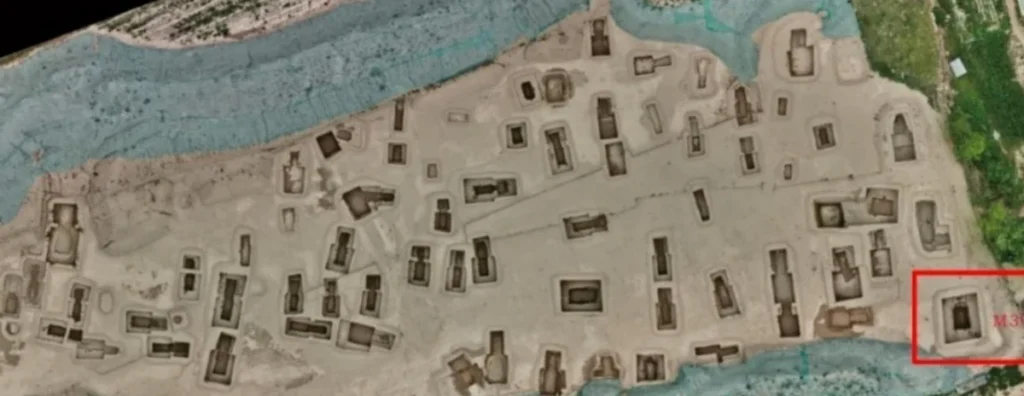
The discovery was made at the Shanjiabao cemetery near Guyuan, in China’s Ningxia Hui Autonomous Region. The burial site, dating to the Warring States period, includes more than 180 tombs linked largely to Qin soldiers and local residents living along a strategic frontier zone.
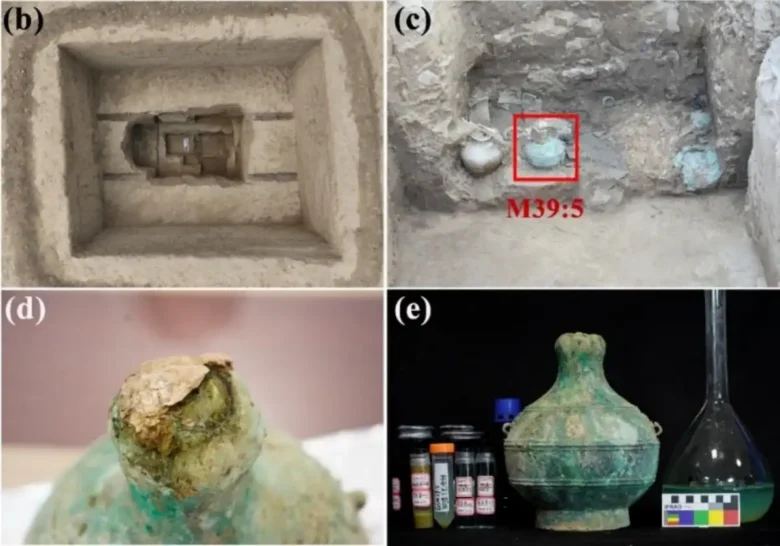
In tomb M39, archaeologists uncovered a bronze bottle with a distinctive garlic-shaped neck, a form closely associated with alcohol storage in Qin culture. The vessel had been carefully sealed using a two-layer method: a textile barrier inside and an արտաքին clay coating mixed with organic material.
Inside, researchers found around 3.7 liters of liquid. Its pale bluish-green color and lack of odor suggested unusual stability rather than contamination.
Scientific analysis confirms a complex fermented drink
To identify the substance, a research team led by Ruru Chen carried out a detailed laboratory investigation using multiple analytical methods. These included Fourier-transform infrared spectroscopy, high-resolution liquid chromatography–mass spectrometry, metabolomics, and microfossil analysis.
The results showed that the liquid contained more than 2,400 organic compounds, ranging from amino acids and peptides to alcohols, esters, carbohydrates, and plant-derived molecules. This level of chemical complexity ruled out the possibility of groundwater infiltration.
Instead, the composition clearly pointed to a deliberately produced fermented beverage.
Millet-based brewing and early fermentation expertise
The analysis revealed that the drink was primarily made from broomcorn millet (Panicum miliaceum), supplemented by wheat or barley from the Triticeae group. This combination indicates a structured brewing process rather than a simple or accidental fermentation.
Evidence also suggests the use of qu, a traditional fermentation starter still used in Chinese alcohol production. Chemical markers and plant microremains indicate that Triticeae grains may have been used specifically to prepare this starter culture.
Further confirmation came from the sediment. Researchers identified more than 8,500 yeast cells, many consistent with Saccharomyces cerevisiae. Their structure, including signs of active reproduction, confirms that controlled fermentation took place.
The presence of amino acids and peptides linked to flavor development suggests that Qin brewers were not only producing alcohol, but actively refining its taste profile.
Archaeology challenges historical records
Ancient Chinese texts such as the Lüshi Chunqiu, compiled in 239 BC, describe early brewing principles and ingredients. However, the Shanjiabao findings do not fully match those accounts.
While historical sources often emphasize sticky grains or sorghum, the analyzed beverage contained neither. Instead, it relied on millet and wheat or barley, suggesting that actual brewing practices were more diverse than written records imply.
This gap highlights the importance of archaeological evidence in reconstructing ancient technologies.
A preservation method that made the discovery possible
The vessel’s sealing system played a critical role in the survival of the liquid. The combination of textile and clay created a stable, low-oxygen environment that protected the contents from contamination and evaporation.
Similar sealing techniques have been documented in other Qin sites and appear to have been well understood at the time. Variations of these methods continued in later Chinese traditions, indicating a long continuity of practical knowledge.
A rare window into early technological sophistication
Published in the Journal of Archaeological Science: Reports, the study represents one of the most comprehensive analyses ever conducted on an ancient liquid preserved in its original container.
The findings show that by the Warring States period, Qin communities had already developed advanced brewing methods, including controlled fermentation, the use of starter cultures, and effective long-term storage techniques.
Rather than a simple drink, this discovery reflects a mature technological system. It connects ancient practices directly to fermentation traditions that remain in use today.