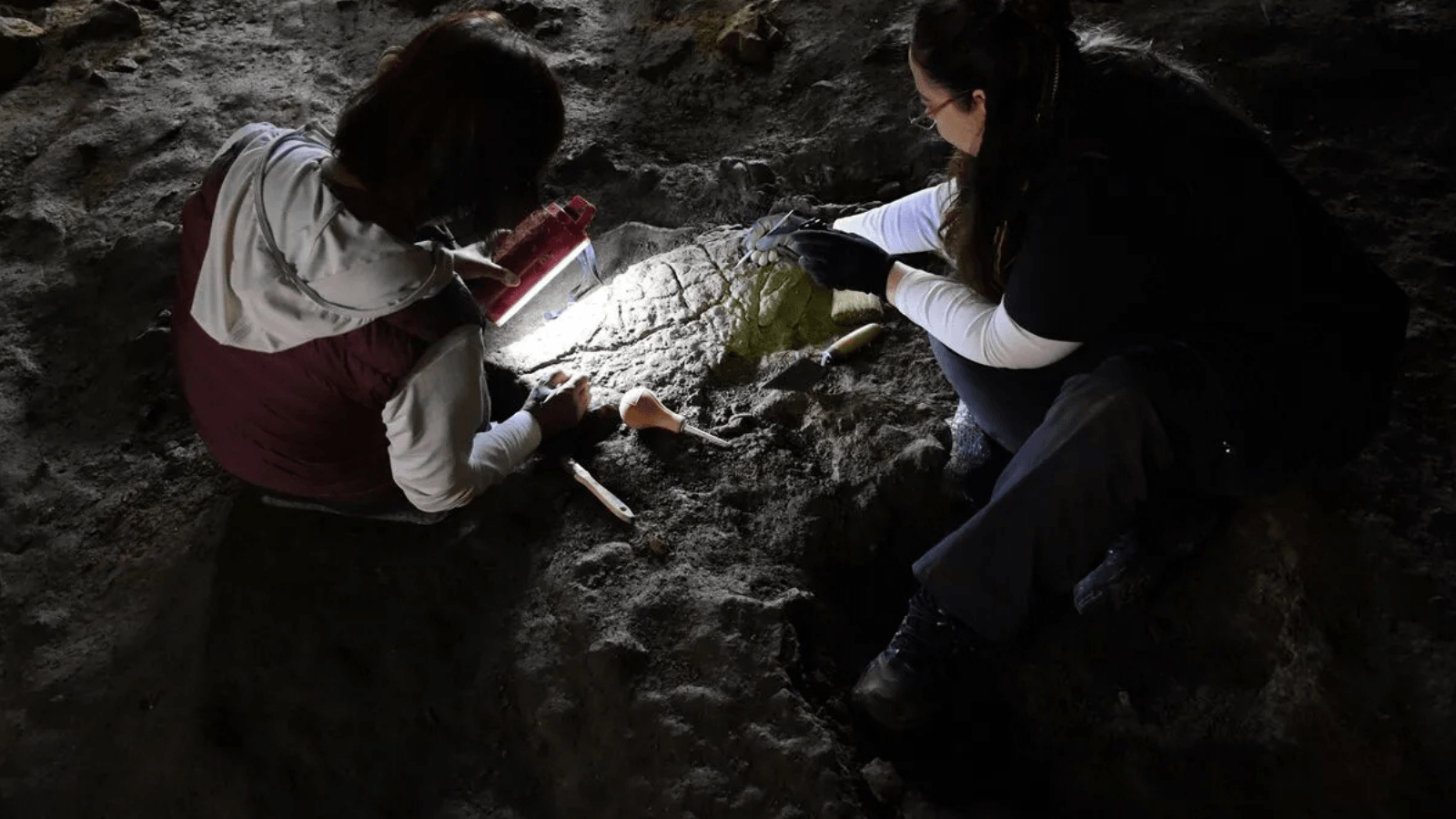
Deep inside a prehistoric cave in northwestern Türkiye, archaeologists have uncovered an unusual collection of about 25 stone turtle figurines, some deliberately pushed into the ground around circular architectural features. The discovery is offering a rare glimpse into the symbolic world of hunter-gatherers who used the site toward the end of the Ice Age.
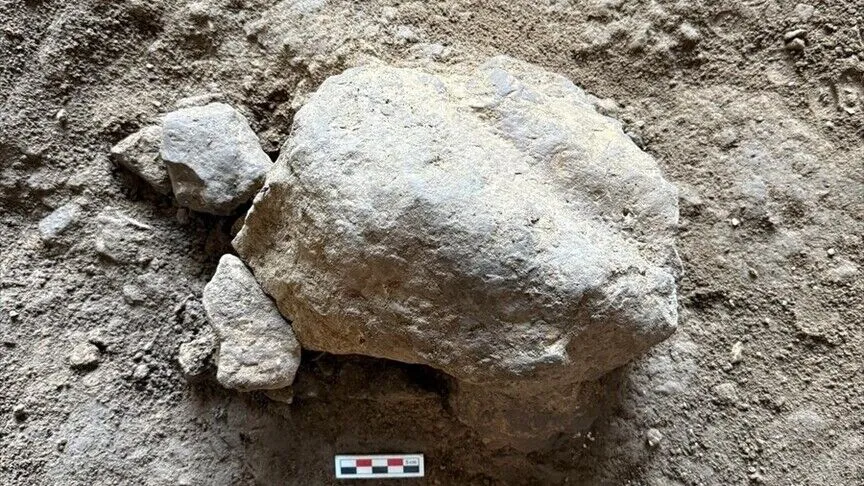
The figurines come from archaeological contexts at Gedikkaya Cave, near İnhisar in Bilecik Province, dating between approximately 14,500 and 11,200 BCE. Most were roughly shaped from limestone, while several were covered with clay. The largest measures about 30 centimeters long and 20 centimeters wide.
Their simplicity may be part of what makes them important. Rather than carefully finished works intended for display, many appear to have been made quickly and placed in specific locations inside the cave, suggesting that the act of producing and depositing them may have mattered more than their artistic quality.
Stone turtles placed around mysterious circles
The 2026 excavations were directed by Prof. Dr. Deniz Sarı of Bilecik Şeyh Edebali University. During work inside the cave, the team identified architectural arrangements forming circular rings, with turtle-shaped objects inserted vertically into the surrounding earth.
That pattern is difficult to explain as ordinary domestic activity. Sarı and his team are therefore investigating whether the turtles functioned as offerings or formed part of repeated symbolic practices carried out inside the cave. Although the interpretation remains preliminary, the combination of repeated animal imagery, deliberate placement and constructed circular spaces gives the discovery a context rarely preserved from the Epipaleolithic period.
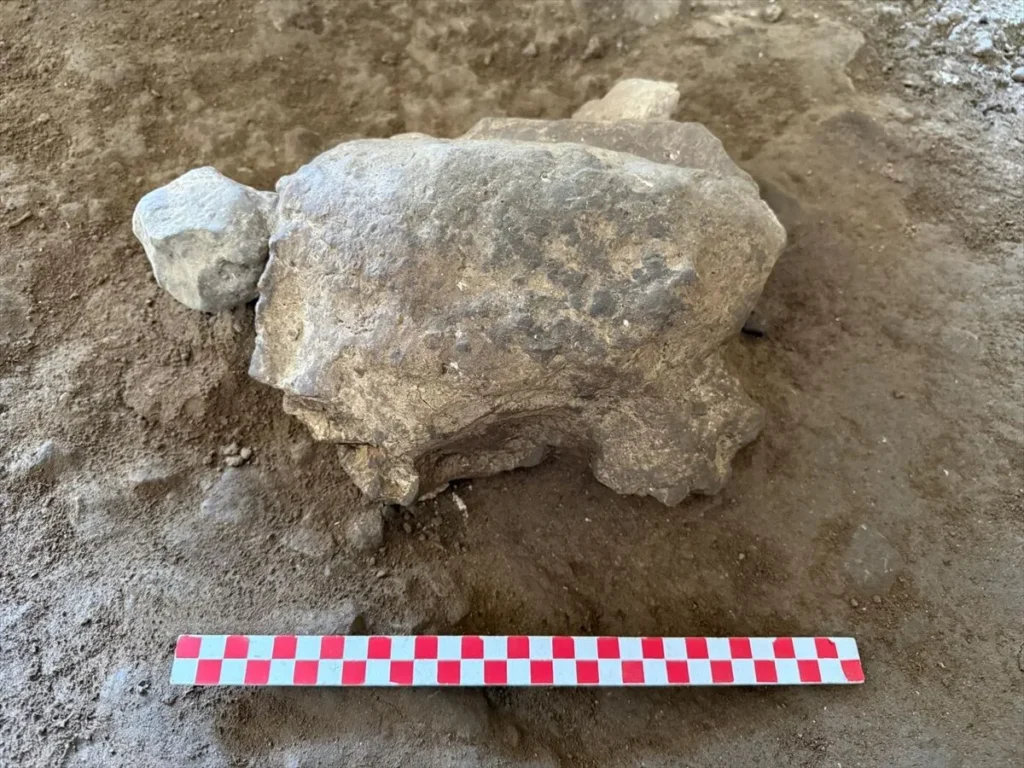
There may also be another clue outside the cave. Researchers noticed that several of the small figures seem to resemble the outline of Gedikkaya Hill itself, leading Sarı to suggest that prehistoric groups may have perceived the rocky hill as turtle-shaped and reproduced that form in miniature inside the cave. If that interpretation proves correct, the figurines could represent more than animals, reflecting a relationship between people, landscape and belief.
Sarı has cautioned that describing this as a fully developed “mountain cult” may be premature. Even so, the recurring turtle forms suggest that the landscape surrounding Gedikkaya could have carried symbolic meaning for the people who returned to the cave thousands of years before farming became widespread in the region.
A cave with a much longer human story
Gedikkaya is not a newly discovered prehistoric site. Archaeological material was first recognized there during surveys in 2017, followed by rescue excavations between 2019 and 2023. The cave extends roughly 180 meters into the limestone hill above the Sakarya River valley and preserves evidence from several widely separated periods of prehistory.
A 2024 study by Sarı published in Belleten established through calibrated radiocarbon dating that the oldest known cultural layer at Gedikkaya reaches back to around 14,500 BCE. The site was subsequently occupied during the Epipaleolithic, Neolithic and Chalcolithic periods, with its latest substantial prehistoric phase dating to around 4500 BCE.
Those early layers are especially significant because they fall within a period when hunter-gatherer communities were moving through Anatolia long before the fully developed farming societies of the Neolithic. Material from Gedikkaya has previously suggested cultural connections stretching toward European Upper Paleolithic traditions on one side and the early Pre-Pottery Neolithic cultures of Anatolia and the Levant on the other.
Later prehistoric communities also appear to have treated parts of the cave as more than simple living space. Previous excavations identified a Neolithic chamber that may have served ritual purposes, while different areas yielded human and animal remains, stone tools, pigments and figurines belonging to several prehistoric phases. The newly discovered turtles suggest that this symbolic use of Gedikkaya may extend much deeper into the site’s prehistoric past.
Why the turtles matter
Animal imagery is one of the few surviving windows into the belief systems of prehistoric hunter-gatherers, but archaeologists rarely recover such objects together with clear evidence showing how they were positioned. At Gedikkaya, the location of the figurines may therefore prove as important as the objects themselves.
The approximately 25 turtles are now being studied and conserved at Bilecik Museum and Bilecik Şeyh Edebali University. Researchers still cannot say exactly what they represented or what happened around the circular structures where they were found. Yet their repeated form and deliberate arrangement suggest that Gedikkaya Cave was not merely a refuge from the prehistoric landscape outside. For the hunter-gatherers who entered it more than 16,000 years ago, the cave—and perhaps the mountain surrounding it—may have belonged to a much larger symbolic world.