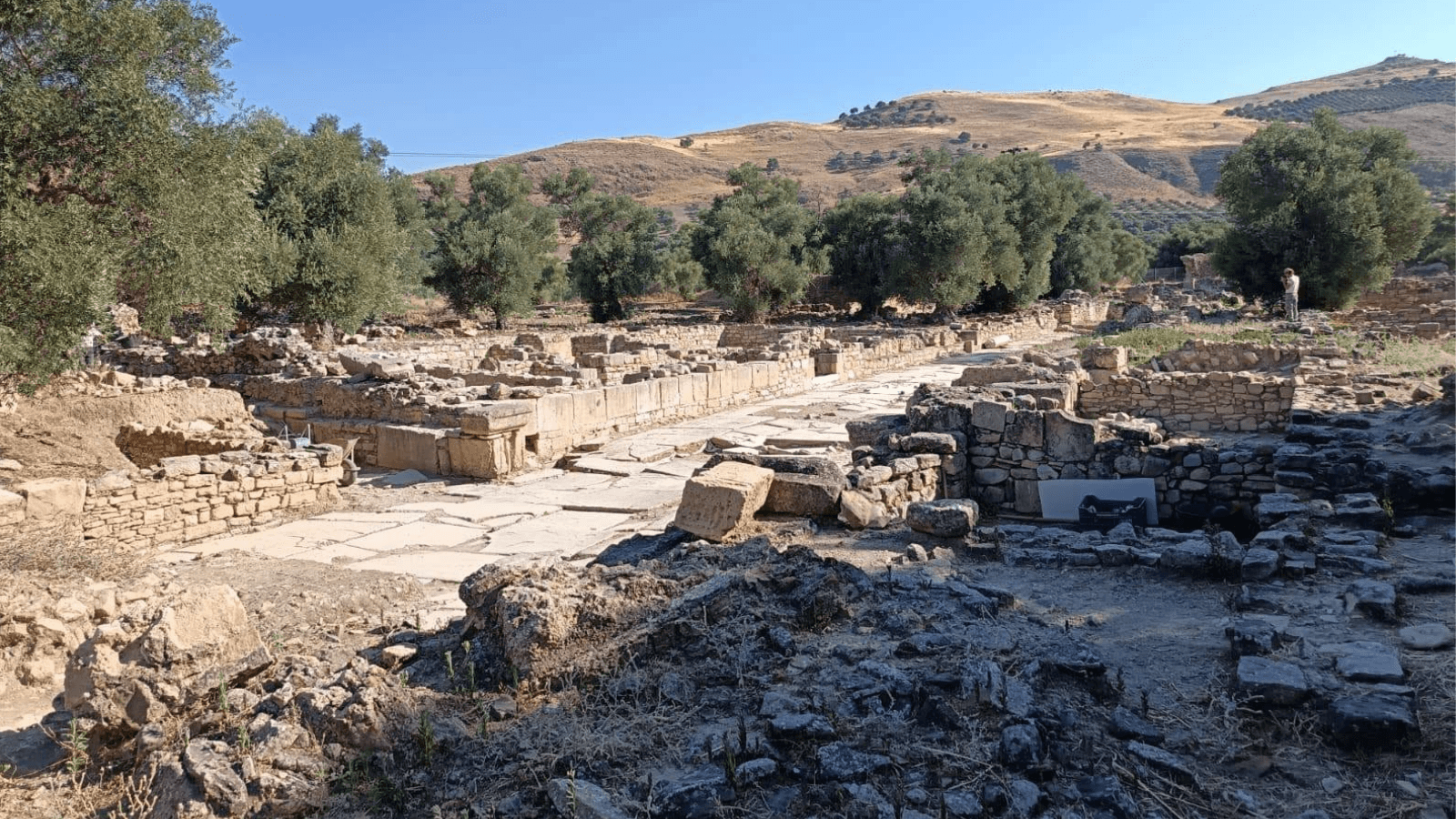
Archaeologists excavating the ancient city of Gortyn on Crete have uncovered about 20 meters of stone paving from one of the city’s main streets, together with evidence that the route was resurfaced several times during the later centuries of Gortyn’s occupation.
The discovery was made along the West Street during the third excavation campaign carried out by the Italian Archaeological School at Athens and the University of Macerata. The latest field season ran from July 20 to August 14.
Excavations focused on an area near the intersection of the West Street and the South Crossroad, which led toward the sanctuary of Apollo Pythios. Researchers exposed approximately 20 meters of paving and identified at least three successive road surfaces dating from the 8th century AD onward.
The sequence provides archaeologists with new evidence for how one of Gortyn’s principal urban routes changed during a relatively late phase in the city’s history.
Three road surfaces beneath Gortyn
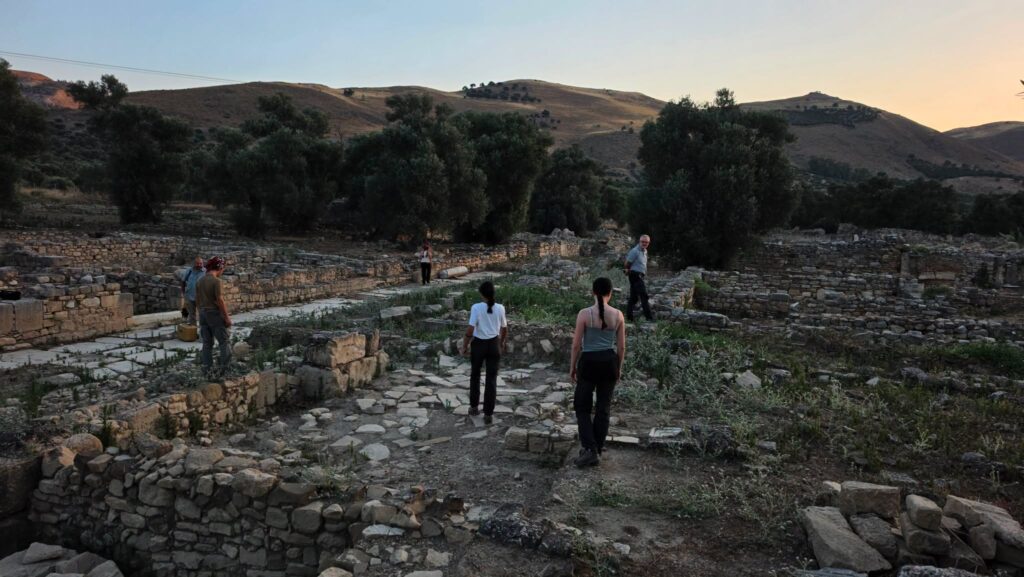
The West Street was one of the important arteries running through Gortyn, and the newly excavated intersection offers a particularly useful location for examining changes in the city’s road network.
Rather than representing a single construction phase, the remains show that the road underwent repeated alterations. The presence of at least three successive surfaces indicates continued activity and modification of the street during the 8th century and later.
This period is important for understanding Gortyn because archaeological research has shown substantial changes in the surrounding neighborhood during the 7th and 8th centuries.
Previous work by the University of Macerata in the same area found that the nearby South Building was a substantial Late Roman structure, probably with a public function. The surrounding district was damaged by an earthquake in the early 7th century and suffered further destruction toward the end of that century. Archaeological evidence nevertheless shows that activity continued into the 8th century and beyond, when parts of the building were reused and reorganized.
Against that background, the newly identified road surfaces provide additional evidence for how this part of Gortyn continued to be reorganized rather than simply abandoned after the end of its monumental Roman phase.
Water-management system found nearby
The excavation also produced another important discovery in the adjacent South Building, where archaeologists uncovered part of a water-management system associated with the city’s latest phase of occupation.
Details about the installation have not yet been released, but its discovery adds another element to the reconstruction of daily life in this sector. Studied together, the street surfaces, buildings and water infrastructure can help researchers determine how people continued to use and adapt the neighborhood as Gortyn’s urban organization changed.
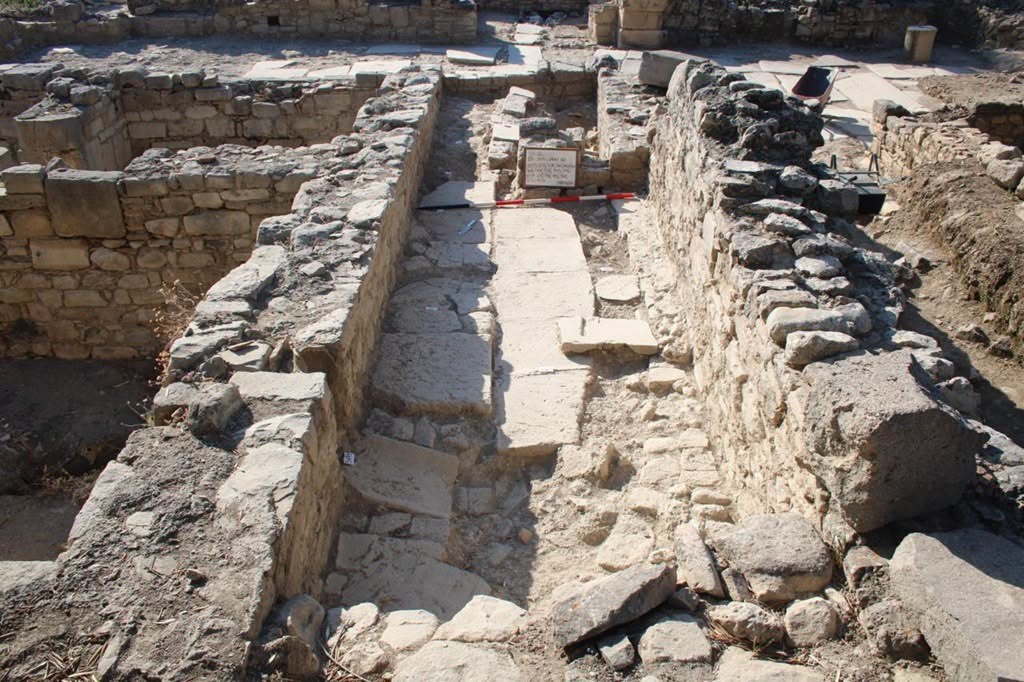
The South Building is particularly significant because it stood directly beside the West Street. Earlier excavations indicate that it was constructed over older Roman-period structures, possibly connected with commercial or artisanal activities, before being extensively transformed in later centuries.
From Roman provincial capital to a changing medieval city
Gortyn had been one of the most important cities in ancient Crete long before the period represented by the newly discovered road surfaces. Under Roman rule, it became the capital of the province of Crete and Cyrenaica, developing into a major administrative and urban center.
Its archaeological remains preserve evidence for many different phases of the city’s history, from Greek and Roman monuments to neighborhoods that continued to evolve during the Byzantine period.
The current research program along the West Street began in 2024, continuing a much longer tradition of archaeological investigation at Gortyn by the Italian Archaeological School at Athens and the University of Macerata.
The latest discoveries shift attention away from Gortyn’s monumental peak and toward a less familiar chapter of its history. The newly exposed paving shows that even in the 8th century, streets in this part of the ancient city were still being altered and reused.
By tracing those successive surfaces alongside nearby buildings and water installations, archaeologists are gradually reconstructing how one of Crete’s greatest ancient cities was reshaped during the later stages of its long urban history.
Cover Image: The newly excavated section of Gortyn’s West Street, one of the main thoroughfares of the ancient city on Crete. Credit: Scuola Archeologica Italiana di Atene (SAIA).