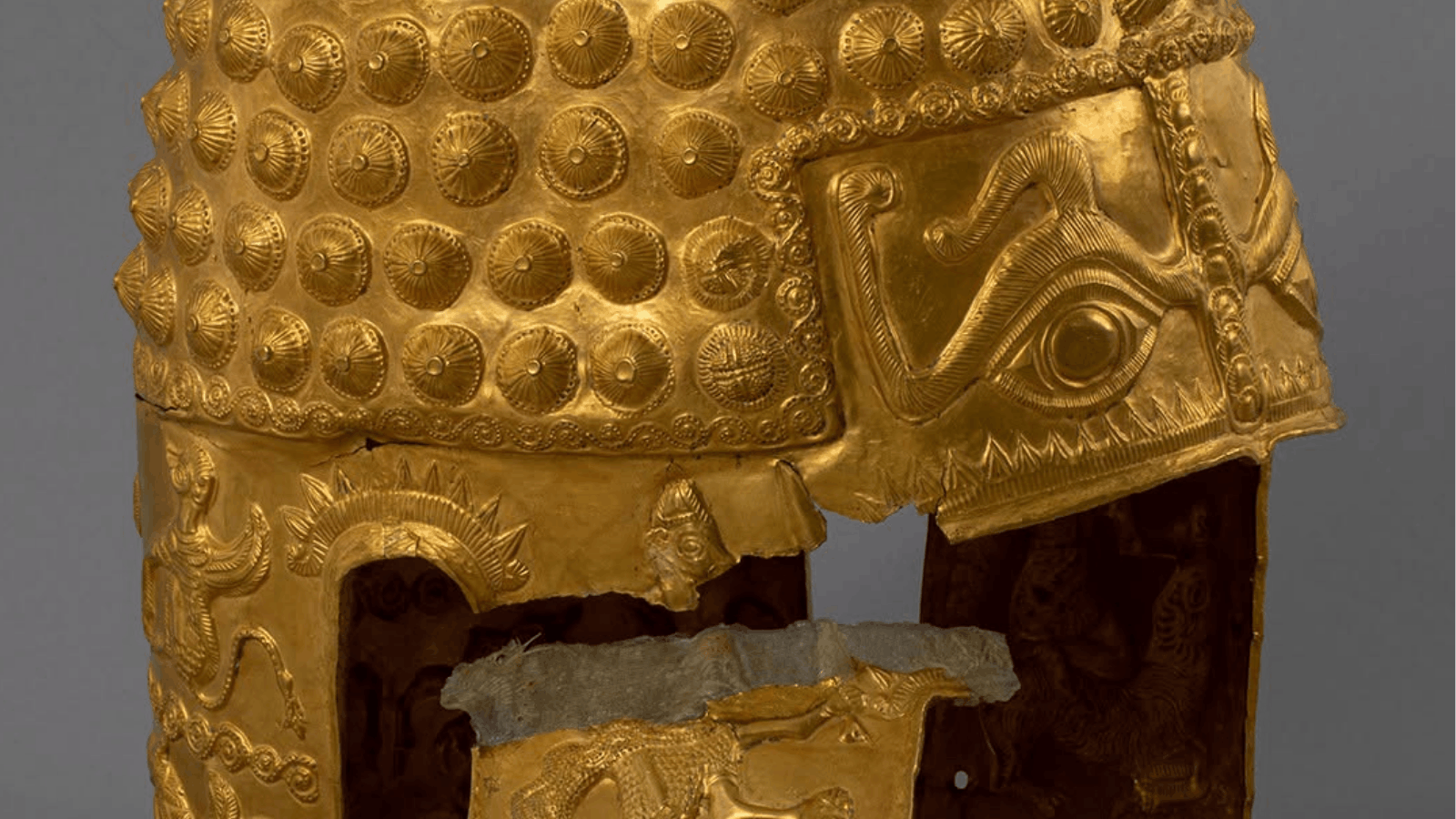
The Coțofenești Gold Helmet, a 2,500-year-old masterpiece of Getic art, is set to undergo restoration in Romania after specialists completed an extensive program of scientific analysis and documentation.
Dating to the mid-5th century BC, the Iron Age artifact is associated with the elite of the ancient Getae. Made of gold, its richly decorated surface combines human and animal figures, protective symbols and ritual imagery within an artistic tradition influenced by both the Greek world and the Scythian cultures of the Eurasian steppe.
The National History Museum of Romania has now received official approval to begin direct conservation and restoration work on the helmet. The first intervention is scheduled to begin on August 17, following months of examinations designed to establish its condition and determine the safest approach to treatment.
A masterpiece of Getic goldwork
The Coțofenești helmet belongs to a small group of richly decorated princely helmets associated with the Getae, who inhabited regions around the lower Danube and the Carpathians during the Iron Age.
Its decoration is among the features that make the object exceptional.
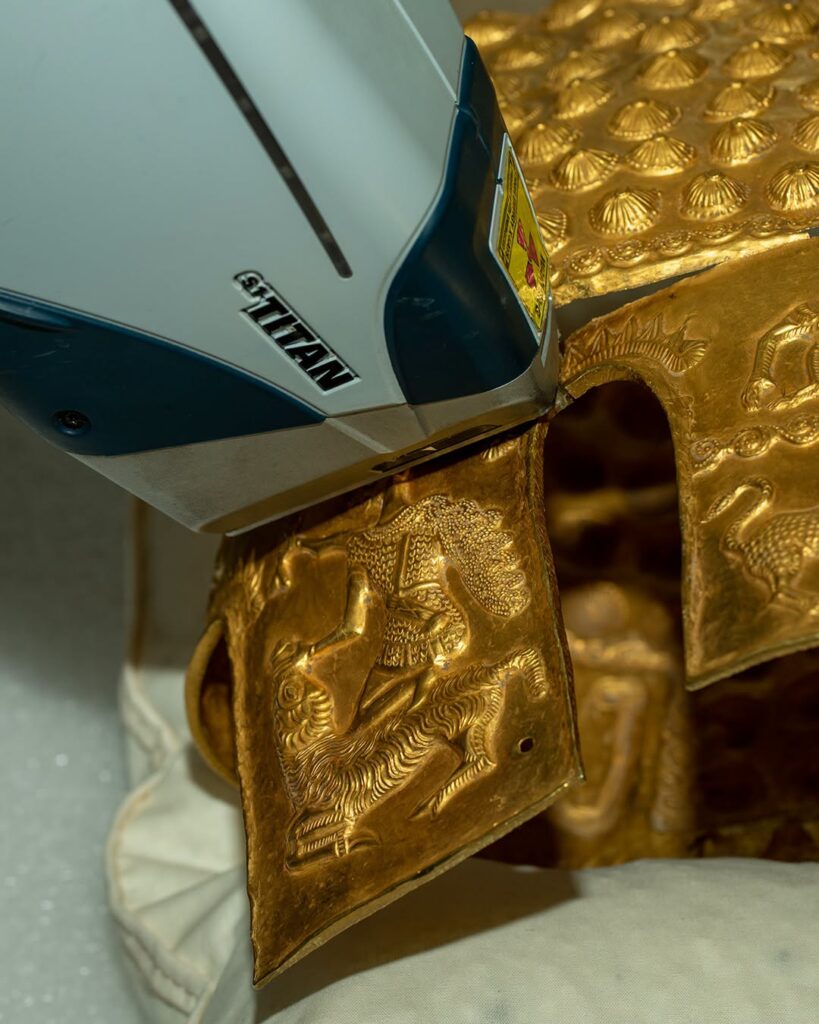
Two large stylized eyes dominate the front of the helmet and are generally interpreted as apotropaic symbols intended to protect the wearer. The cheek pieces depict a kneeling male figure sacrificing a ram while holding a short dagger, while other areas are decorated with fantastic and winged creatures.
The combination of motifs reflects artistic connections extending well beyond the local environment. Greek and Scythian stylistic influences were incorporated into a distinct Getic visual language, illustrating the cultural exchanges that shaped elite art in the region during the first millennium BC.
The helmet was discovered by chance in 1927 near the village of Coțofenești in Romania’s Prahova County. Although part of its upper section was already missing, the object became one of the best-known archaeological treasures in the collection of the National History Museum of Romania.
Scientific analyses prepared the way for restoration
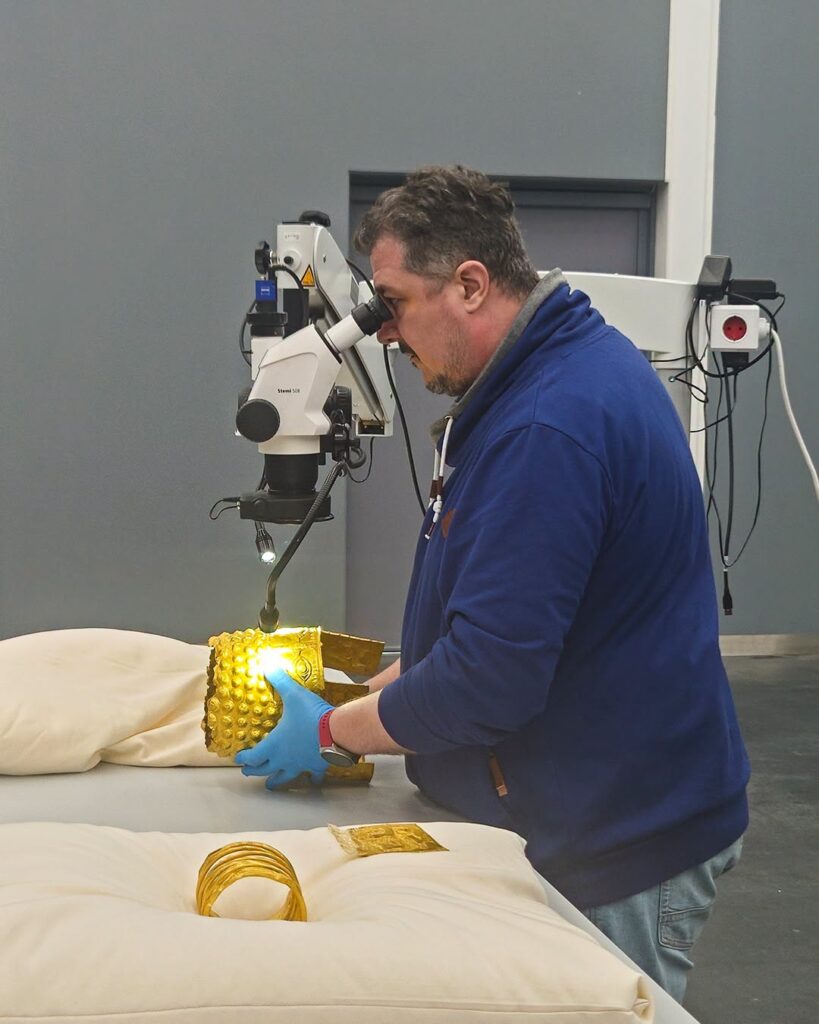
Before any direct intervention, specialists carried out extensive imaging to record the helmet’s present condition in detail and create a reference for each subsequent stage of conservation.
A second phase involved a range of non-invasive physical and chemical investigations, including optical and digital microscopy, X-ray fluorescence spectroscopy, scanning electron microscopy, energy-dispersive X-ray analysis, proton-induced X-ray emission and metallographic examination.
The work was carried out by specialists from the National History Museum of Romania in collaboration with researchers from the Horia Hulubei National Institute for Physics and Nuclear Engineering and experts from the Cultural Heritage Agency of the Netherlands.
The analyses were used to examine the materials and techniques employed in the helmet’s manufacture, assess its state of preservation and identify changes affecting its surface and structure.
Based on those results, specialists developed a conservation strategy guided by minimum intervention, material compatibility, reversibility and detailed documentation. Romania’s National Commission of Museums and Collections subsequently approved the proposed restoration program.
Restoration will proceed in stages
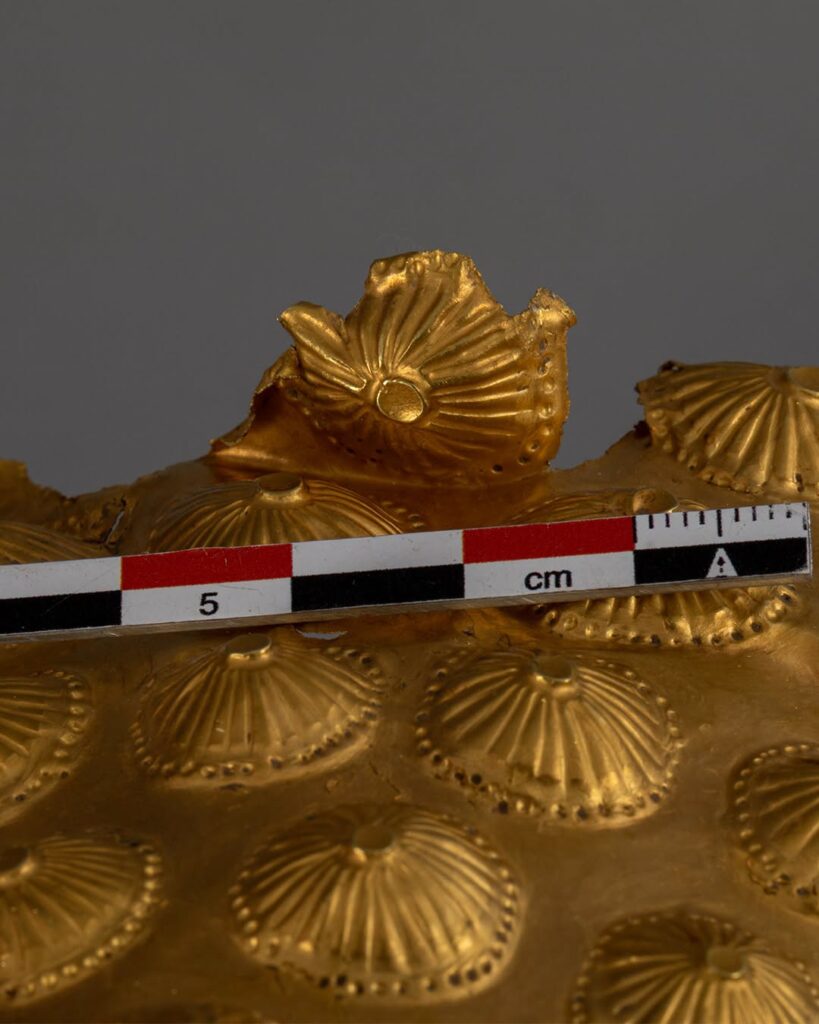
The first phase of direct treatment, planned for August 17 to September 15, 2026, will focus on removing residues of epoxy resin left from earlier restoration work. The material will be treated locally and gradually to minimize stress on the ancient gold.
A later stage will address areas of deformation. Conservators plan to make controlled adjustments using specially designed supports rather than forcing the metal back into shape.
The final phase will concentrate on structural stabilization, including treatment of damaged areas around the neck guard and left side of the helmet and the reattachment of the right cheek piece.
The restoration comes several months after the helmet returned to Romania following one of the most closely watched archaeological theft cases in Europe.
It was stolen from the Drents Museum in the Netherlands in January 2025 while on loan for an exhibition, together with three ancient Dacian gold bracelets. The helmet and two of the bracelets were recovered in April 2026. The recovered objects were subsequently returned to Romania, where specialists began assessing their condition before preparing the restoration program.
The National History Museum of Romania said it will continue to publish updates as conservation and restoration work on the Coțofenești helmet progresses.