
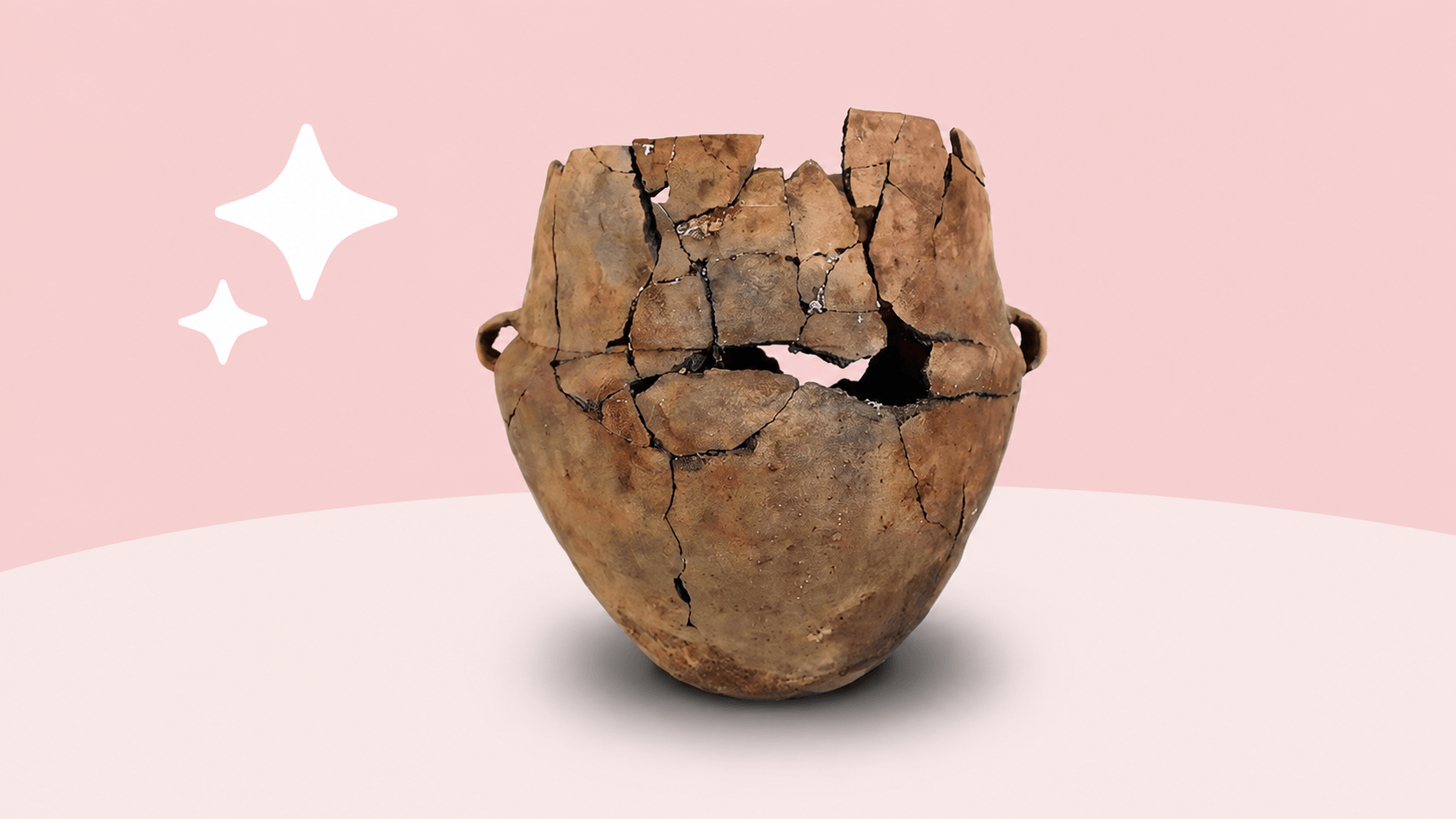
Archaeologists in southern Sweden have uncovered a prehistoric burial site where stones were arranged to form the outline of a small ship. No actual vessel was found, but the approximately three-metre-long stone setting contained one of four remarkably well-preserved cremation urns recovered at the site.
The burial complex was discovered near Domsten, north of Helsingborg, during archaeological monitoring connected with the Öresund electricity cable project. What initially appeared to be an ordinary stone mound gradually revealed a carefully planned funerary monument that may be between 2,500 and 3,000 years old.
The stone outline of the ship was accompanied by two circular stone arrangements. Archaeologists believe these structures may once have been covered with soil or turf, creating a low burial mound that later disappeared from the landscape.
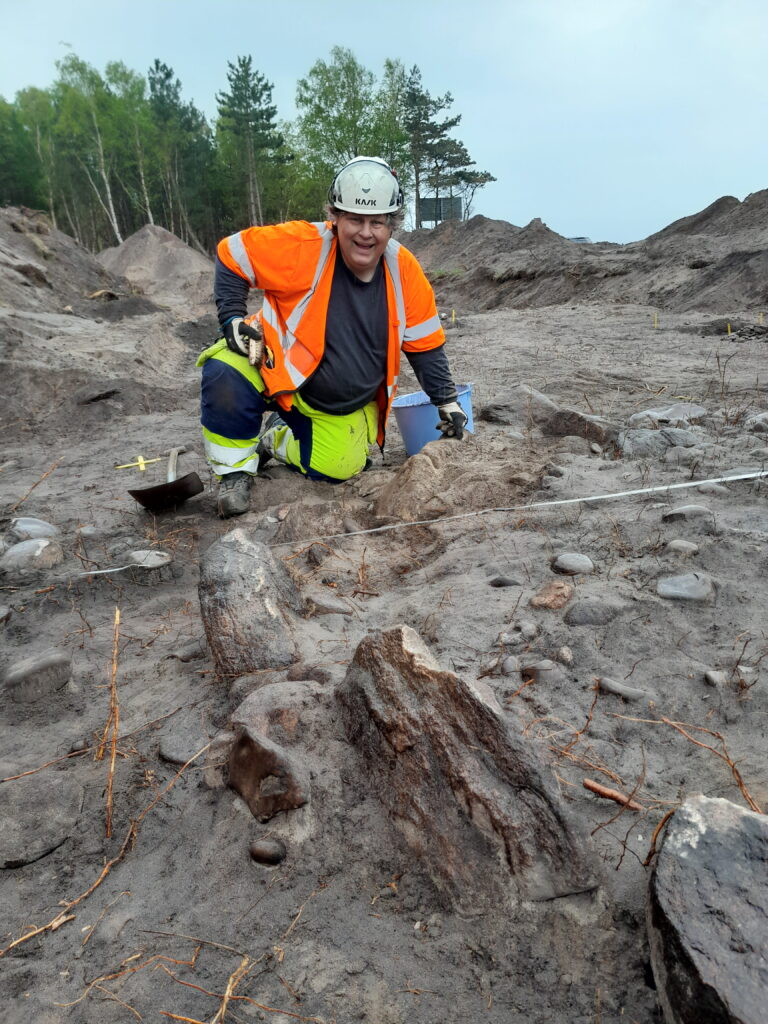
Four urns protected inside stone chambers
Four cremation urns were recovered from different parts of the burial complex. Their condition allowed archaeologists to lift them with their contents intact, preserving the internal arrangement of bones and any objects placed with the dead.
The urns had been carefully installed inside small chambers built from flat stones. Upright slabs surrounded the vessels, while other stones were placed beneath and above them, effectively forming protective stone boxes.
One urn was discovered inside the ship-shaped setting. Next to it was a small, soot-darkened pit containing fragments of burned bone. Two other urns stood side by side beneath a shared covering stone within the inner stone circle, suggesting that they may have been deposited during the same burial event.
The relationship between the individuals remains unknown. The paired urns could belong to people who were closely connected, but researchers will need to examine the cremated remains before determining their ages, sexes or possible biological relationships.
X-rays reveal burned bones and a metal object
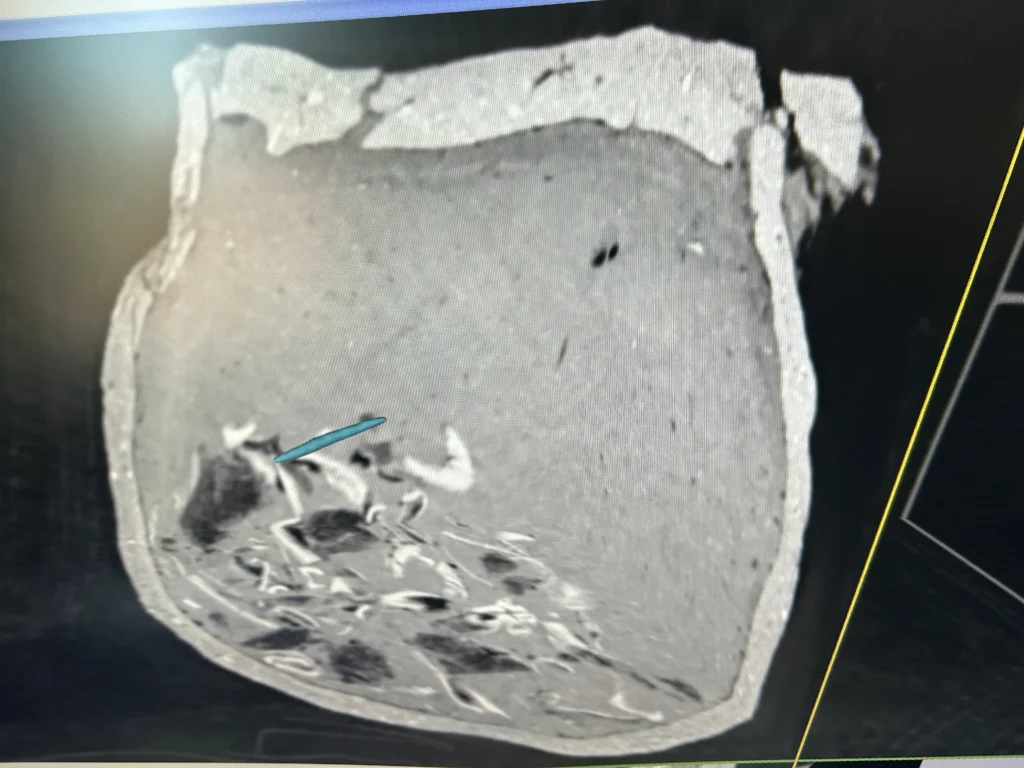
Before opening the fragile vessels, specialists examined them using X-ray imaging. The scans revealed fragments of cremated human bone and at least one unidentified metal object concealed inside an urn.
The imaging allows researchers to study the position of the contents before the vessels are emptied. During the next stage, specialists will carefully remove the cremated remains, look for grave goods and collect suitable samples for scientific dating.
Archaeologist Per Jansson of Sydsvensk Arkeologi said the team hopes the bones are sufficiently preserved to estimate the age and sex of the people buried at the site. Small burial objects overlooked during the initial examination may also emerge as the urns are studied in the laboratory.
The monument has not yet been directly dated. Its construction suggests that it may belong to the Bronze Age or the transition into the Pre-Roman Iron Age, placing it broadly within the period from approximately 1000 to 500 BCE. Radiocarbon analysis will be needed to establish a firmer date.
Part of a larger prehistoric cemetery
The newly discovered graves may form part of a much larger burial landscape. In 2019, archaeologists working about 100 metres away uncovered another stone monument containing one cremation burial and two urn graves.
Those earlier burials were dated to approximately 1400–1050 BCE. Similarities between the two discoveries suggest that the area around Domsten may have been used for burials over an extended period, possibly by several generations of the same prehistoric community.
Researchers have also identified indications of additional stone settings or cairns near the excavation. However, archaeological work was restricted to the corridor affected by the infrastructure project, leaving the full extent of the possible cemetery unknown.
A carefully constructed place for the dead
Although the Domsten monument contains only a symbolic stone outline, Scandinavia also preserves burials constructed around actual vessels. Recent research into a 1,300-year-old ship burial in Norway has shown that elaborate maritime burial traditions developed before the conventional beginning of the Viking Age.
Stone settings shaped like ships are known from prehistoric Scandinavia and were commonly connected with burials. They were created by arranging stones to reproduce the outline of a vessel, sometimes on a monumental scale and sometimes, as at Domsten, in a much smaller form.
The Domsten structure appears to have formed part of a more complex burial arrangement rather than standing alone. Its ship-shaped outline, surrounding stone circles and carefully protected urns show that the dead were placed within a deliberately organized ceremonial space.
Svenska kraftnät first announced the discovery during the summer and updated its account on August 26, 2026, as the investigation entered the laboratory phase. Analysis of the cremated remains and the unidentified metal object may now reveal who was buried at Domsten and whether the four urns represent a single event or several burials carried out over time.
Cover Image: A prehistoric cremation urn recovered from the burial complex near Domsten in southern Sweden. Credit: Svenska kraftnät