
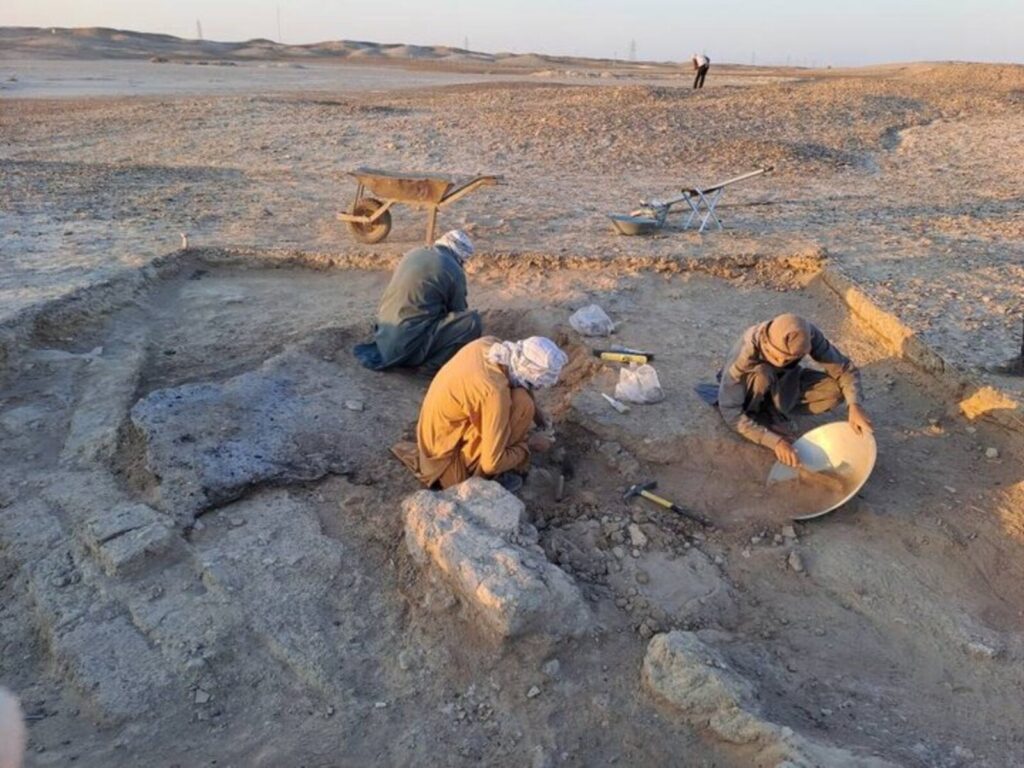
Archaeologists at Shahr-i Sokhta, Iran’s ancient Burnt City, have uncovered a second 4,600-year-old game, but unlike the famous gaming set discovered there nearly half a century ago, this one has no surviving board.
The discovery was made during the 21st excavation season at the Bronze Age city in southeastern Iran. Excavation director Rouhollah Shirazi says the newly recovered game is completely different from the one previously known from Shahr-i Sokhta, raising two possibilities: its pieces may have been arranged directly on the ground, or the original playing surface may have been made from a perishable material that disappeared long ago.
The same excavation season has also produced an engraved bone comb, preserved traces of textile, leather and egg, previously undocumented burial forms and new evidence from residential areas. Together, the finds offer a more personal view of a city usually discussed in terms of urban development, craft production and long-distance cultural connections.
Burnt City Had Already Revealed One Remarkable Game
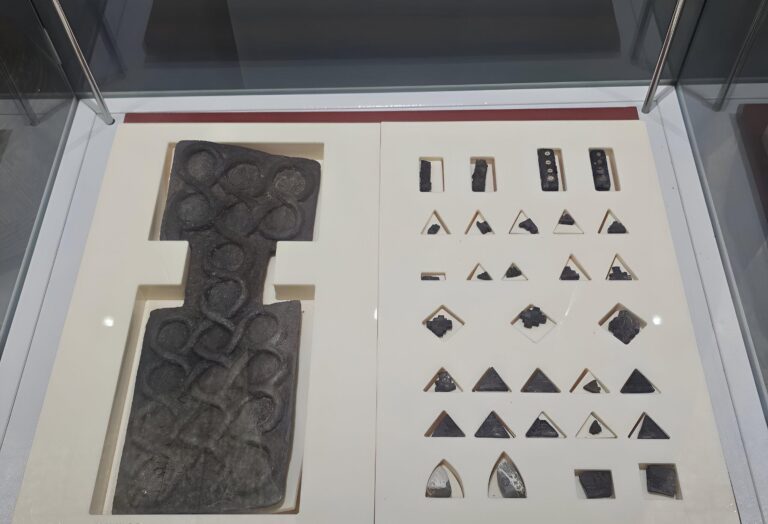
Shahr-i Sokhta already occupies an important place in the archaeology of ancient games. During Italian excavations before the 1979 Iranian Revolution, archaeologists recovered an elaborate gaming set from Grave 731, including a decorated wooden board, gaming pieces and dice.
Generally dated to around 2600–2400 BC, that assemblage has often been compared with games known from Mesopotamia, particularly the Royal Game of Ur. Because no written rules survived, researchers have spent decades trying to understand how it was played, with recent studies proposing reconstructions based on the surviving board, pieces and comparisons with other ancient games.
The new discovery is not another example of that set. Shirazi has described it as the second ancient game identified at Shahr-i Sokhta and emphasized that it differs from the first in both form and surviving components.
Most strikingly, no board was recovered with it. Archaeologists therefore cannot yet determine whether the game originally required a separate playing surface, whether that surface was made of organic material, or whether the pieces were positioned directly on the ground according to rules now lost.
Detailed publication of the discovery will be needed before its rules, number of pieces and precise archaeological context can be reconstructed. What can already be said is that Shahr-i Sokhta now appears to preserve evidence for more than one form of gaming during its Bronze Age occupation.
Why a Second Game Matters
A single gaming set might represent an unusual possession, a prestigious grave object or a rare imported idea. A second, structurally different game raises a broader question: how common was gaming within the social life of Shahr-i Sokhta?
The evidence does not yet show who played these games or in what circumstances. Different games could have involved different groups, rules or social settings, but such interpretations remain speculative until the newly recovered material is fully studied.
Even so, the discovery adds an aspect of life that archaeology often struggles to recover. Houses, workshops and burials reveal how people lived and worked, while gaming material offers a glimpse of how they may also have spent time interacting, competing or entertaining themselves.
Its archaeological context may eventually be just as important as the game itself. If the objects were associated with a burial, researchers will also need to consider whether they reflected personal identity, status, memory or funerary practice rather than everyday recreation alone.
A Decorated Bone Comb Points Beyond the City
The game was not the only unusual object recovered during the latest excavation season. Archaeologists also discovered an engraved bone comb which, according to Shirazi, currently has no close known counterpart from the immediate region.
Comparable examples have been reported from archaeological sites in Central Asia. The comb could therefore contribute not only to studies of grooming and personal appearance but also to research into manufacturing traditions, decoration and cultural connections.
Whether it was locally produced, copied from a distant tradition or brought to Shahr-i Sokhta remains unknown. Its material, carving technique and decorative pattern will therefore be important in determining how it fits within the wider cultural world of the city.
That wider world was part of what archaeologists call the Helmand Civilization, a Bronze Age cultural complex centered on the Helmand River basin across southeastern Iran and southwestern Afghanistan. Shahr-i Sokhta was one of its largest urban centers, while Mundigak in present-day Afghanistan was another major settlement within the same cultural sphere.
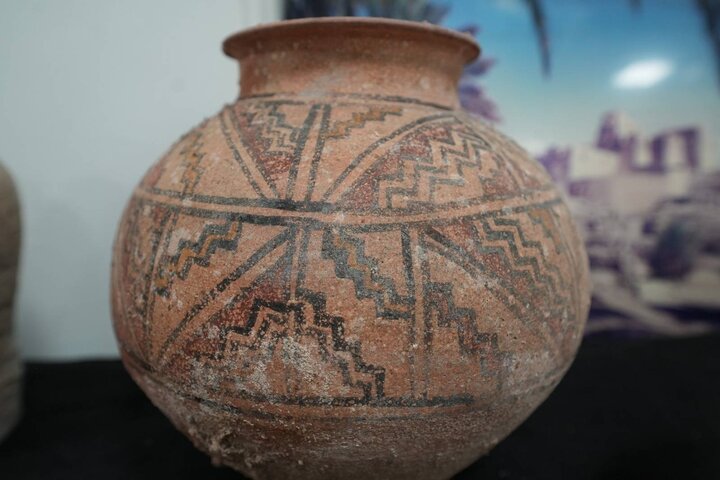
Shahr-i Sokhta’s position in the Sistan basin placed it within networks connecting regions toward Central Asia and the Indus Valley with the Iranian plateau and areas farther west. Archaeological finds from the city point to extensive cultural contacts, although the scale and organization of long-distance exchange remain subjects of continuing research.
A City Where Work and Daily Life Overlapped
The 21st excavation season has also complicated earlier interpretations of the city’s residential areas. Archaeologists working in the northeastern part of the settlement identified two architectural phases together with animal remains, tools, stone-working debris, animal figurines and hearths.
Shirazi argues that this evidence does not support interpreting the area as a purely industrial quarter. Instead, some forms of craft production appear to have taken place alongside ordinary domestic activities, suggesting that work and household life were more closely intertwined than a simple division between “residential” and “industrial” zones would imply.
Shahr-i Sokhta was founded around 3200 BC and remained occupied through four principal periods until approximately 1800 BC. Its archaeological remains extend across roughly 273 hectares and include residential, manufacturing, monumental and burial areas, while more than 100 ancient settlements have been identified across the surrounding Sistan landscape.
Its scale helps explain why the city became one of the principal centers of the Helmand cultural world. Yet the latest discoveries draw attention away from urban planning and toward the people who lived within that landscape.
Eggshell, Leather and Cloth Survived for Thousands of Years
Among the most fragile finds from the current excavations are traces of egg, textile and leather. Such organic materials usually disappear long before archaeologists arrive, but Shahr-i Sokhta’s dry desert conditions have allowed exceptional traces of everyday life to survive alongside pottery, architecture and human burials.
These remains may eventually reveal details about diet, clothing, craft techniques and funerary practices that cannot be reconstructed from stone and ceramics alone. The current research therefore includes radiocarbon dating, OSL sampling, physical anthropology and ancient-DNA studies alongside conventional excavation.
Shahr-i Sokhta has long been known for weaving, decorated pottery, stone working and complex burial practices. The new game, engraved comb and preserved organic materials add another dimension to that picture, showing a city whose inhabitants did more than produce, trade and build.
The second game is especially significant because it suggests that gaming at Burnt City may not have been represented by a single exceptional object. Once the new discovery is fully published, archaeologists may be able to determine whether different forms of play were part of a broader social tradition within one of the largest cities of the Helmand Civilization.
Cover Image: Archaeological excavations at Shahr-i Sokhta, the Bronze Age settlement known as the Burnt City in southeastern Iran. Credit: Tehran Times