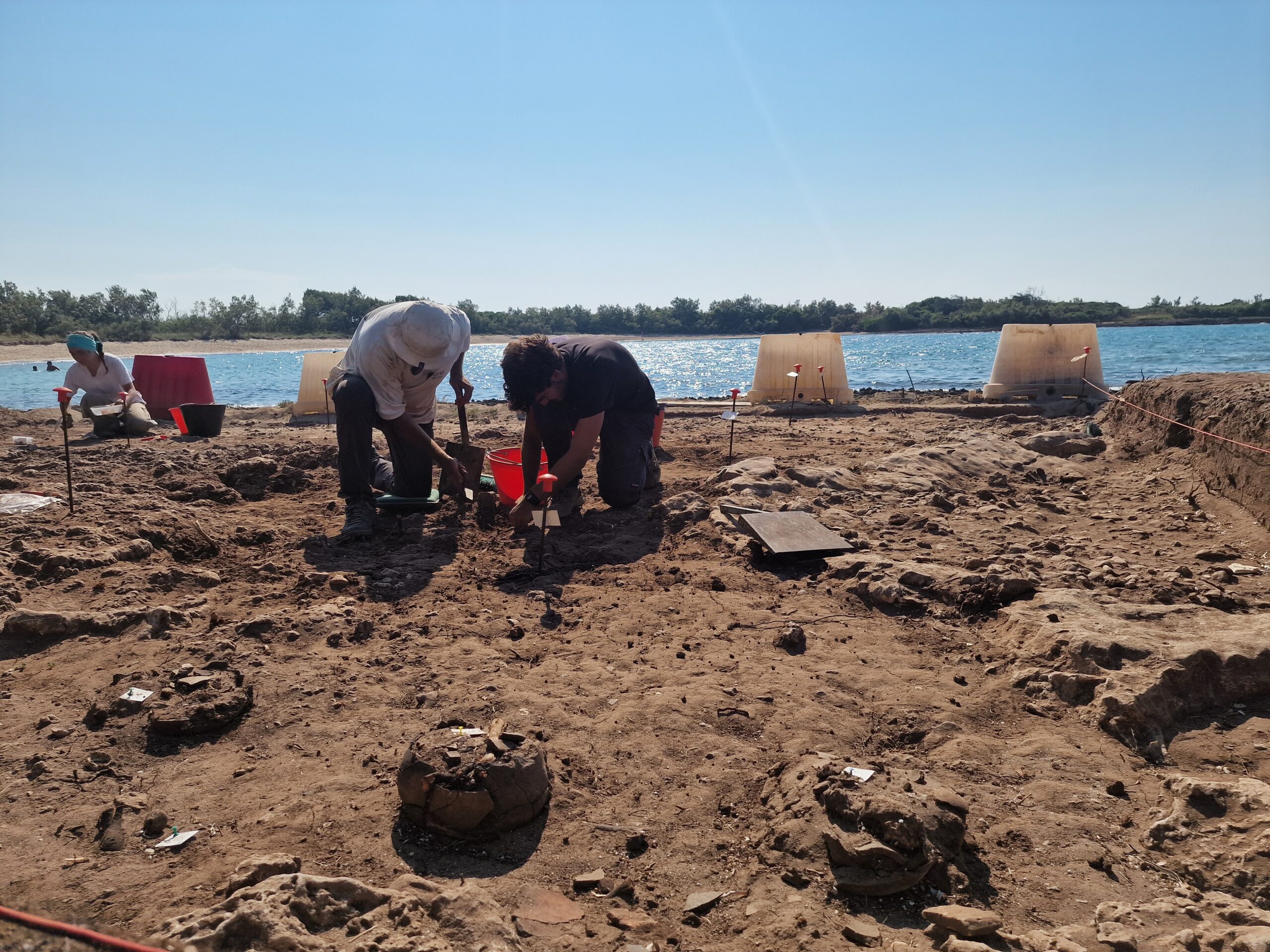
Beneath the sand of Torre Guaceto, on Italy’s Adriatic coast, archaeologists are uncovering a cemetery where the dead were burned, gathered into ceramic urns, and buried with care more than 3,000 years ago.
The 2026 excavation season has added 23 new cremation graves to the site, bringing the total number of burials found in the Late Bronze Age necropolis to 131. The cemetery lies inside the Torre Guaceto Nature Reserve, near Brindisi in southern Italy, and dates broadly to the 13th–12th centuries BC.
Urns, Fire, and Ritual Care
The importance of the discovery is not only the number of graves. The layout, the urns, the ritual vessels, and the traces left by fire are beginning to show how one coastal community organized death at a time when the Adriatic connected southern Italy with wider Mediterranean and European networks.
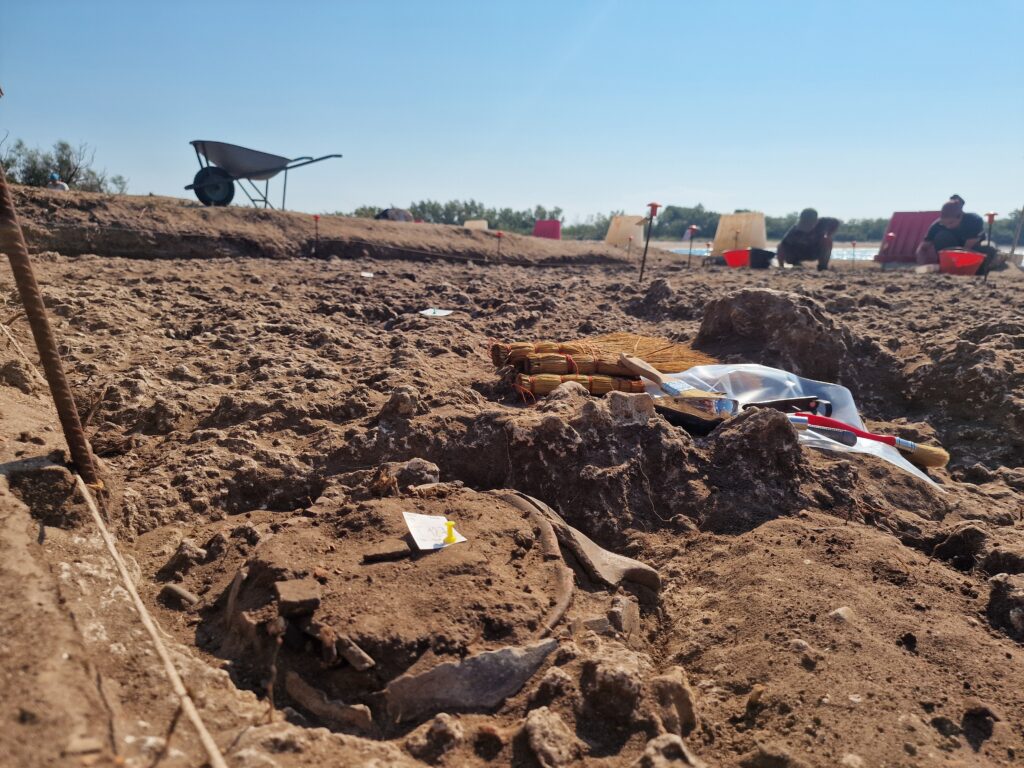
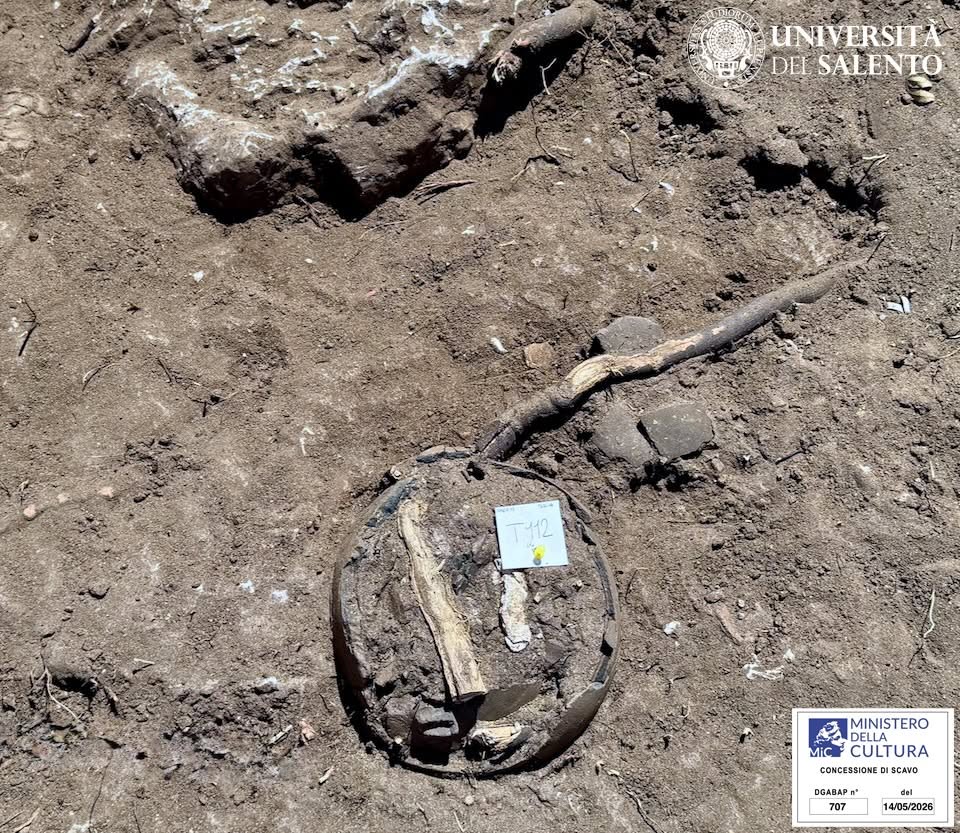
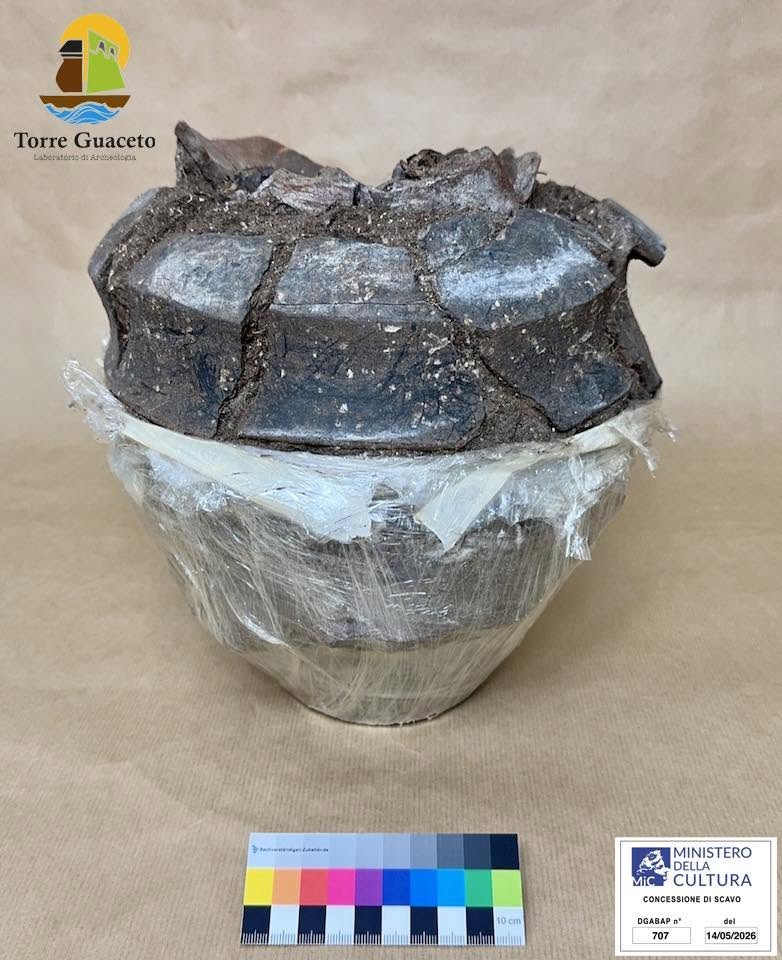
Many of the burials were found in good condition. Cremated human remains had been placed inside ceramic urns, often covered with bowls and set into pits cut into the rocky ground. Some graves appear in small ordered groups, arranged in rows of three or four. This suggests that the cemetery was planned and remembered, not used casually or at random.
The latest campaign opened about 150 square meters of new ground. Together with previous seasons, around 750 square meters of the necropolis have now been investigated. Even so, the cemetery appears to continue along the present coastline, leaving open the possibility that more graves remain beneath the sand.
What the Vessels May Still Hold
Several ritual vessels were also recovered near the burials. Some may contain residues from a fermented cereal-based drink, possibly an early form of beer.
That interpretation remains provisional. The vessels will need micro-excavation and laboratory analysis before researchers can say what they held.
Bronze Pins Seen Through CT Scans
Another detail comes from CT scans of urns found in earlier seasons. Inside some burials, researchers identified bronze pins. These may have fastened cloth used to wrap the cremated bones after the funeral pyre.
Their bent and heat-affected condition fits with a ritual sequence in which the body was burned first, then selected remains were gathered and placed in the urn.
An Adriatic Community in Southern Italy
The Torre Guaceto finds also point beyond the cemetery itself. Some objects show links with northern Italian cultural traditions, including the Padua-Alpine area. In the Late Bronze Age, such connections matter. They suggest that this part of southern Italy was not isolated, but belonged to a wider Adriatic world shaped by movement, exchange, and shared practices.
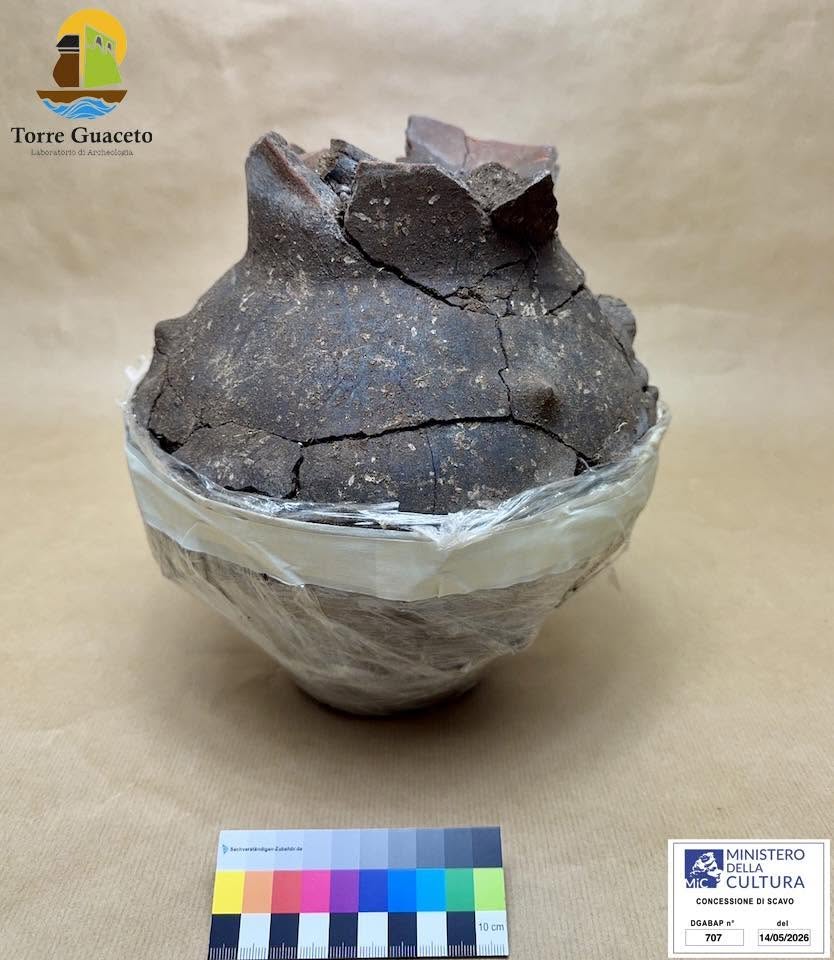
The necropolis is therefore becoming a rare record of a Bronze Age community seen through its funerary customs. Its people left no written account of themselves. What remains are urns, burned bones, bronze pins, stone markers, and vessels placed beside the dead.
At Torre Guaceto, those small traces are now beginning to form a larger picture: a coastal society that treated cremation as a formal ritual, marked its graves with care, and lived within a network that stretched across the Adriatic more than 3,000 years ago.