More than 3,000 years after a rare weapon entered the Meuse near Buggenum in the Netherlands, archaeologists still cannot answer that question with certainty. What they do know is that the sword was too valuable to be treated as an ordinary lost object.
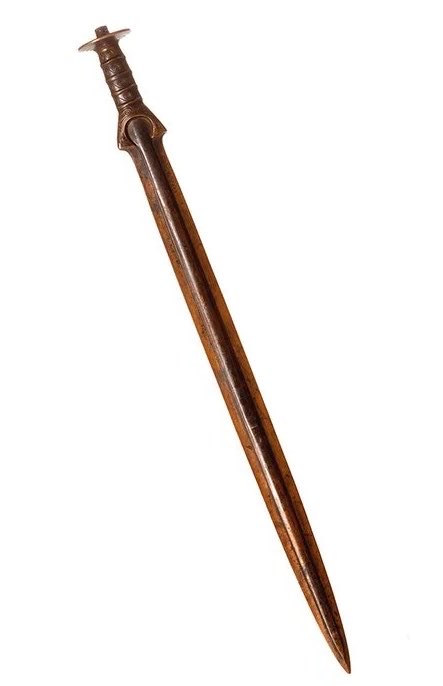
The sword was discovered in 1964 during dredging work in an old channel of the Meuse River, near Buggenum in Limburg. It is now held by the Rijksmuseum van Oudheden in Leiden and is dated to around 1300–1100 BC, at the transition between the Tumulus and Urnfield traditions.
A Sword That Traveled Across Bronze Age Europe
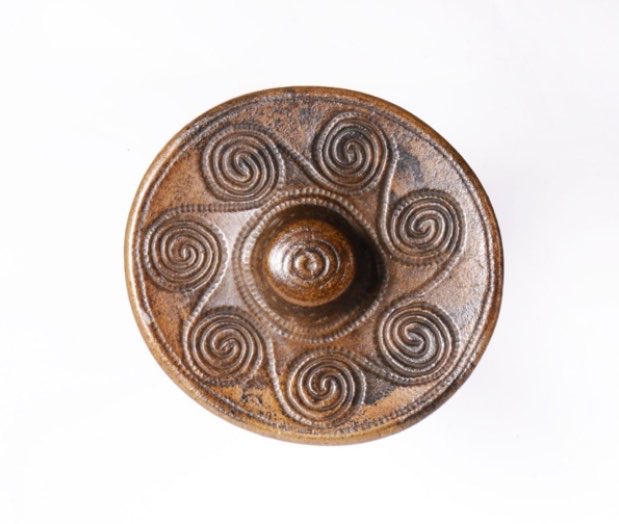
At about 68 cm long, the Buggenum sword is a rare full-hilted bronze sword. Its solid grip and decorated hilt set it apart from more common Bronze Age blades known from the region.
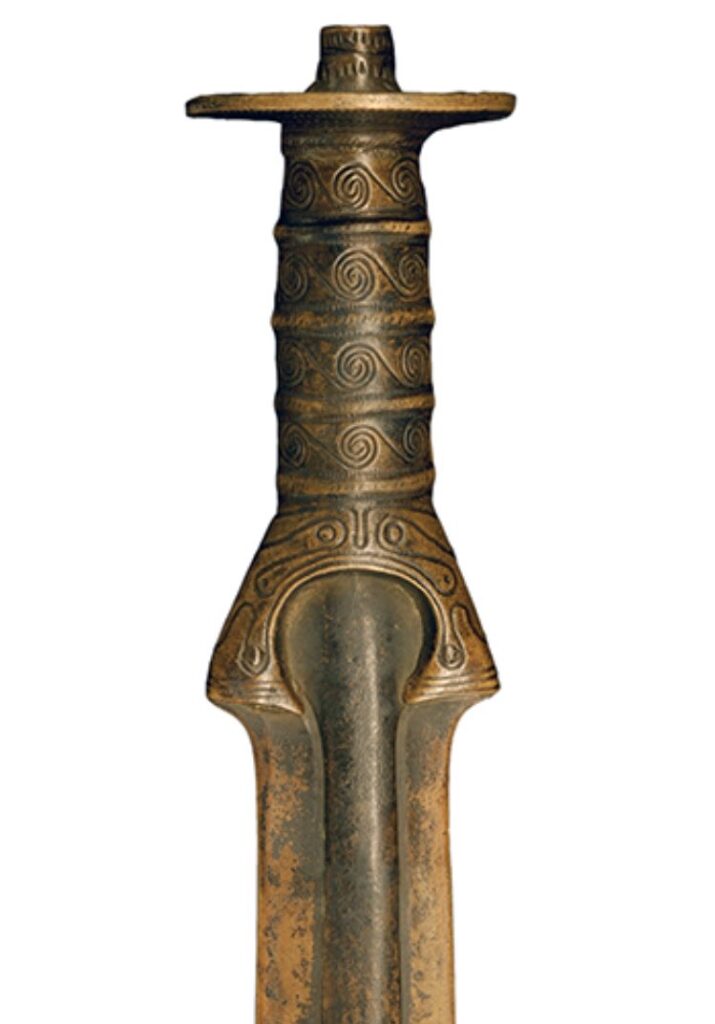
Its origin may also lie beyond the Netherlands. Based on its form and manufacture, researchers have suggested links with Central Europe, possibly Bavaria, southern Germany, or Austria. If that reading is correct, the sword points to long-distance contacts between the Meuse valley and the Upper Danube region during the Late Bronze Age.
The object’s condition adds another layer. It does not show clear signs of heavy use. That does not prove it was never used, but it makes a purely practical reading less convincing. The sword may have functioned as a prestige object, ceremonial weapon, or symbol of status.
Why Deposit a Sword in a River?
The findspot is as important as the sword itself. Across Bronze Age Europe, valuable metal objects were often deposited in rivers, bogs, and wetlands. Some may have been accidental losses, but many are interpreted as deliberate acts linked to ritual, power, or offering.
For the Buggenum sword, that interpretation remains cautious rather than certain. Its value, condition, and watery context all make a simple explanation difficult. It may have entered the Meuse as a public gesture, a religious offering, or a display of power that ended with the object being removed from human use.
That is why the Buggenum sword is more than a beautiful weapon. It is evidence of a world in which a sword could be a tool, a status marker, and a sacred object at the same time. Its final journey into the Meuse may have been the most important act in its life.
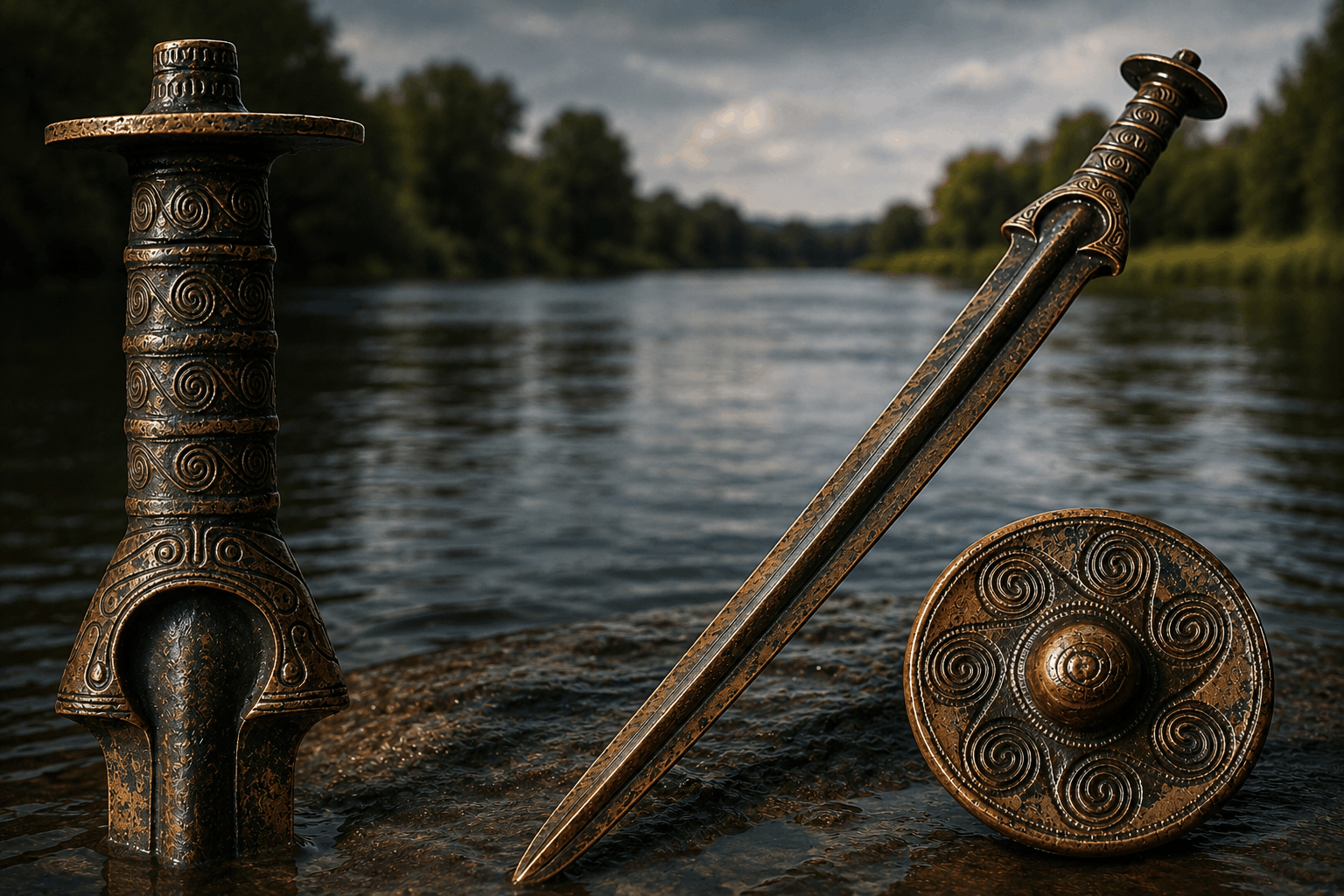
Cover Image: AI-generated illustration based on reference photographs of the Bronze Age sword discovered near Buggenum, the Netherlands. This image is not an original museum photograph.