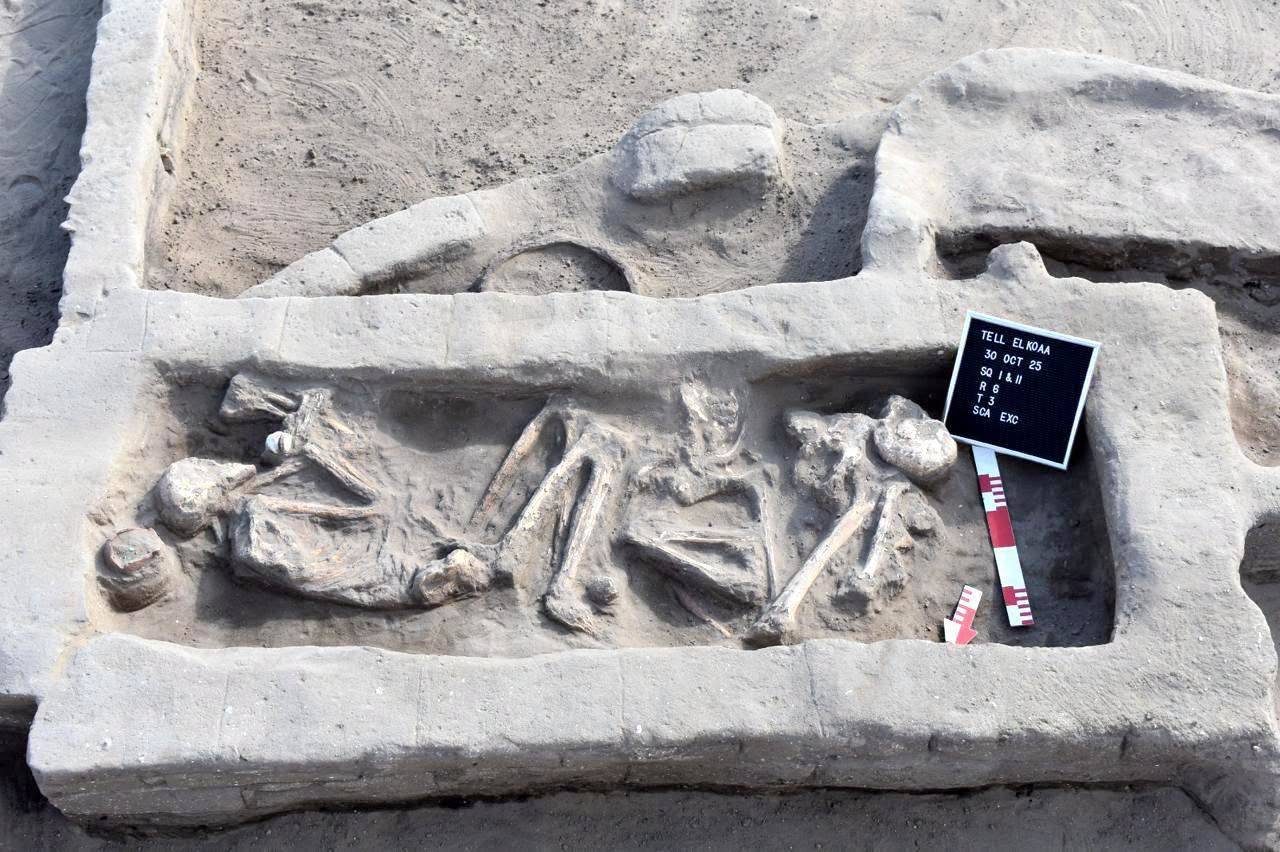
Egyptian archaeologists have uncovered a Hyksos-era settlement and cemetery complex at Tell el-Koa in Ismailia, adding new evidence for how communities lived, worked and buried their dead in the eastern Nile Delta during the Second Intermediate Period.
The discovery was made by an Egyptian archaeological mission working in the Wadi Tumilat area, a natural corridor that linked the eastern Delta with Egypt’s frontier and the routes beyond Sinai. According to Egypt’s Ministry of Tourism and Antiquities, the site includes 10 mudbrick tombs, a walled residential complex, kilns, storage silos and a collection of artifacts ranging from scarabs to bronze tools and pottery.
The material dates mainly to the 15th Dynasty, the period associated with Hyksos rule in northern Egypt. The Second Intermediate Period, broadly dated to about 1650–1550 B.C., was a time of divided power, regional movement and strong connections between Egypt and the Levant.
A walled settlement beside the tombs
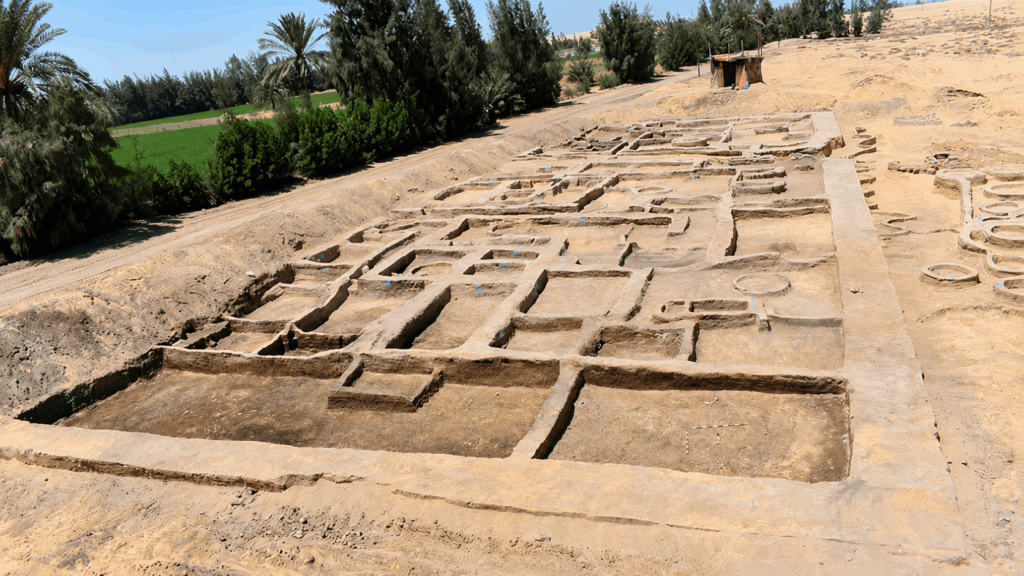
The settlement area measures about 30 by 60 meters and was enclosed by a mudbrick wall. Inside, archaeologists identified halls and rooms of different sizes, suggesting an organized residential area rather than scattered occupation.
East of the complex, the mission found kilns and storage silos. These features point to food storage and production activity at the site. For that reason, the discovery is not simply another cemetery find from the Hyksos period. It preserves a broader picture of a community: houses, work spaces, storage areas and graves within the same archaeological setting.
Tourism and Antiquities Minister Sherif Fathy said the discovery helps clarify settlement patterns in the eastern Delta during the Second Intermediate Period. The value of the site lies in this combination of domestic, economic and funerary evidence.
Ten mudbrick tombs from the 15th Dynasty
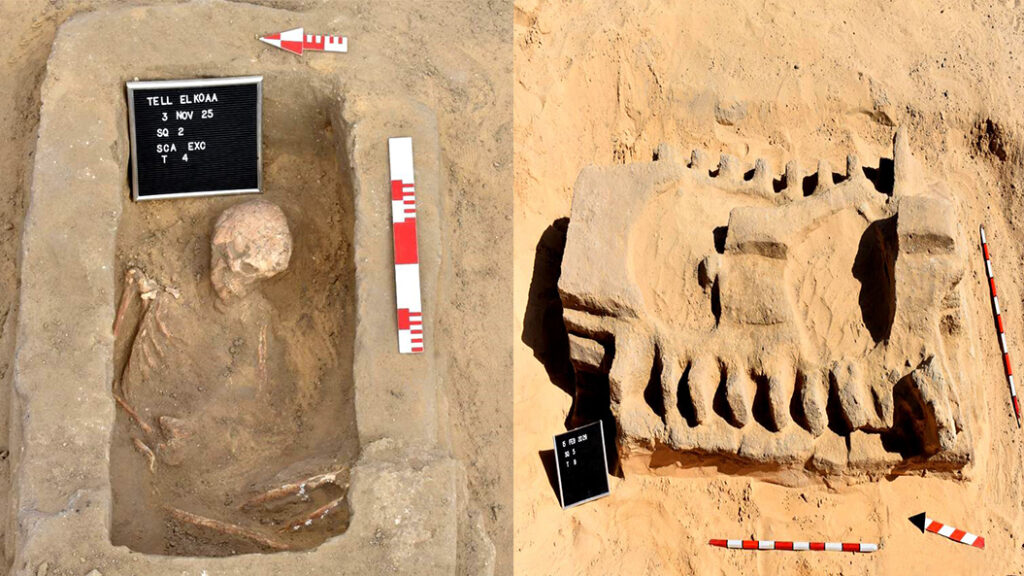
The excavation also revealed 10 mudbrick tombs of different sizes and architectural forms. Some were rectangular and mastaba-like, while others had façades and decorative elements.
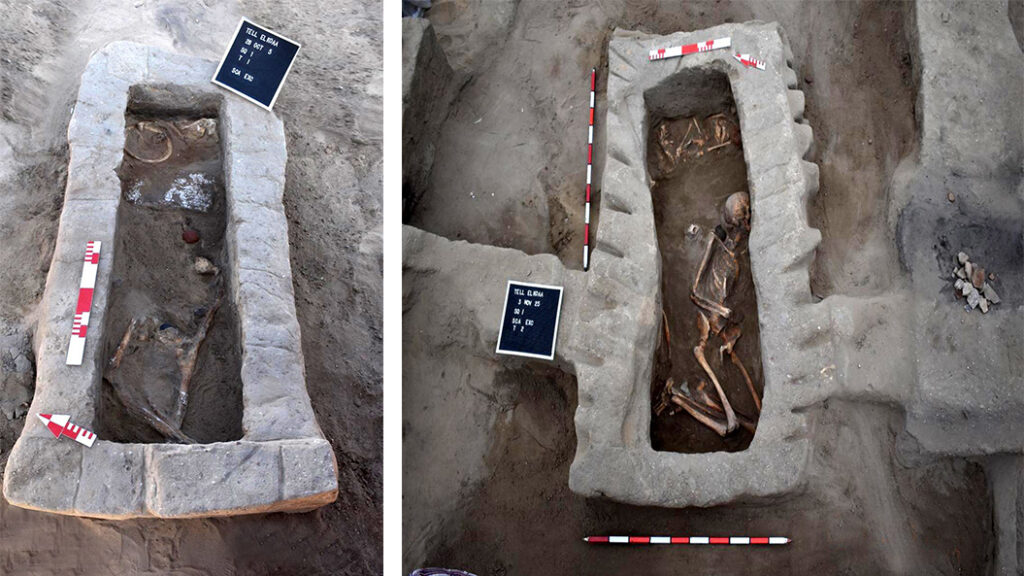
Mohamed Abdel Badie, head of the Egyptian Antiquities Sector at the Supreme Council of Antiquities, said the tombs date to the 15th Dynasty. This is the dynasty most closely linked with the Hyksos, a ruling group of West Asian origin that controlled parts of northern Egypt from the eastern Delta.
The Hyksos are often discussed through politics and warfare, especially their conflict with the Theban rulers who later reunified Egypt and founded the New Kingdom. Tell el-Koa offers a quieter but important angle: the material traces of people who lived in the Delta during that period, used local and imported goods, stored food, worked with tools and buried their dead according to practices that now require closer study.
Scarabs, bronze tools and marked pottery
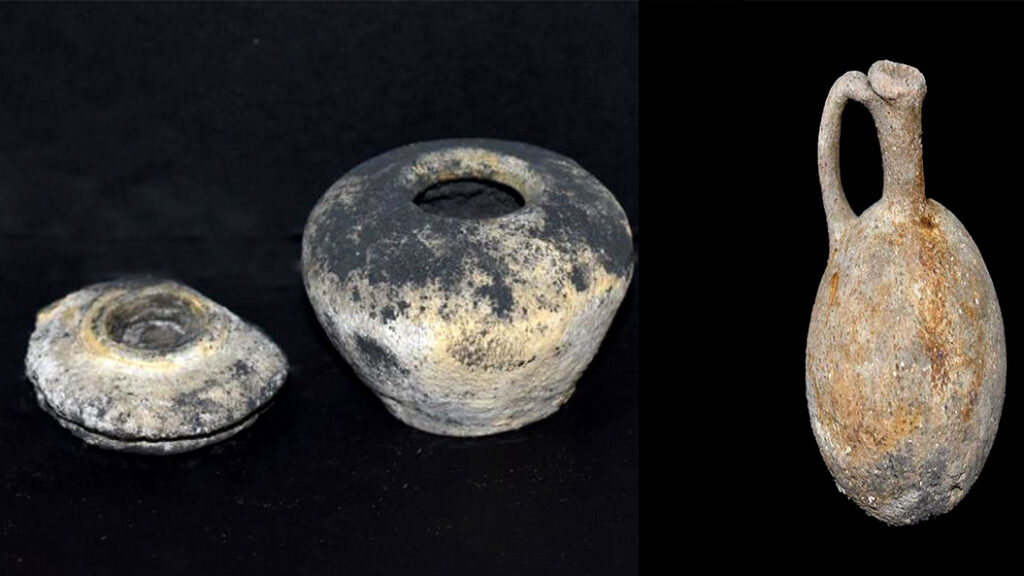
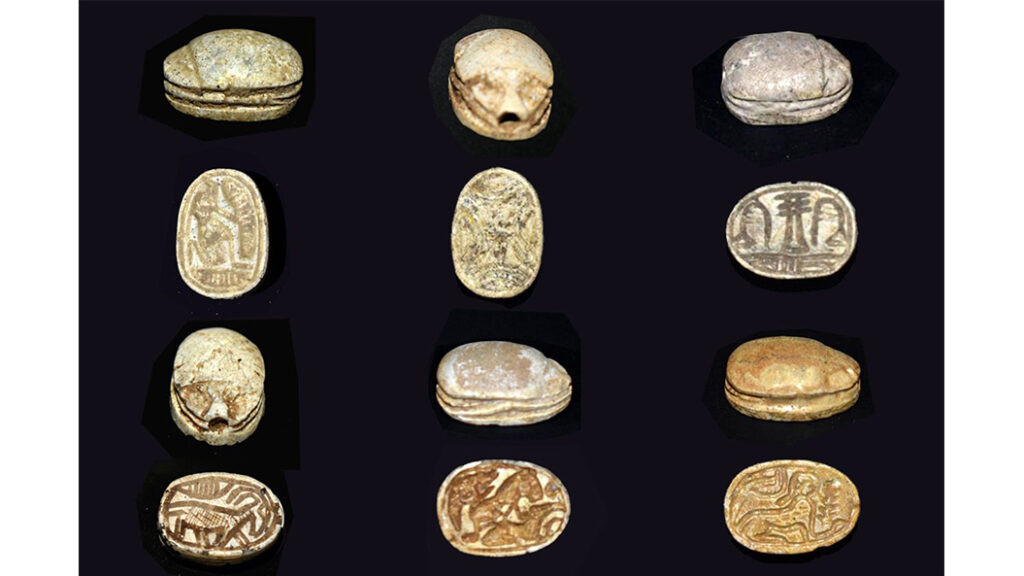
Among the finds are scarabs, bronze tools, pottery vessels, alabaster kohl containers and bottles of Tell el-Yahudiyeh ware. This distinctive pottery type is closely associated with the Second Intermediate Period and with cultural links across the eastern Mediterranean.
The ministry also reported pottery carrying production marks and seals. Such marks may indicate organized exchange or distribution activity. For now, the safest interpretation is that Tell el-Koa was not an isolated settlement. Its location in Wadi Tumilat and its marked pottery suggest contact with wider trade and movement networks.
Animal bones were found in large quantities. Some appear to be linked to everyday consumption, while others may have been associated with funerary offerings. This overlap between domestic refuse and burial-related material is one of the reasons the site is likely to receive further specialist study.
Burials outside the tombs
One of the more unusual parts of the excavation is the discovery of human burials outside the mudbrick tombs. The ministry said this is the first time such burials have been documented at Tell el-Koa.
Some individuals were placed in a crouched position. Researchers have not yet offered a final explanation for this practice. It may relate to social status, local custom, cultural background or another factor that cannot be resolved from excavation notes alone.
Preliminary study of the human remains indicates that the individuals examined so far were between about 25 and 40 years old. The variation in burial positions and age groups makes the cemetery especially useful for future bioarchaeological work.
From Hyksos rule to the New Kingdom
Mustafa Hassan, director of Ismailia Antiquities and head of the mission, said the evidence suggests the site remained in use until the middle of the 18th Dynasty. If confirmed through further analysis, that would place Tell el-Koa across an important historical transition: from Hyksos rule to the early New Kingdom.
That continuity is one of the most important parts of the find. The end of Hyksos power is often framed as a political break, but settlement evidence can show whether local communities changed abruptly or continued many of their habits under new rule.
Tell el-Koa now adds a compact but significant case study from Egypt’s eastern Delta. Its tombs, kilns, silos, scarabs and marked pottery point to a community that was not only burying its dead but also producing, storing, exchanging and living in a landscape shaped by movement between Egypt and the wider eastern Mediterranean world.
Cover Image Credit: Egypt’s Ministry of Tourism and Antiquities