
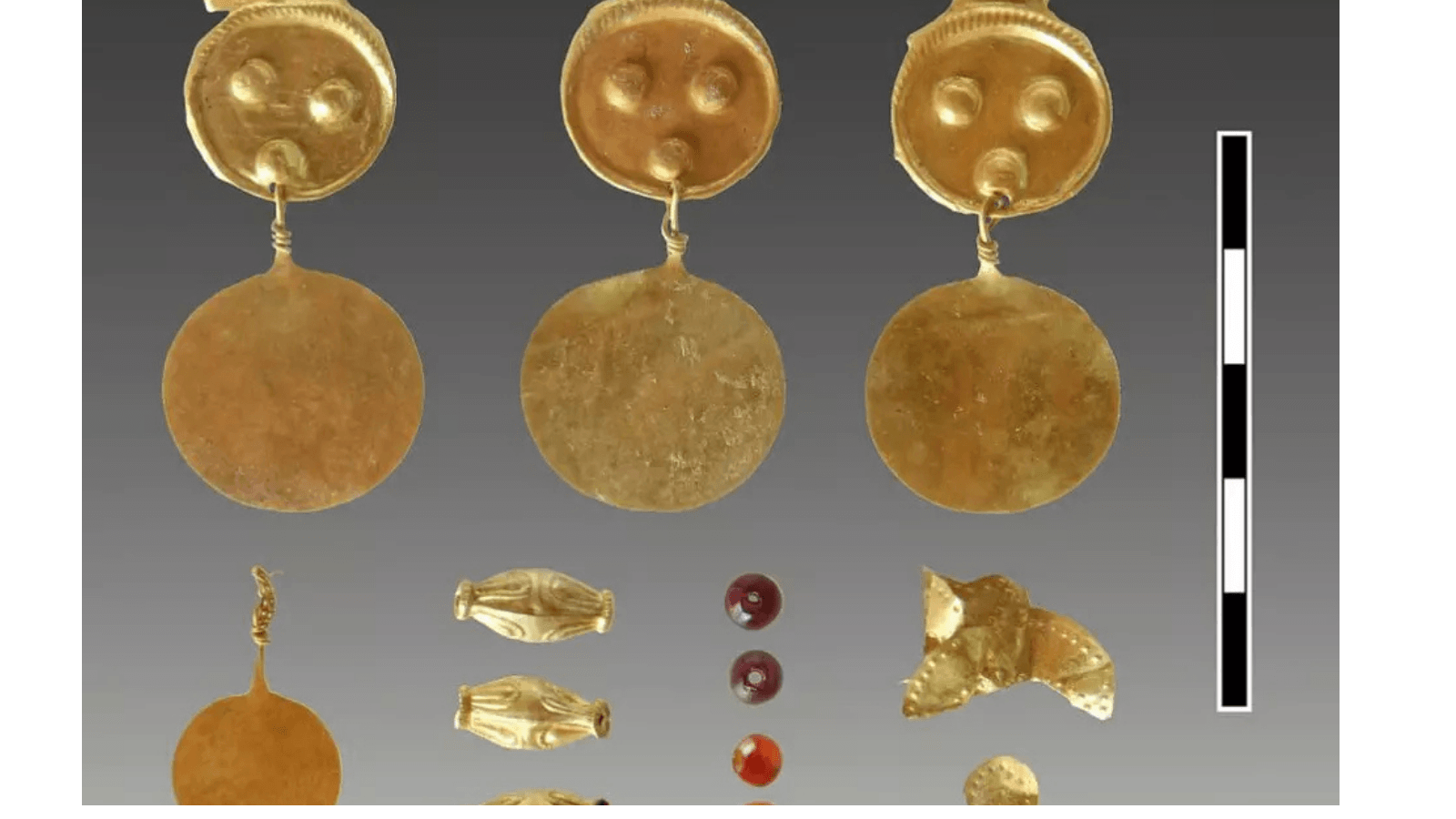
A group of 3,500-year-old gold jewels unearthed on the Greek island of Aegina may offer something that one of the British Museum’s most enigmatic Bronze Age collections has lacked for more than a century: a reliable archaeological context.
The 32 gold and semi-precious stone objects were discovered during the 2025 excavation season at Kolona, a fortified coastal settlement overlooking the Saronic Gulf. The pieces appear to have formed an elaborate necklace or pendant associated with the island’s elite during the first half of the second millennium BCE.
Their importance extends far beyond their appearance. Several ornaments resemble pieces in the so-called Aegina Treasure, a celebrated but poorly documented collection acquired by the British Museum in 1892. The newly excavated jewels may now help researchers place that mysterious assemblage within the society that produced, exchanged and wore such objects.
A necklace scattered beneath a Bronze Age building
The jewels were uncovered inside a substantial stone structure beside a defensive wall built during the expansion of the Middle Bronze Age settlement. The area stood just beyond what archaeologists regard as the inner section of prehistoric Kolona.
The group comprises eight double-disc gold amulets, another disc-shaped pendant, seven biconical gold beads, one cylindrical gold bead, eight thin gold sheets and seven spherical carnelian beads. According to the Greek Ministry of Culture, all 32 pieces survived in excellent condition and probably belonged to a single necklace or hanging ornament.
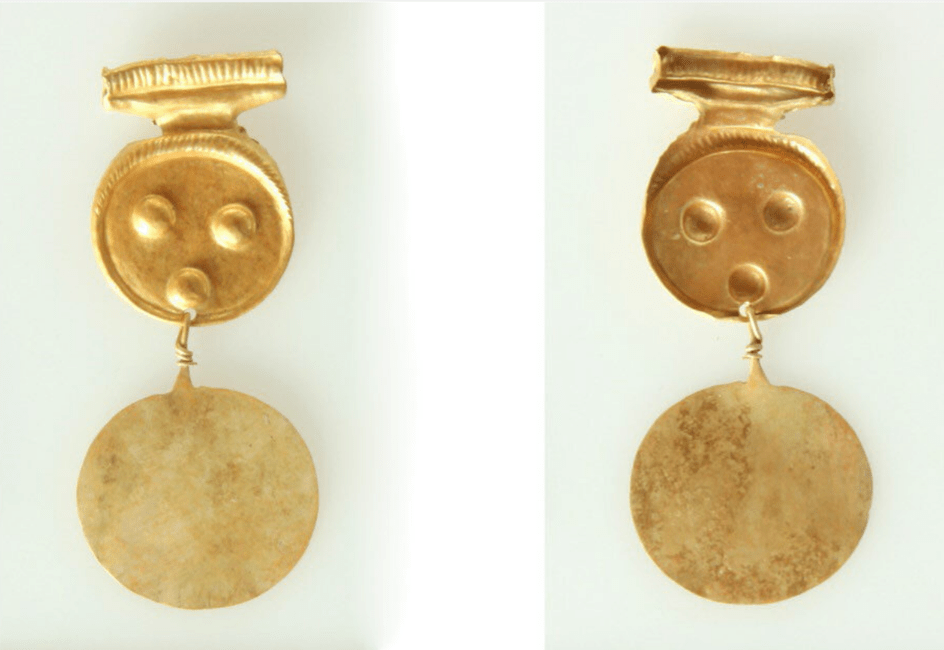
The archaeological layers had been disturbed at an unknown date, and no intact grave was identified. Nevertheless, the character and arrangement of the jewelry suggest that it may originally have been deposited in a Middle Bronze Age burial. Fragments of bronze daggers and a bronze pin recovered nearby strengthen the possibility that the building concealed part of a funerary context that was later disrupted.
Rather than representing casually hidden wealth, the necklace may therefore have formed part of a deliberate burial display. Gold, imported stone and skilled workmanship would have communicated the identity and social standing of its owner even after death.
The excavation is being directed by Alexander Sokolicek and Lydia Berger of the University of Salzburg, in cooperation with the Austrian Archaeological Institute in Athens and under the supervision of the Ephorate of Antiquities of Piraeus and Islands. Salzburg University has conducted regular archaeological research at Kolona since 1967.
The clue missing from the Aegina Treasure
The discovery immediately attracted attention because of the double-disc ornaments. Comparable pieces appear in the Aegina Treasure, one of the most remarkable collections of Bronze Age goldwork held by the British Museum.
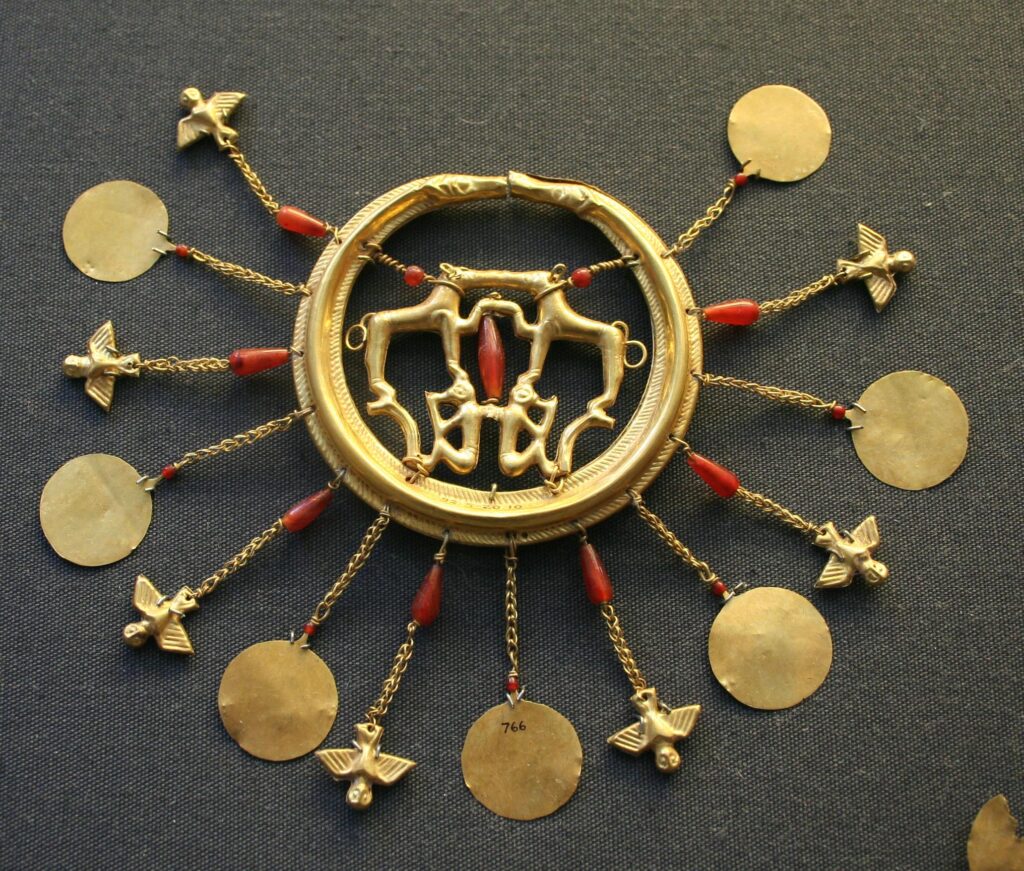
The museum collection includes ornate earrings, diadems, necklaces, rings, gold plaques, a bracelet, a decorated cup and an unusual pectoral terminating in human heads. Its imagery and manufacturing techniques reflect influences associated with Crete, Egypt, Anatolia and the eastern Mediterranean.
Yet the history of the treasure remains uncertain. According to the traditional account, the objects were discovered during the late 19th century on land near Kolona belonging to a British resident named George Brown. Following Brown’s death in 1887, most of the collection passed through a London firm of sponge merchants before being acquired by the British Museum in 1892. Further pieces entered the museum in 1914.
Because the objects were not recovered during a documented archaeological excavation, crucial information disappeared before they reached London. Researchers cannot securely reconstruct their original arrangement, establish whether they came from one burial or determine where every piece was manufactured.
Even their reported origin on Aegina has occasionally been questioned. Some scholars have proposed that parts of the collection could have come from the Minoan cemetery of Chryssolakkos at Malia on Crete, while others argue that Kolona’s wealth and maritime connections make Aegina a credible source.
The newly discovered jewelry cannot settle this debate by itself. It does, however, demonstrate that ornaments resembling examples in the British Museum were present at Kolona during the appropriate period, giving the Aegina origin theory new archaeological support.
Context may prove more valuable than gold
The British Museum objects are more elaborate, but the new discovery possesses something potentially more valuable to archaeologists. Its location, architectural setting and relationship with surrounding finds were recorded during a controlled excavation.
Future analysis could compare the composition, construction methods, tool marks and decorative details of the Kolona ornaments with those of the Aegina Treasure. Close similarities might point to a shared workshop tradition, while differences could reveal that elite jewelry reached the island through several production centres.
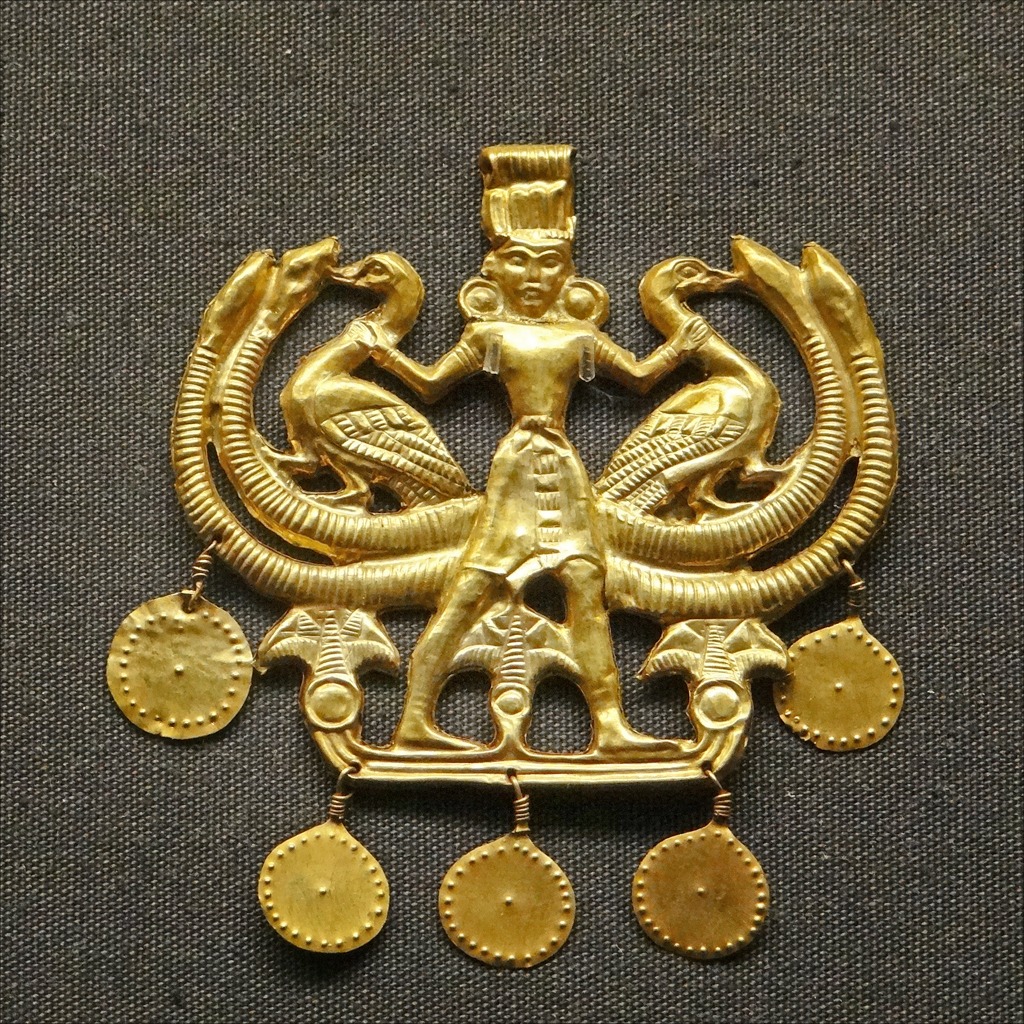
Earlier scientific examination of the British Museum collection suggested that many of its pieces may have been manufactured in the same workshop. The assemblage itself, however, was probably not chronologically uniform, and some objects may already have been valued as heirlooms when they were finally deposited.
An academic review published by the American Journal of Archaeology described the collection as evidence of a connected Bronze Age world shaped by influences from Egypt, Anatolia and Mesopotamia. Microscopic examination also identified indications that two individual craftspeople may have worked in the workshop responsible for many of the objects.
The securely excavated Kolona necklace now provides researchers with a new body of evidence against which those conclusions can eventually be tested.
A wealthy settlement at the centre of the Aegean
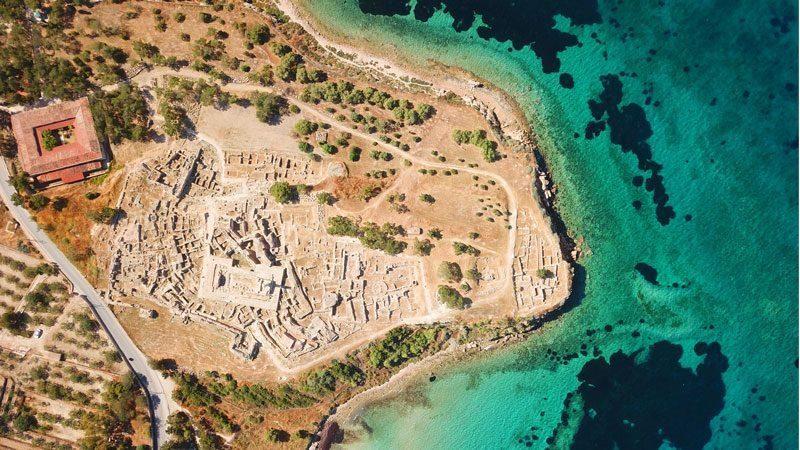
Kolona occupied a strategic position on the northwestern coast of Aegina, facing the Greek mainland and the maritime routes running through the Saronic Gulf. Long before the construction of the better-known Temple of Apollo in the sixth century BCE, the hill supported a succession of prehistoric settlements.
During the Middle Bronze Age, the town was protected by formidable fortifications and contained buildings much larger than an average house. Excavations have revealed locally manufactured pottery alongside ceramics and other materials linked with Crete, the Cyclades and mainland Greece.
These discoveries have led researchers to regard Kolona as an unusually powerful island centre. Some have even proposed that it represented one of the earliest state-like societies in the Aegean outside Crete, although that interpretation remains a subject of scholarly discussion.
Its inhabitants participated in extensive maritime networks through which raw materials, crafted objects and artistic ideas travelled over long distances. Gold, carnelian and the foreign influences visible in elite ornaments belonged to this interconnected world.
The person who wore the newly discovered necklace may therefore have been displaying more than personal wealth. The jewels could also have expressed access to distant materials, specialist craftspeople and the trading relationships on which Kolona’s prosperity depended.
The objects found in 2025 cannot recover everything lost when the Aegina Treasure was separated from its original context more than 130 years ago. They nevertheless bring archaeologists closer to the people behind it, allowing the mystery preserved in London to be examined beside comparable gold jewels recovered from the soil of Aegina itself.
Cover Image: Gold pendants, beads and carnelian ornaments discovered at Kolona on Aegina. The objects probably formed part of a Middle Bronze Age necklace. Credit: Greek Ministry of Culture