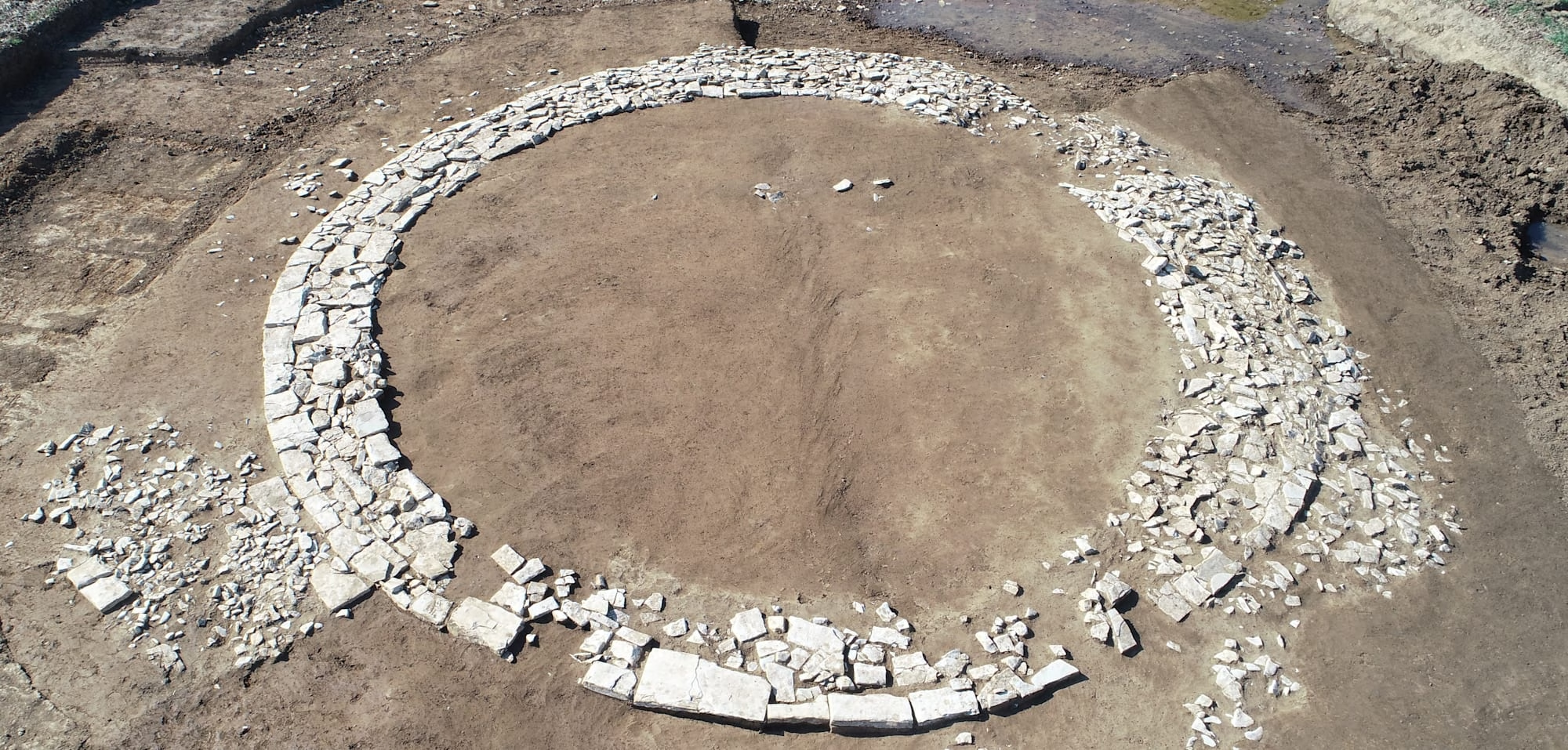
Long before the Roman Empire’s northern frontier dissolved into memory, a powerful family in Raetia carved their claim into the landscape of southern Germany — not with words, but with stone.
Near Wolkertshofen, archaeologists have now uncovered the remains of a monumental Roman burial mound unlike any other in Bavaria, rewriting the region’s funerary map.
An Empty Grave with a Loud Message
At first glance, the site appeared to be nothing more than a circular stone formation twelve meters wide. Yet its geometric precision, built beside an ancient Roman road, revealed something far more deliberate — the base of a tumulus, a type of grand memorial reserved for the powerful.
No human remains, urns, or offerings were found within. Instead, the structure’s silence spoke volumes. Archaeologists identified it as a kenotaph — a symbolic tomb, not meant to contain a body but to display status.
Such monuments, meant to be seen from the passing road, acted as political statements in stone — declarations of heritage, belonging, and social dominance.
Architecture of Prestige
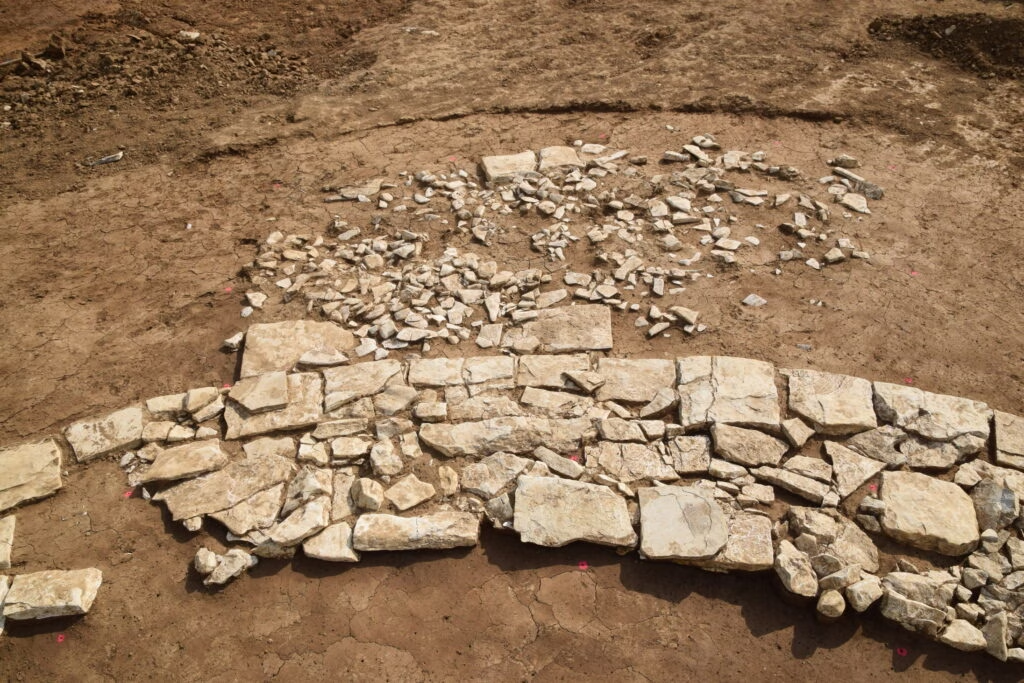
The tumulus consisted of a circular limestone wall, anchored by a square annex roughly two meters on each side — possibly once supporting a stele or statue. According to the Bavarian State Office for Monument Preservation (BLfD), the craftsmanship and scale of the find are unprecedented in Raetia.
Prof. Mathias Pfeil, the BLfD’s General Conservator, described it as “an unexpected monument of visibility — part memorial, part message.”
Nearby traces of a villa rustica, a Roman rural estate, suggest that the mound’s builders belonged to a local elite family that fused Roman urban aesthetics with Celtic ancestral traditions still rooted in Bavarian soil.
Roman Ideals on a Celtic Frontier
Across the empire, monumental mounds like this one were architectural translations of memory — merging imported Roman design with regional customs.
In Raetia, such structures were virtually unknown; most burials were modest and unadorned. The Wolkertshofen tumulus therefore signals cultural convergence: an elite family embracing Roman ideals while preserving the familiar circular form long used by Iron Age and Celtic peoples.
This cross-cultural synthesis illustrates how Roman identity evolved at the edges of empire — less imposed than adapted.
A Chance Discovery with Deep Roots
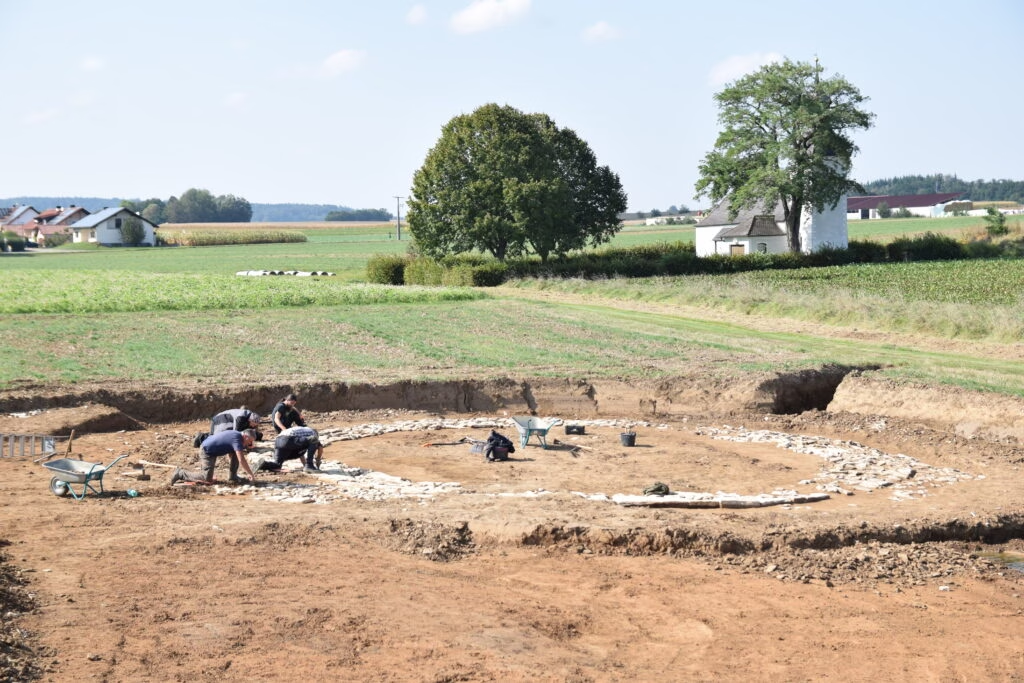
Ironically, the tumulus came to light not during excavation but during modern construction. Workers building a rainwater retention basin in 2024 exposed the ring of stone, prompting a rapid rescue operation by the BLfD team. Beneath the Roman layers, prehistoric ceramics and settlement traces emerged — proof that the site had held meaning for millennia.
That continuity may explain why the Roman family chose it. The mound didn’t merely honor the dead; it anchored the living within a sacred landscape already dense with memory.
A New Chapter in Bavaria’s Roman Story
The Wolkertshofen monument joins a small handful of known Roman grave mounds in southern Germany, yet its architectural ambition stands apart.
For archaeologists, it underscores how Roman monumental architecture was not confined to cities or temples — it extended into the countryside, transforming even rural estates into stages of political performance.
As Raetia’s soil continues to yield new evidence of life and power on Rome’s northern frontier, this solitary stone ring reminds us that even an empty tomb can speak — and that silence, too, can be monumental.
Bavarian State Office for Monument Preservation
Cover Image Credit: The stone circle of Wolkertshofen was discovered by chance. Archäologiebüro Dr. Woidich GmbH