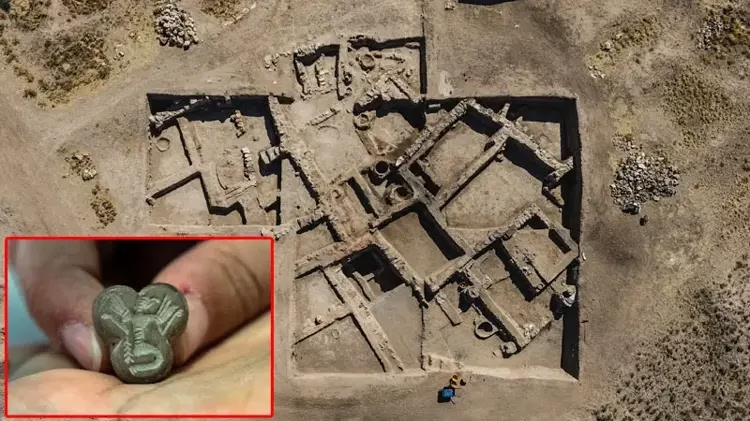
Excavations at the ancient settlement of Karahöyük have revealed a seal featuring an eagle-headed human figure, shedding new light on Bronze Age belief systems, funerary customs, and long-distance trade networks.
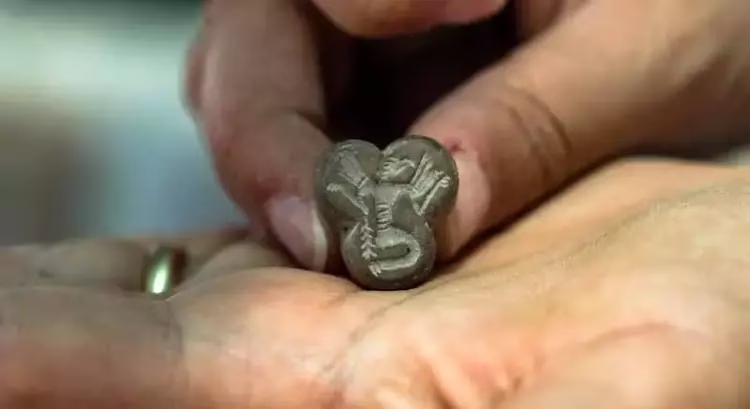
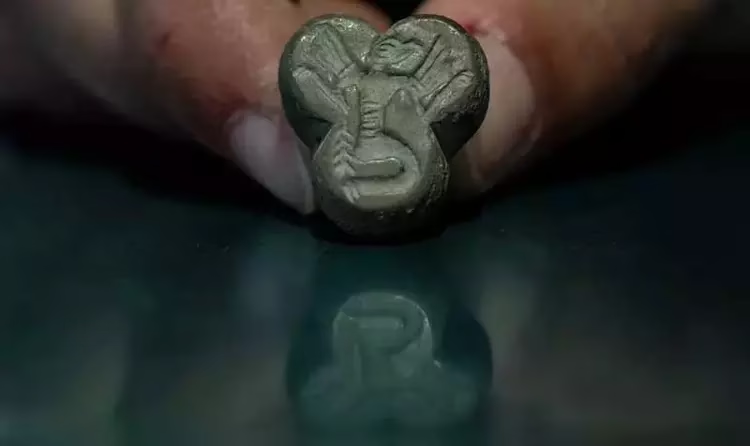
Archaeologists working at Karahöyük, an ancient mound in Konya’s Meram district, have announced the discovery of an intricately carved seal depicting a human figure with an eagle’s head. The artifact, which dates back 3,500 years, is considered one of the most significant finds of the current excavation season. The seal’s symbolic imagery offers valuable clues about the spiritual and cultural identity of the community that once inhabited this part of central Anatolia.
“Seals from Karahöyük reveal much more than administrative practices; they express status, belief, and personal identity,” explained Assoc. Prof. Gonca Dardeniz Arıkan of Istanbul University’s Faculty of Letters, who leads the excavation. “This piece, in particular, tells us how people presented themselves and what they valued.”
Ritual Burials Under Domestic Floors
The excavation team also unearthed evidence of burial practices that provide an intimate look into life and death in Bronze Age Karahöyük. Infants were buried directly beneath living spaces, while adults were cremated and removed from the settlement. Archaeologists discovered an altar-like feature and accompanying grave goods, suggesting these rituals held deep symbolic significance.
“These burials may reflect a desire to keep deceased infants close to the family, integrating memory and mourning into daily life,” said Arıkan.
Squid Traces Show Ancient Trade Links
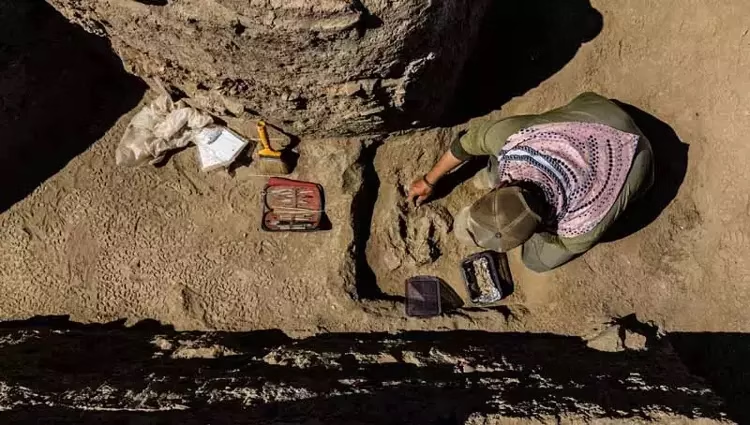
Karahöyük’s storerooms and pithoi (large clay storage vessels) have yielded a surprising range of dietary evidence. In addition to freshwater fish from Beyşehir Lake, researchers found remains of squid believed to have been transported from the Mediterranean coast near Alanya, hundreds of kilometers away. Bones of deer, hare, hyena, and even cave bear reflect the region’s rich biodiversity at the time.
The discovery illustrates that Karahöyük was not an isolated settlement but part of an extensive trade and exchange network that connected inland Anatolia with coastal communities more than 3,000 years ago.
A Settlement of Enduring Importance
Located in central Türkiye, Karahöyük is one of Anatolia’s most significant multi-layered archaeological mounds, with a history of continuous occupation spanning millennia. Excavations are carried out under the Turkish Ministry of Culture and Tourism’s “Heritage for the Future” project with the support of Konya Metropolitan Municipality.