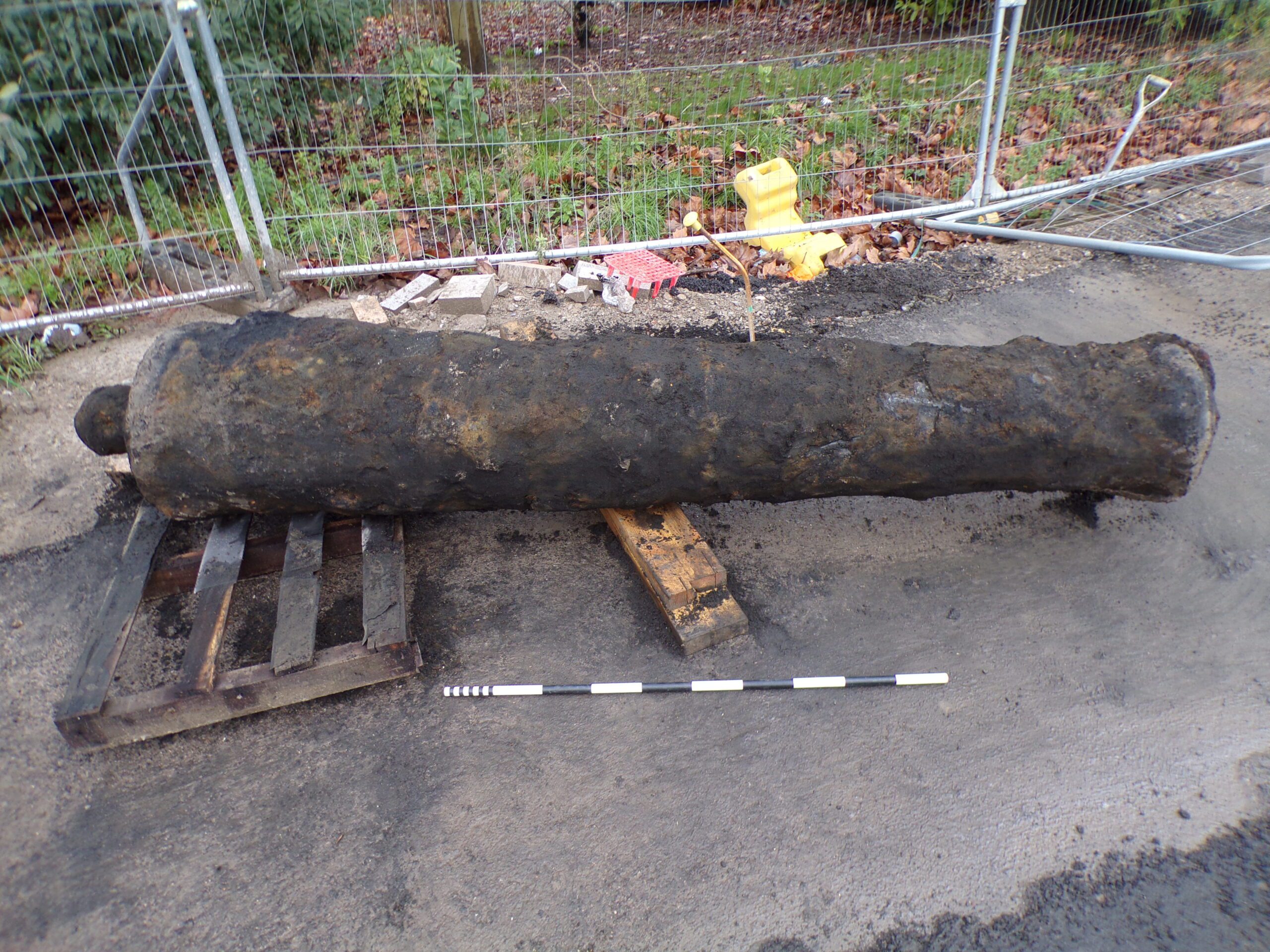
A major archaeological discovery has emerged from a routine urban regeneration project in Hull, where construction workers uncovered a massive cast-iron cannon believed to date back more than 400 years. The historic artillery piece was found buried deep beneath the soil during redevelopment works at Queen’s Gardens, a central public park built over a former dock basin.
The unexpected find was made last Friday by workers from C R Reynolds while excavating foundations for a new water retention basin. What initially appeared to be an unusually shaped iron object quickly revealed itself to be a remarkably well-preserved early modern cannon.
A Monumental Military Relic Beneath the City
Archaeologists from Humber Field Archaeology were called to the site immediately after the discovery. Preliminary assessments suggest the cannon dates from the 17th or possibly early 18th century — a period when Hull played a strategic military and maritime role in Britain.
Measuring approximately 2.6 meters in length and weighing over a metric ton, the cast-iron gun is an imposing artifact. Its size and construction indicate it may have once been mounted in a coastal battery or aboard a naval vessel tasked with defending England’s eastern seaboard.
Peter Connelly of Humber Field Archaeology described the object as “a significant and visually striking reminder of Hull’s military and maritime heritage.” According to Connelly, such large cannons were typically used for harbor defense or naval warfare during periods of intense conflict, including the English Civil War and later maritime confrontations.
From Weapon of War to Harbor Infrastructure
Interestingly, the cannon’s story did not end on the battlefield. Archaeologists observed that the muzzle had been deliberately sealed, indicating it had long ago been decommissioned. Rather than being melted down or scrapped, the heavy iron gun appears to have been repurposed.
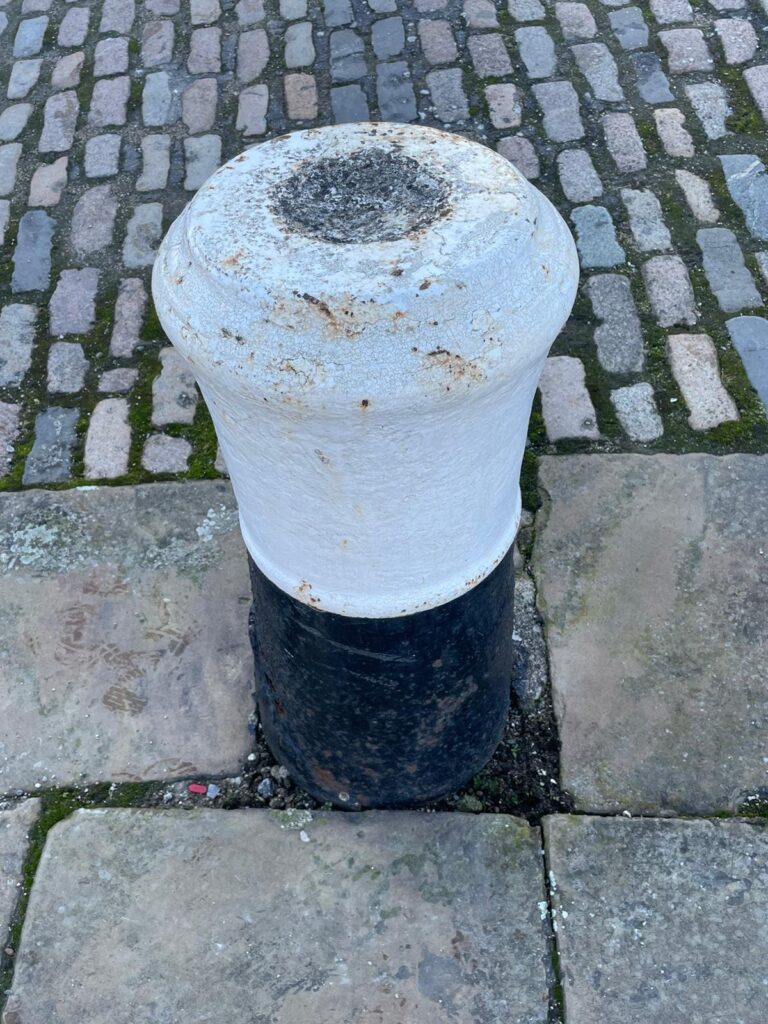
Historical evidence suggests that during the late 19th and early 20th centuries, obsolete cannons were frequently reused as mooring bollards in British port cities. Their immense weight and durability made them ideal for securing ships.
Hull, with its long-standing identity as a major port on the Humber Estuary, was no exception. Before the former dock basin was filled in during the 1930s to create today’s Queen’s Gardens, the cannon was likely embedded along the waterfront as part of the harbor’s infrastructure. When the docks were reclaimed and transformed into parkland, the cannon appears to have been buried beneath layers of reclaimed soil.
Urban Archaeology and Hull’s Hidden Past
The discovery highlights the archaeological potential hidden beneath modern urban landscapes. Hull’s waterfront has undergone significant transformation over the past century, but its subsoil continues to preserve material evidence of the city’s maritime past.
Experts are now conducting detailed examinations to determine the cannon’s exact age, manufacturing origin, and potential military affiliation. Metallurgical analysis may reveal the foundry where it was cast, while typological comparisons with similar artillery pieces could refine its dating.
The cannon has been carefully removed from the construction site and transported for conservation and further study. Cleaning and stabilization processes will ensure the iron structure remains intact while specialists document its features.
Regeneration Under Archaeological Supervision
Despite the dramatic find, redevelopment works at Queen’s Gardens will continue under close archaeological monitoring. The project forms part of a broader urban regeneration initiative aimed at modernizing the park’s infrastructure while preserving its historical character.
Hull City Council has emphasized that discoveries like this reinforce the importance of conducting responsible archaeological assessments during construction. Urban renewal, officials note, must balance development with heritage protection.
Once analysis is complete, decisions will be made regarding the cannon’s future. It may eventually be displayed locally, potentially becoming a centerpiece exhibit illustrating Hull’s layered maritime and military history.
For now, the enormous iron gun stands as tangible proof that even beneath carefully landscaped parks, fragments of the past endure — silent witnesses to centuries of conflict, commerce, and transformation along Britain’s eastern coast.
Cover Image Credit: Hull City Council