
A routine railway project in central Mexico has led to an unexpected archaeological turning point.
During preliminary work on the Mexico–Querétaro passenger line, researchers uncovered a previously undocumented concentration of rock art at El Venado in Hidalgo. The discovery—made by specialists from the National Institute of Anthropology and History (INAH)—has already prompted authorities to change the planned route of the railway, highlighting the site’s significance.
What initially appeared to be a minor find quickly revealed something far more complex: a landscape marked by human activity for thousands of years.
Sixteen Figures, Thousands of Years
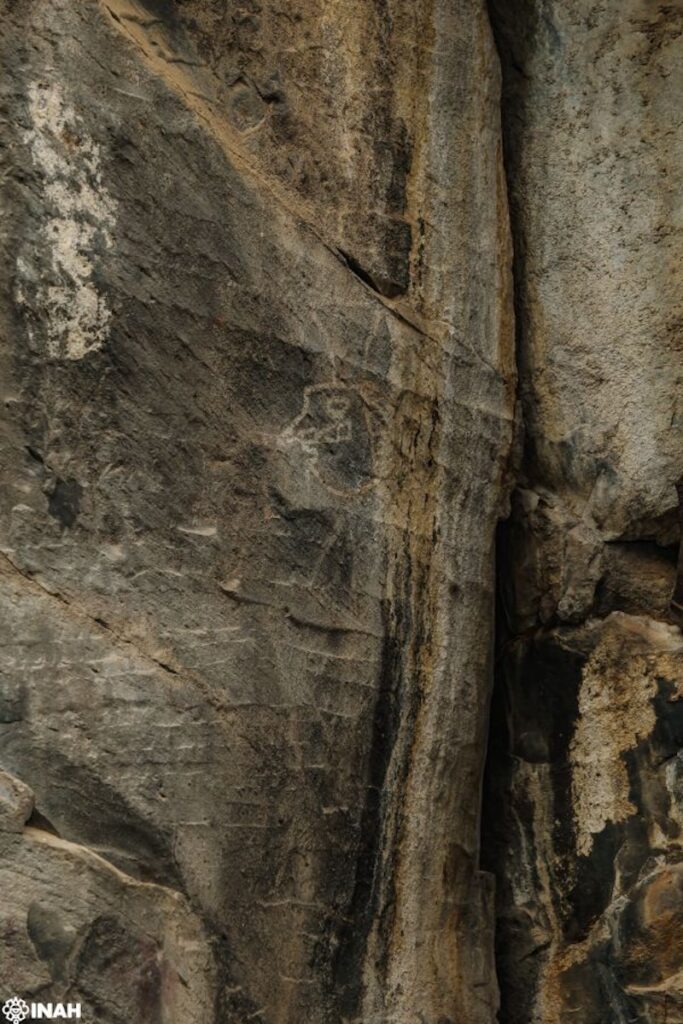
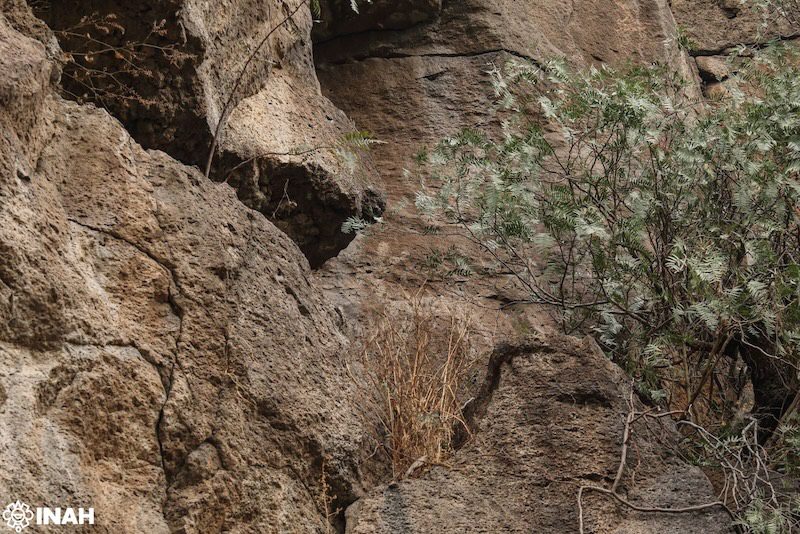
Detailed surveys identified 16 petroglyphs and pictographs carved and painted onto rocky outcrops overlooking the Tula River basin. Their placement is striking—high above water sources and visible across the surrounding terrain.
Rather than belonging to a single period, the images span a vast timeline. Researchers suggest the earliest examples may date back more than 4,000 years, while others belong to the(900–1521 CE).
This long chronological range transforms the site from a single-phase discovery into something more layered: a place repeatedly used, reinterpreted, and revisited.
Warriors, Symbols, and Deities
The imagery itself offers clues to how the site functioned.
Several figures depict human-like forms carrying shields and wearing elaborate headdresses. One profile figure stands out with a geometric chest motif and what appears to be a chimalli, the shield associated with Mesoamerican warriors.
Elsewhere, circular eye elements evoke the iconography of Tlaloc, suggesting connections to rain, fertility, or ritual invocation. A nearby figure may even depict a macuahuitl, reinforcing associations with power and status.
Not all representations are human. A stylized quadruped—likely a deer—anchors the site’s modern name, while abstract engravings and a red-painted figure resembling a serpent or lightning form introduce a more symbolic, possibly cosmological layer.
Why This Place Matters
The location itself may be the key to understanding the site.
Across Mesoamerica, elevated terrain near water sources often held ritual significance. These were not neutral landscapes, but places where the natural and the sacred intersected.
At El Venado, the positioning of the images suggests intentional selection rather than random decoration. The cliffs overlook both the Tula River and nearby reservoirs—features that would have carried ecological and symbolic importance.
Its proximity to Tula further deepens this context. As a major center of the Toltec world, Tula influenced cultural traditions across central Mexico, leaving traces that continued into later societies.
A Site That Didn’t Fade Away
One of the more intriguing aspects of the discovery is its possible continuity into the colonial period.
Among the figures is an unusual depiction combining a human-like face with animal-like limbs. Researchers suggest it may date to the early decades following Spanish contact in the 16th century.
If confirmed, this would indicate that the site remained meaningful even during periods of profound cultural disruption—adapting rather than disappearing.
Technology Reveals Hidden Detail
Despite centuries of exposure, many of the artworks remain in notable condition.
According to project coordinator Víctor Francisco Heredia Guillén, the engravings were created using a pointillist technique, while painted elements were produced with mineral or plant-based pigments.
Researchers are now documenting the site using photogrammetry and high-resolution imaging, allowing for detailed digital analysis and long-term preservation.
Some stylistic features have also drawn attention beyond the region. Certain motifs appear to share similarities with imagery linked to the Mogollon cultural sphere in northern Mexico and the southwestern United States, raising questions about broader cultural connections.
From Overlooked Site to Archaeological Focus
El Venado is not entirely new to research. It was first noted in the 1970s during surveys led by Eduardo Matos Moctezuma, though at the time only a single deer-related figure had been recorded.
The latest findings dramatically expand that picture.
What was once considered a minor location is now emerging as a multi-layered ritual landscape, shaped by centuries—if not millennia—of human interaction.
A Discovery That Changed the Present
The immediate impact of the discovery is already visible.
Instead of proceeding with its original route, the Mexico–Querétaro railway project has been adjusted to avoid the site entirely. The decision reflects a growing shift in how large infrastructure projects interact with archaeological heritage.
In this case, the past didn’t just surface—it altered the future of the landscape around it.
More Than Just Rock Art
El Venado is not simply a collection of carvings.
It represents a long-term relationship between people and place—a record of how different communities returned to the same location, leaving marks that accumulated over time.
Taken together, the figures suggest continuity rather than isolation. Not a single story, but many—layered across centuries, preserved in stone.