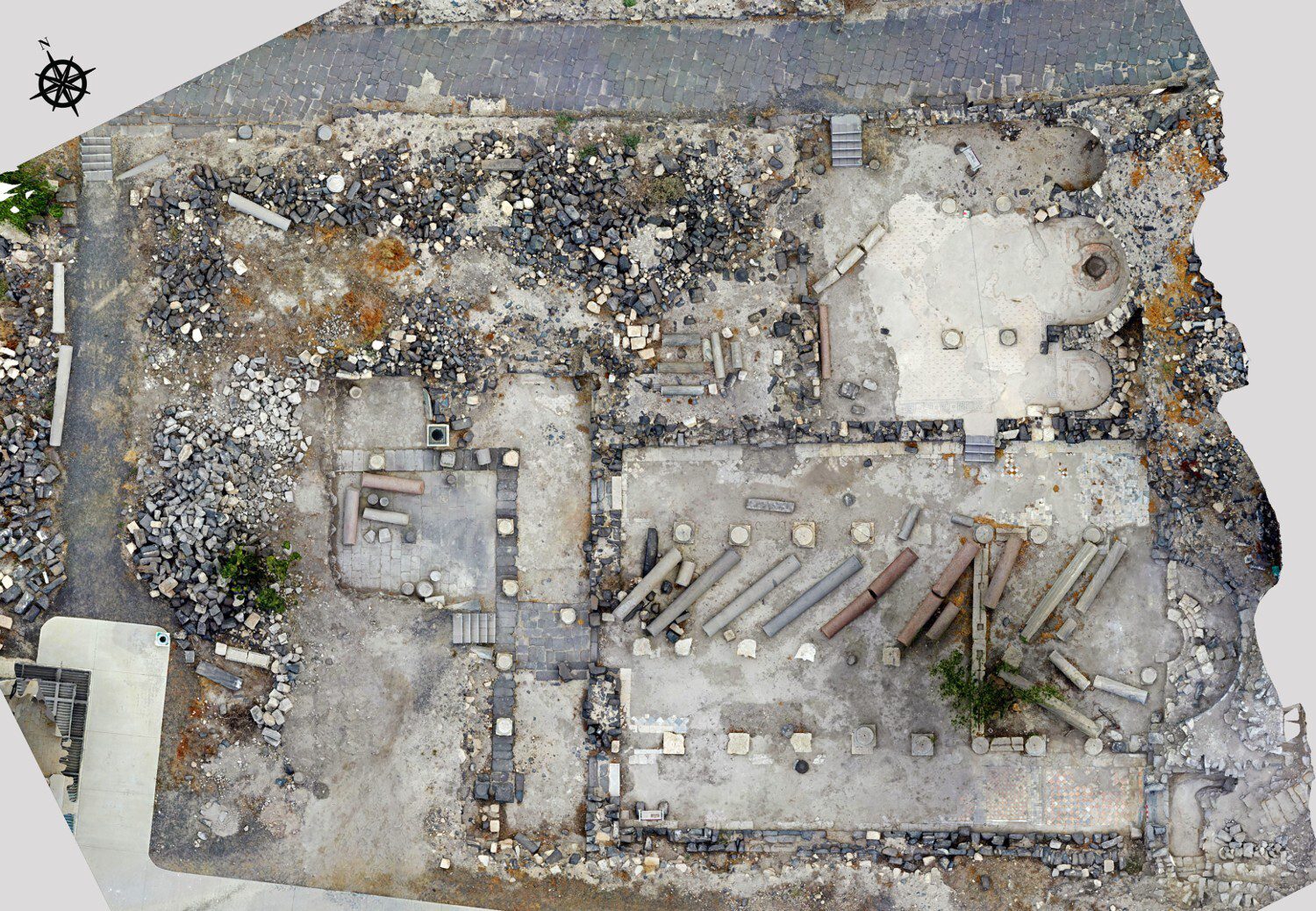
A Byzantine baptistery unearthed near the Sea of Galilee is offering a rare glimpse into early Christian ritual practices, after remaining sealed for more than a thousand years beneath the ruins of an earthquake-destroyed cathedral.
At the ancient city of Hippos, overlooking the Sea of Galilee, archaeologists have uncovered a remarkably preserved Byzantine baptistery complex—one that challenges long-standing assumptions about baptism in late antiquity. Hidden beneath debris since a devastating earthquake in 749 CE, the space has emerged as a rare archaeological time capsule, preserving both architecture and ritual objects in situ.
What makes the discovery exceptional is not just its preservation, but its structure. The cathedral at Hippos contained not one, but two separate baptisteries—making it the only known early Christian church ever discovered with this dual system.
A Unique Dual Baptistery System
The original, larger baptistery—known as the northern photisterion—belongs to the earliest phase of the church. Centuries later, likely following renovations in 590–591 CE, a second space was added.
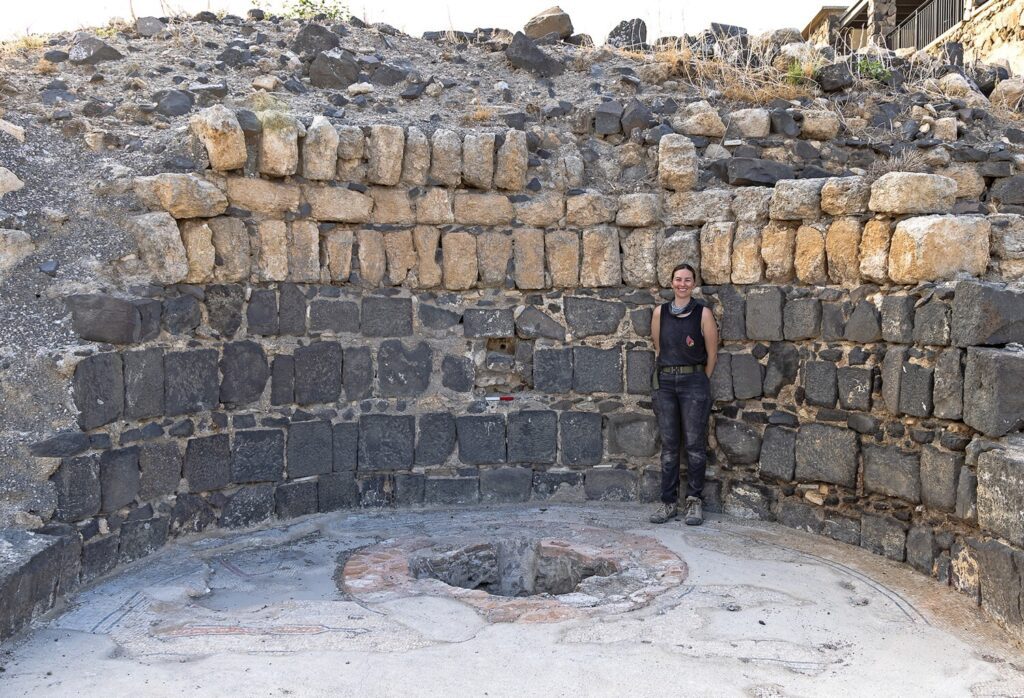
This southern photisterion is smaller, more enclosed, and architecturally distinct, with a compact baptismal font set into a corner. The design suggests that it was not simply an auxiliary space, but one with a specialized ritual function.
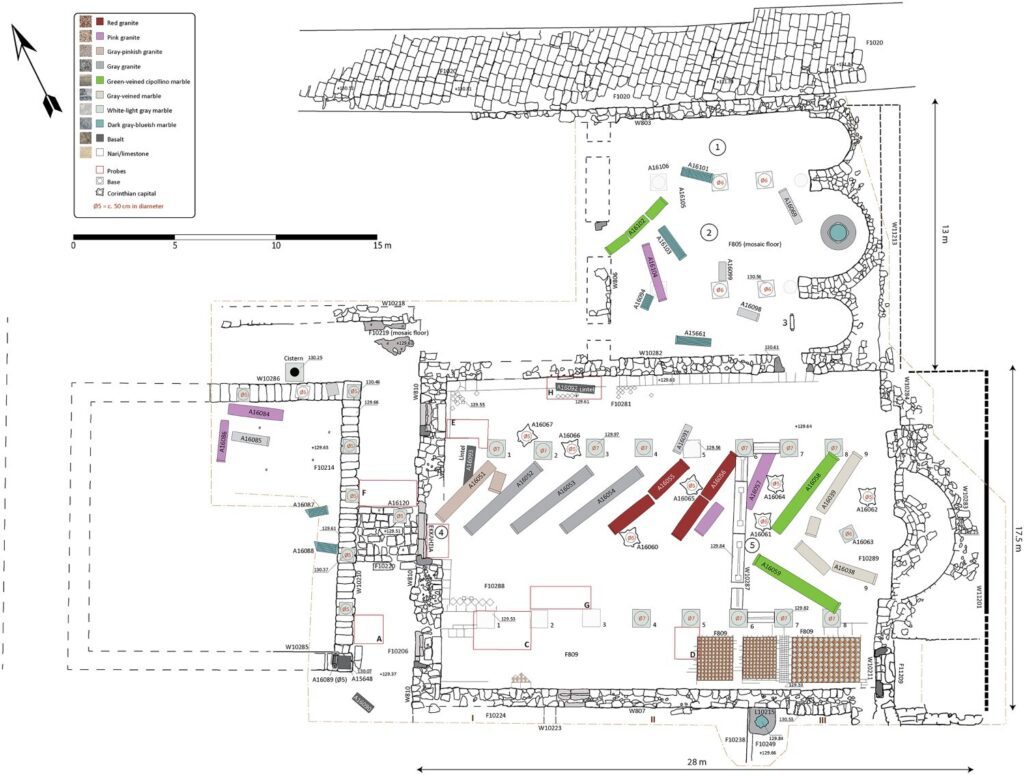
Archaeologists now believe the dual arrangement may have allowed different forms of baptism to occur simultaneously. The larger font may have been used for adult initiations involving flowing “living water,” while the smaller basin—fed by still water—may have been intended for infants or specific ceremonial variations.
This interpretation points to a level of liturgical flexibility that is rarely documented in the archaeological record.
Ritual Objects Preserved in Place
The southern baptistery also yielded an unusually rich collection of ritual objects, many of them found intact near the font. Such preservation is rare, as most Byzantine religious spaces were looted or repurposed over time.
Here, however, the sudden collapse of the structure appears to have protected the interior from disturbance.
Among the most intriguing finds is a marble block carved with three hemispherical cavities—an artifact with no clear parallel in early Christian contexts. Researchers suggest it may have held different sacred oils used during baptism, hinting at a multi-stage anointing process not clearly documented in surviving texts.
Nearby, a massive marble reliquary was uncovered—one of the heaviest ever recorded in the region. Designed with internal compartments and a lid that allowed liquids to be poured over its contents, it may have been used in rituals involving the relics of saints.
Its presence within a baptistery is striking. It suggests that the space may have functioned simultaneously as a martyrion, where baptism and relic veneration intersected.
A finely crafted bronze candelabrum, standing over a meter tall, was also found close to the font. Its scale and decorative detailing—including animal-like feet—reflect both the artistic sophistication of the community and the ceremonial importance of the space.
A Moment Frozen by Disaster
The exceptional state of preservation is the result of catastrophe.
In 749 CE, a powerful earthquake struck the region, causing the cathedral to collapse suddenly. While other parts of the complex were later disturbed, the southern baptistery remained sealed beneath layers of debris.
What survived is not just a structure, but a moment—captured at the instant it was abandoned.
This rare level of preservation allows archaeologists to reconstruct ritual practice with unusual precision. The positioning of objects, the layout of the space, and the relationship between architecture and material culture all point to a more complex and dynamic form of Christian worship than previously assumed.
Rethinking Early Christian Practices
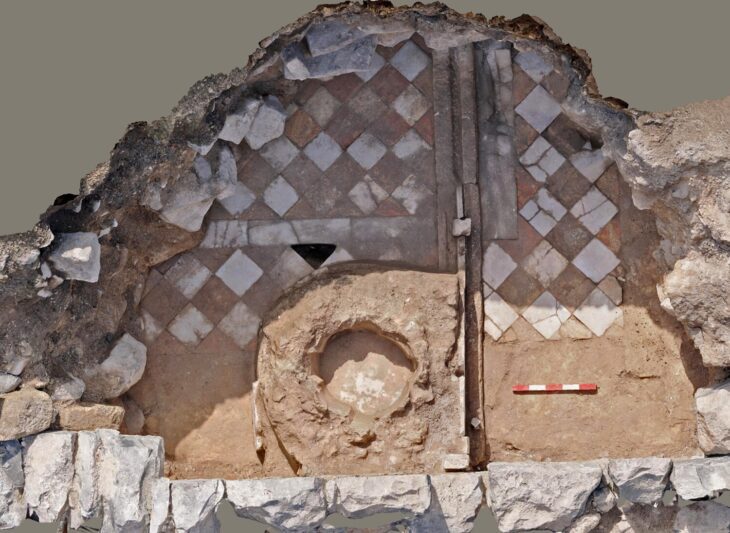
Once part of the Decapolis, Hippos played a significant role as a Byzantine religious center. Despite limited written sources, ongoing excavations continue to reveal its importance—not only as a place of worship, but as a site of ritual innovation.
The discovery adds new depth to our understanding of early Christianity in the eastern Mediterranean. Rather than a uniform system, the evidence from Hippos suggests a tradition that adapted to local needs, evolving in both form and meaning over time.
Eisenberg, M., & Kowalewska, A. (2026). The Southern Photisterion at the Hippos Cathedral and its Unique Byzantine-Period Liturgical Implements. Palestine Exploration Quarterly, 1–22. https://doi.org/10.1080/00310328.2026.2634232
Cover Image Credit: Eisenberg, M., et al.,2026, Palestine Exploration Quarterly