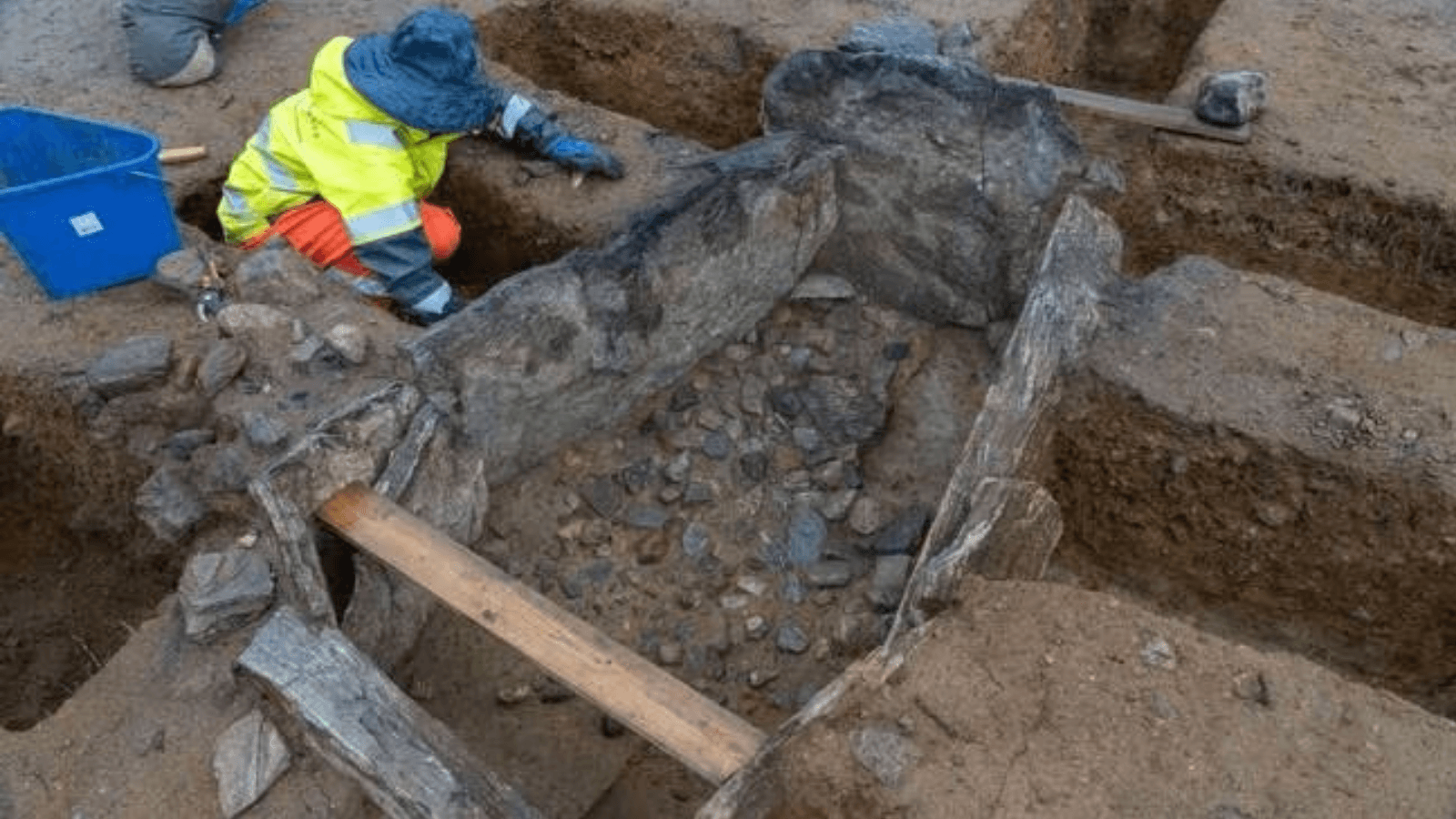
Archaeologists believe a stone grave near Norway’s border with Sweden is about 4,000 years old. They found an amber bead and arrowheads inside, but no human remains—and are now testing the soil for DNA.
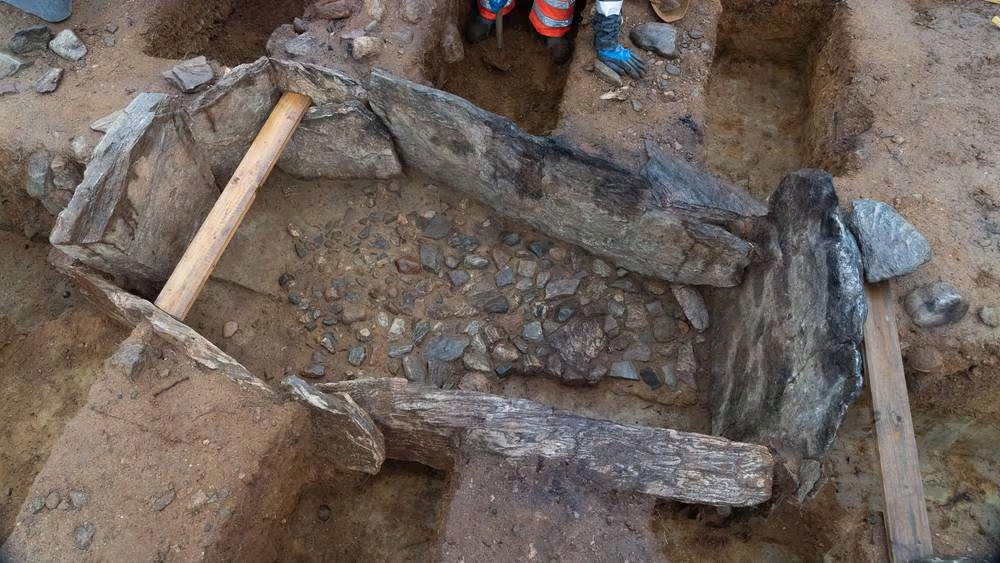
A grave built from stone slabs weighing hundreds of kilograms has emerged from an excavation near Halden, Norway. Its builders secured the slabs with wedges and appear to have laid a floor of individually placed stones at the bottom. Yet the chamber has yielded no human bones.
Archaeologists from the Museum of Cultural History discovered the tomb on the Svinesund plateau, a few kilometres from the Swedish border. They were investigating nine Stone Age settlement sites before construction of a new industrial area. During that work, stones protruding from the ground and traces of charcoal led the team to the buried chamber, excavation leader Carine Rosenvinge told NRK.
The structure is estimated to be around 4,000 years old, based on comparisons with similar graves. Analyses that could help establish a firmer date are still pending.
A Carefully Built Grave With No Bones
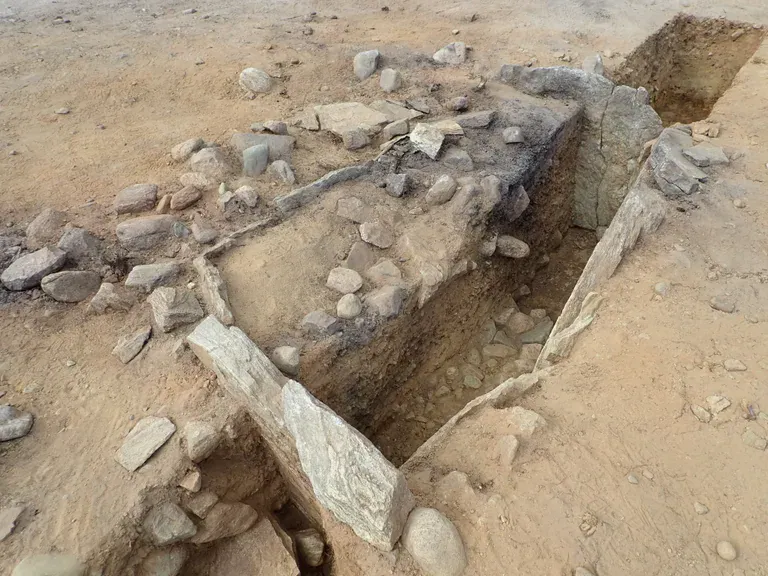
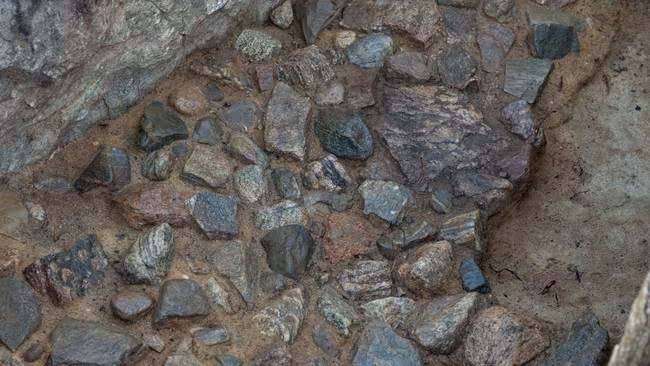
The chamber, known as a stone cist, is about 70 centimetres deep. Archaeologist Magnus Tangen told NRK that its possible floor looked almost like a mosaic, with stones placed carefully across the base. Building it would have meant moving heavy slabs and fitting them together securely enough to remain standing.
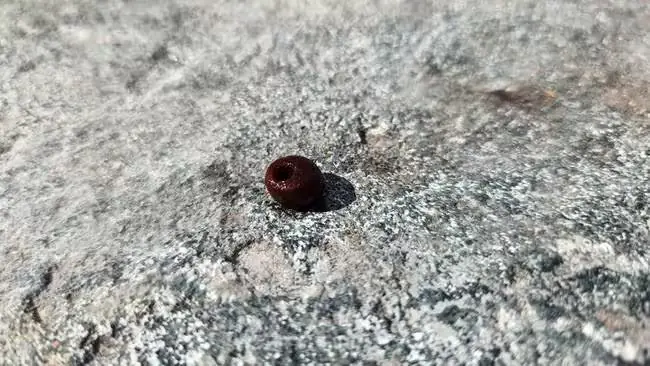
Inside, the excavators found an amber bead and arrowheads, but no human remains. Excavation leader Carine Rosenvinge said the bones may have decomposed in the soil over thousands of years. Without them, the team cannot say how many people were buried in the chamber, or identify their age or sex.
The lack of flint daggers also caught the archaeologists’ attention. Daggers have appeared in other graves of this type, and some researchers have interpreted stone cists containing weapons as warrior burials. That interpretation is debated; the Halden grave offers no evidence that would justify calling its occupant a warrior.
The amber bead may once have belonged to someone buried there. For now, it is an object found within the grave, with no surviving remains to connect it to an individual.
Can the Soil Reveal More?
The team has taken soil samples to look for DNA. Rosenvinge described the method as somewhat experimental and said the archaeologists are waiting to see whether it produces useful results.
A successful test would still need careful interpretation. DNA recovered from soil would not, by itself, establish who was buried in the tomb. Together with the excavation records and other analyses, however, it could give researchers evidence that the missing bones cannot provide.
The find may also help archaeologists understand how burial customs spread through this part of Scandinavia. Rosenvinge told NRK that roughly 20 comparable stone cists have been found in eastern Norway, while they are more common across the border in Sweden. The Halden grave lies in the border region, although its location alone cannot show where its builders came from or which communities they knew.
Stone cists are associated with the period when farming communities became established in Norway. The Halden excavation offers a chance to examine one in detail using current sampling methods. According to Rosenvinge, comparable graves in eastern Norway have rarely been investigated in a development excavation with this much time available for documentation.
What happens to the chamber after the excavation is still under discussion. The Museum of Cultural History and Østfold county are considering whether it could remain in place for visitors, be moved, or be removed once the archaeological work is complete. Whatever the decision, the team is recording its construction and the position of its finds.
The stones show how carefully the grave was made. Whether its soil can tell archaeologists anything about the people it was made for remains an open question.
Cover Image: An archaeologist examines the stone cist near Halden, Norway. Large slabs form the sides of the grave, with smaller stones visible across its base. Photo: Martin Tangen Schmidt / NRK