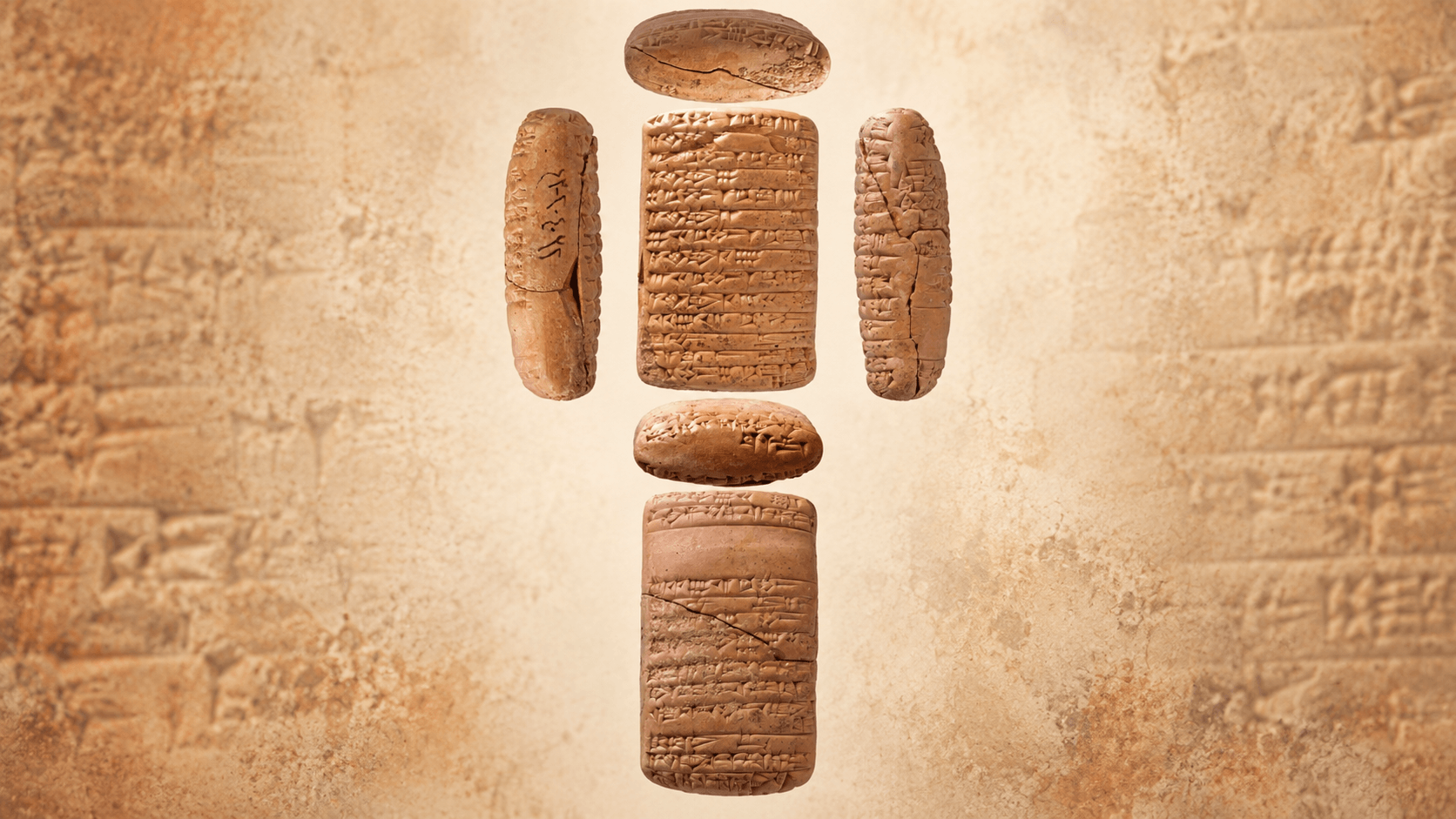
Fifteen cuneiform tablets preserved in the Iraq Museum are revealing a less familiar side of Sumerian life, one that did not always fit neatly within the official administrative system of ancient Mesopotamia.
Dating to the Ur III period, around 2112–2004 BC, the clay tablets record fields, barley, workers, canals, boats and payments. Several, however, differ noticeably from the highly standardized records normally associated with the provincial administration of Umma in southern Mesopotamia.
Researchers argue that some of these documents came from economic settings outside the local bureaucracy, including royal rural estates that maintained their own administrators and scribes. One group may even be connected with the estate of a Sumerian princess.
The study, published in the journal Iraq by Abather Rahi Saadoon, Noemi Borrelli and Maurizio Viano, presents detailed editions of 15 tablets now held by the Iraq Museum in Baghdad.
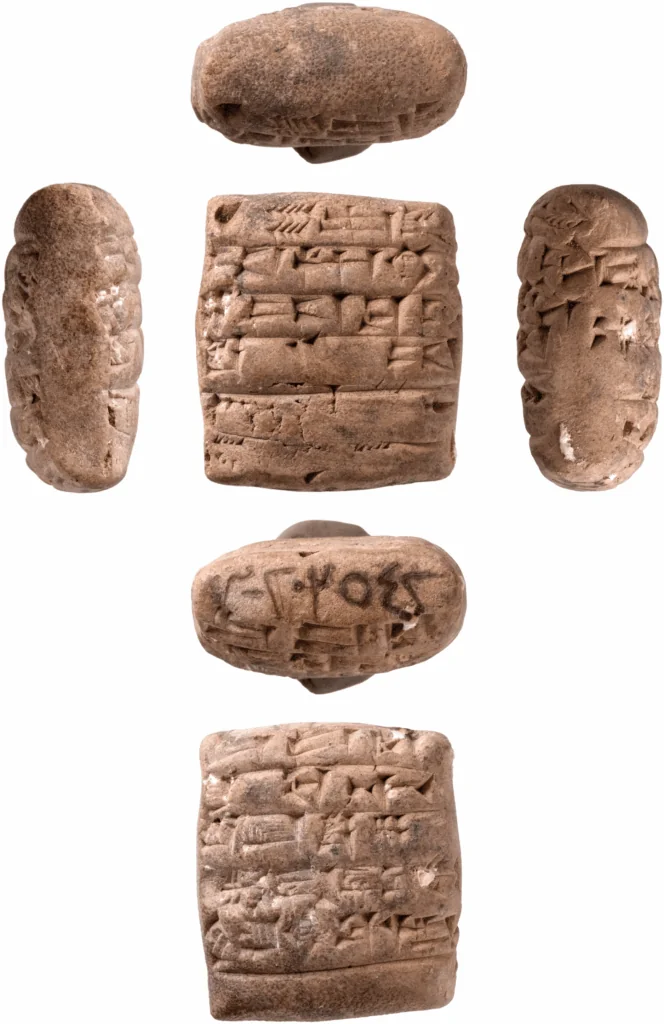
Credit: Photo courtesy of the Iraq Museum / Saadoon, Borrelli and Viano, Iraq (2026), Cambridge University Press.
Records that did not follow the usual rules
Twelve of the tablets appear to come from the Umma region, while two belong to the administrative archives of Irisaĝrig. Researchers traced another to either Ur or the Ĝirsu-Lagaš area by examining names, terminology and other internal evidence.
Umma has produced an enormous body of administrative material from the Ur III period, giving scholars an unusually detailed picture of how officials managed land, labor and agricultural production. That extensive archive also makes documents that depart from its normal practices easier to recognize.
Several of the newly published texts contain non-standard administrative formulas, unusual spellings, defective writings and occasional Akkadian. They also mention senior administrators unknown from the major institutional archives, as well as place names that are either poorly documented or previously unknown.
Researchers argue that these differences are more than isolated scribal mistakes. They suggest that some of the tablets were written by scribes working outside the economy directly managed by the governor of Umma.
A princess’s estate may lie behind some of the records
The researchers link two tablets with particular confidence to the estate of Princess Šat-Eštar, a king’s daughter and the wife of a man named Šarakam. Two additional tablets may also have originated there.
Other records associated with her estate contain similar variations in spelling and administrative practice. Earlier research has suggested that these differences reflect a team of scribes working for the estate rather than officials following the rigid conventions of provincial administration.
The newly published tablets strengthen that picture. One especially unusual document combines administrative elements normally found in different provincial archives and brings together information that scribes would usually have recorded on separate tablets.
According to the researchers, such a mixture raises questions about how its scribe learned the profession. It suggests that alongside the highly standardized scribal traditions of major institutions, other forms of training and administrative practice also existed.
Šat-Eštar’s estate appears to have participated in a broad range of economic activities, including cereal production, orchard cultivation, animal husbandry and the processing of food and garments. Its administrators could also draw on workers from neighboring provinces when additional labor was needed.
Barley records put people into the accounts
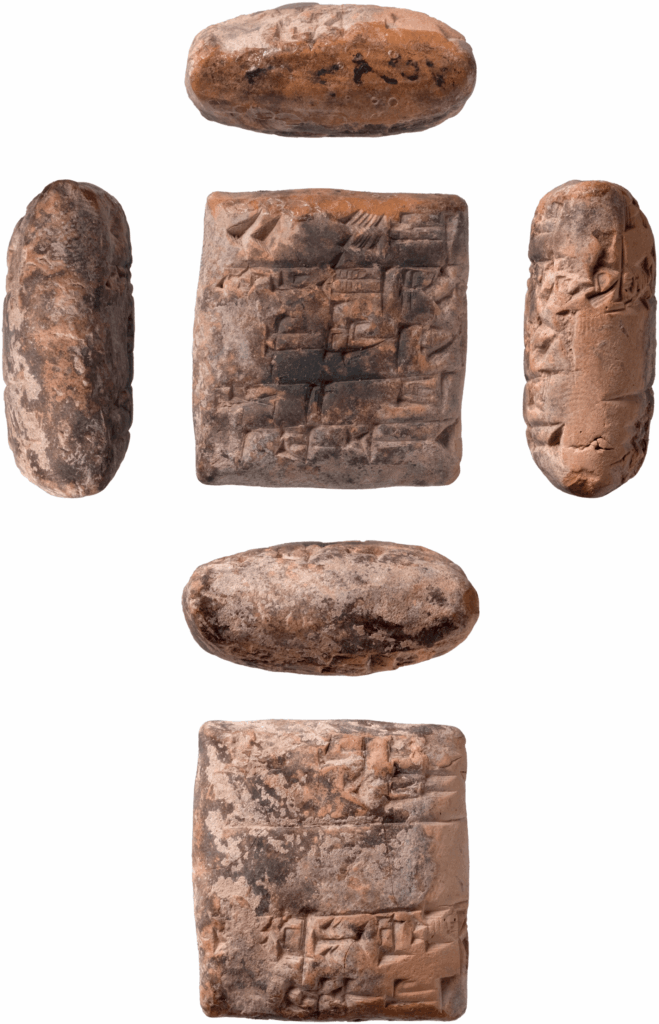
Credit: Photo courtesy of the Iraq Museum / Saadoon, Borrelli and Viano, Iraq (2026), Cambridge University Press.
Despite their administrative purpose, the tablets occasionally allow individual workers to emerge from the columns of numbers.
One document records 810 litres of barley distributed as monthly payments. Among the recipients were groups of Elamites, ox drivers and junior herdsmen, providing a small glimpse of the people working within the estate economy.
Another tablet names Lu-Šara, a singer who received 60 litres of barley. The same document records 100 litres as the price of fresh reeds, another 40 litres connected with a boat and 7,920 litres of threshed barley deposited in the house of an official named Urlugal.
Other accounts operated on a far larger scale. One tablet records 124,260 litres of barley, while another tracks grain revenues from several types of agricultural land and assigns barley quotas to numerous recipients.
The records also document canal work, hired labor and the movement of grain. In one case, workers dug on the Sisa canal, while hired laborers transported barley to Pašime, showing how agricultural production depended on networks of workers, waterways and transport.
A different layer of the Ur III economy
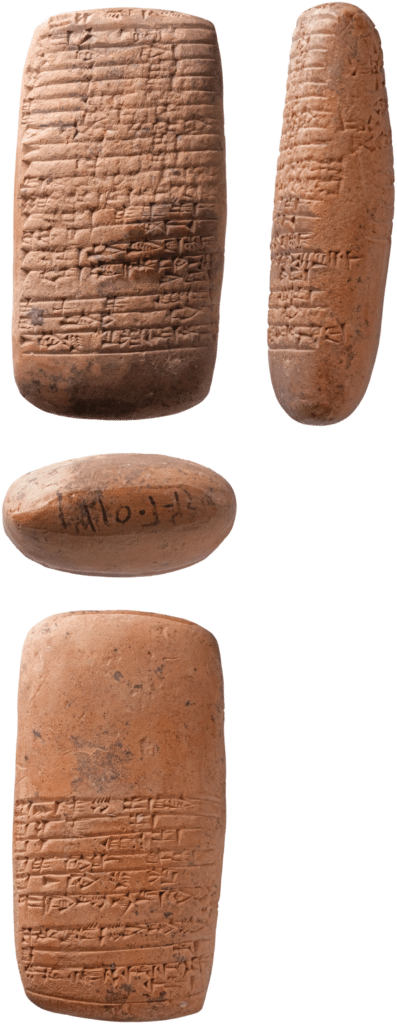
Credit: Photo courtesy of the Iraq Museum / Saadoon, Borrelli and Viano, Iraq (2026), Cambridge University Press.
The tablets entered the Iraq Museum through different institutional channels between 2005 and 2008. Some had been confiscated or recovered by Iraqi authorities, while a group was returned to Iraq by Jordan in 2008.
Because the tablets do not come from controlled archaeological excavations, researchers cannot simply reconstruct their original archives from findspots. Instead, they used personal names, place names, dating formulas, terminology and parallels with thousands of other Ur III texts to identify where the documents most likely originated.
That makes the unusual features of the Umma tablets particularly significant. They indicate that the enormous surviving institutional archives of the Ur III period do not capture every type of economic organization operating at the time.
Royal estates could maintain their own personnel and accounting practices while still interacting with workers and institutions beyond their boundaries. The 15 tablets therefore reveal more than transactions involving barley and land: they offer a glimpse of an administrative world that operated alongside the official provincial system, but followed rules of its own.
Cover Image: A cuneiform tablet from the Umma region dating to the Ur III period. The document records measurements of agricultural land and displays several unusual administrative features examined in the new study.
Credit: Photo courtesy of the Iraq Museum / Saadoon, Borrelli and Viano, Iraq (2026), Cambridge University Press.