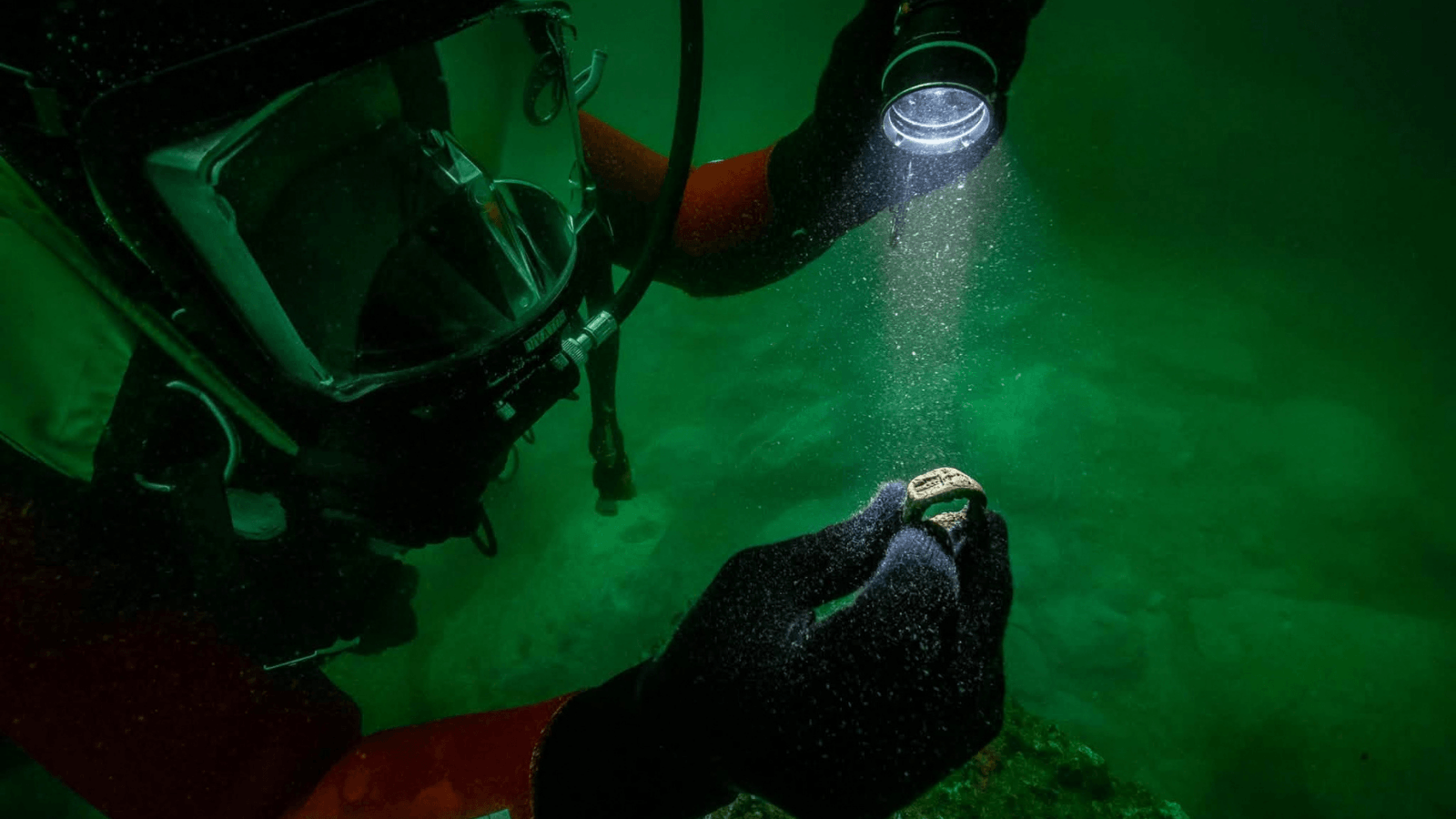
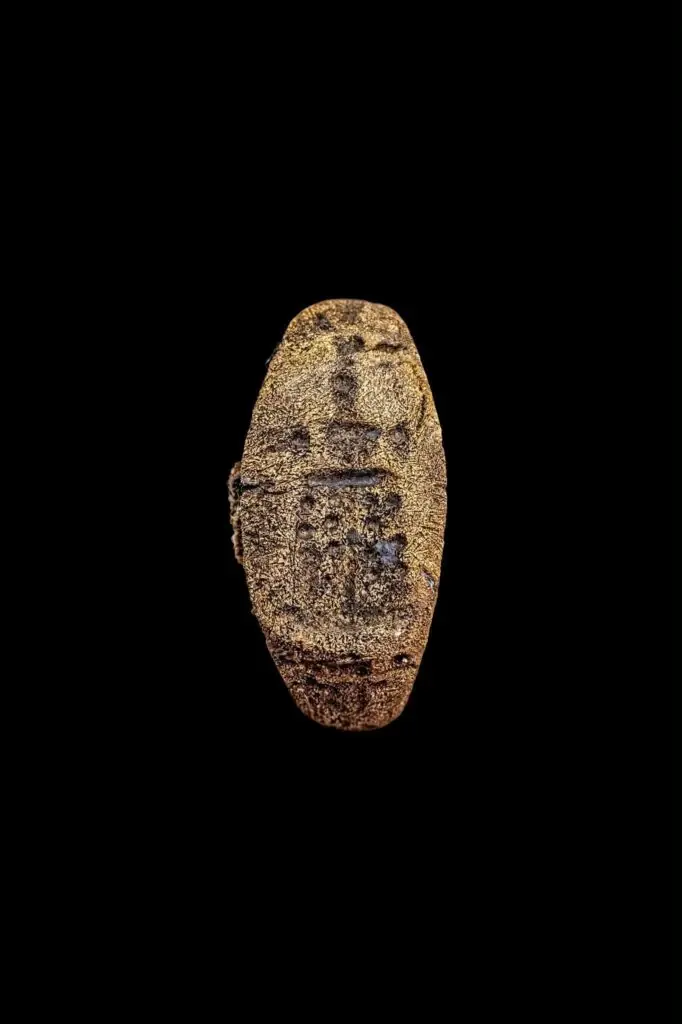
Archaeologists working beneath the waters of Alexandria’s Eastern Harbour have discovered a bronze signet ring engraved with an image of the ancient Lighthouse of Alexandria, one of the Seven Wonders of the Ancient World.
The find came from the submerged remains of Antirhodos, the royal island that once formed part of Alexandria’s monumental harbour district. Egyptian antiquities officials say it is the first known representation of the famous lighthouse found engraved on a seal.
The ring was uncovered by a joint underwater archaeological mission involving the European Institute for Underwater Archaeology, or IEASM, and Egypt’s Supreme Council of Antiquities. The team is directed by underwater archaeologist Franck Goddio, who has investigated Alexandria’s submerged harbour for more than three decades.
A rare image of the Pharos
The engraving closely resembles representations of the Lighthouse of Alexandria seen on Roman-period coins from the second century AD. That comparison may help archaeologists assess the ring’s date and context, although the object itself has not yet been firmly dated on stylistic grounds alone.
Built during the Ptolemaic period, the Pharos became one of the most recognizable monuments of the ancient Mediterranean. Standing at the entrance to Alexandria’s harbour, it served as both a navigational landmark and a powerful symbol of the city.
Its appearance is known mainly from ancient descriptions, coin imagery and later artistic representations. The newly discovered ring therefore adds an unusual small-scale image of the monument to the archaeological record.
Found in Alexandria’s submerged royal quarter
Antirhodos once stood inside Alexandria’s Portus Magnus, close to palaces, temples and harbour installations used during the Ptolemaic and Roman periods.
Large parts of this district later disappeared beneath the Mediterranean following earthquakes, subsidence and other natural processes. Underwater excavations since the 1990s have revealed extensive remains of the ancient harbour landscape, including structures associated with royal and religious complexes.
The ring was recovered from this broader archaeological setting, where excavations have also produced pottery, amphorae, lamps, glass vessels and other material dating from the Hellenistic and Roman periods.
Could the ring have had an administrative role?
Hisham El-Leithy of Egypt’s Supreme Council of Antiquities said the discovery may indicate that the palace complex on Antirhodos continued to serve administrative purposes during the Roman period.
Researchers are also considering whether the seal could have had some connection with the administration of the Pharos itself. The similarity between the engraved image and Roman-period depictions of the lighthouse makes the possibility worth examining, but it remains a hypothesis rather than a confirmed interpretation.
The significance of the find lies primarily in the image it preserves. The Lighthouse of Alexandria is usually reconstructed through monumental remains, written sources and coins; this bronze ring adds a rare personal or administrative object carrying the image of the city’s most famous landmark.
Cover Image: An underwater archaeologist examines the bronze signet ring discovered in Alexandria’s Eastern Harbour. The ring bears an engraved image identified as the Lighthouse of Alexandria. C. Gerigk © Franck Goddio / Hilti Foundation.