Archaeologists excavating the ancient Roman city of Aquinum in central Italy have discovered a richly decorated stone monument depicting a bull, a ram and a pig. The unusual combination points toward one of the most solemn sacrificial rituals practiced in Roman religion.
The discovery came during the University of Salento’s 18th excavation campaign at Aquinum, near modern Castrocielo in the province of Frosinone. Researchers presented the monument at the end of the 2026 field season together with a second find that offers further evidence for religious and civic life in the Roman colony.
Three animals with a specific meaning
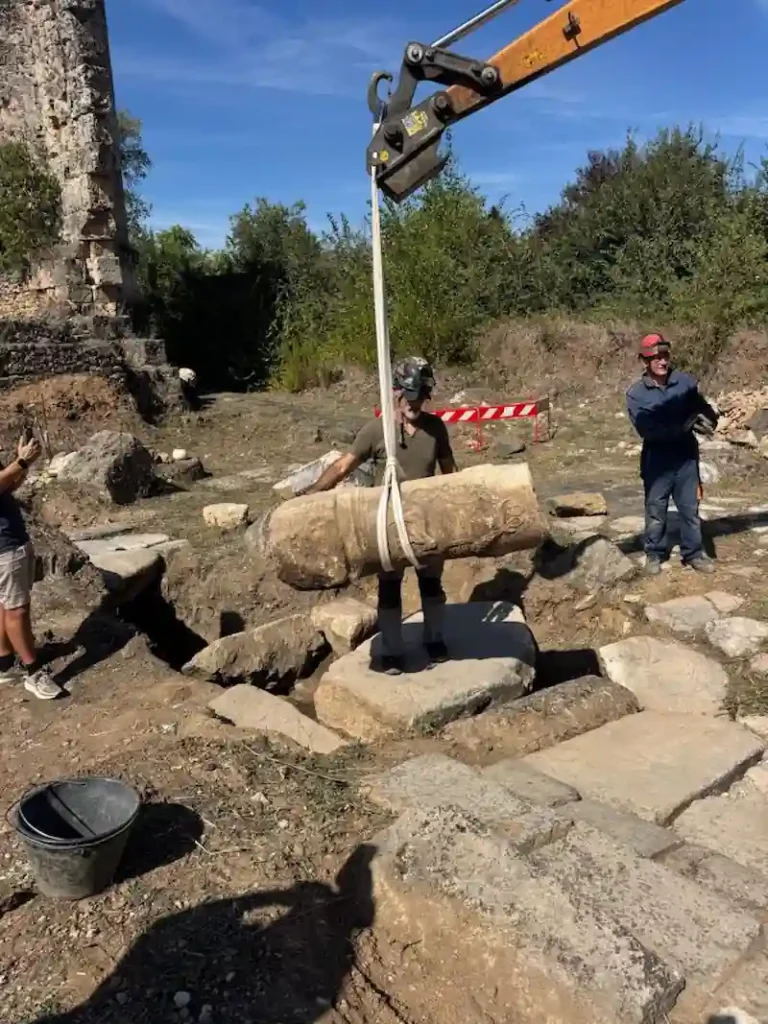
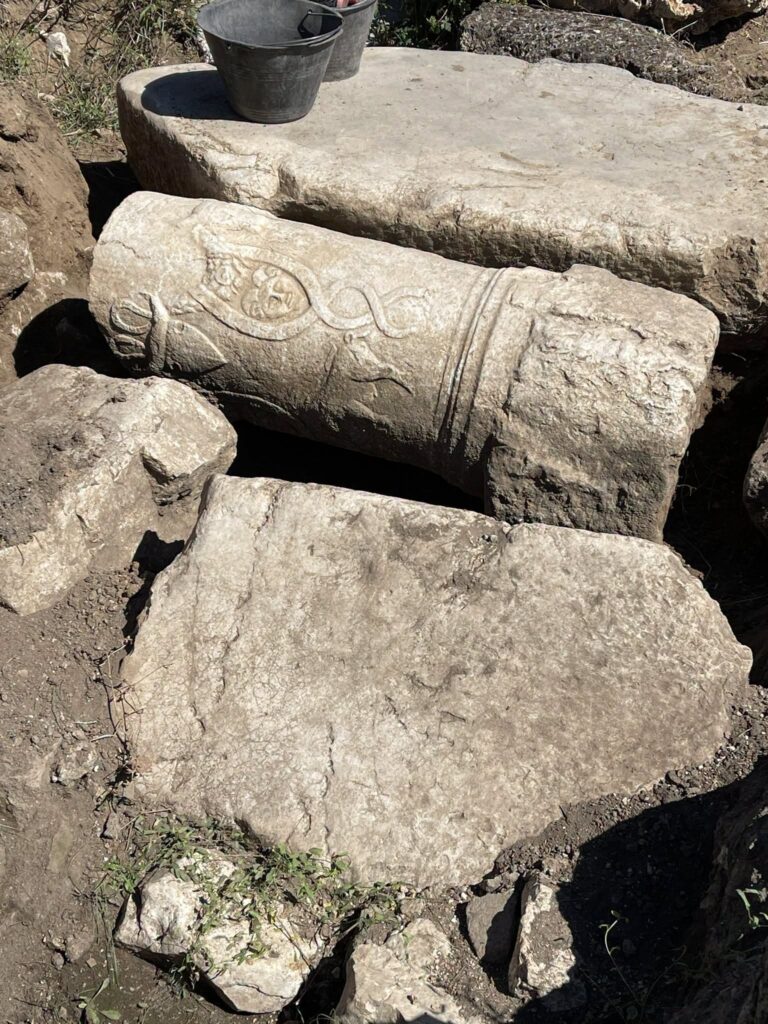
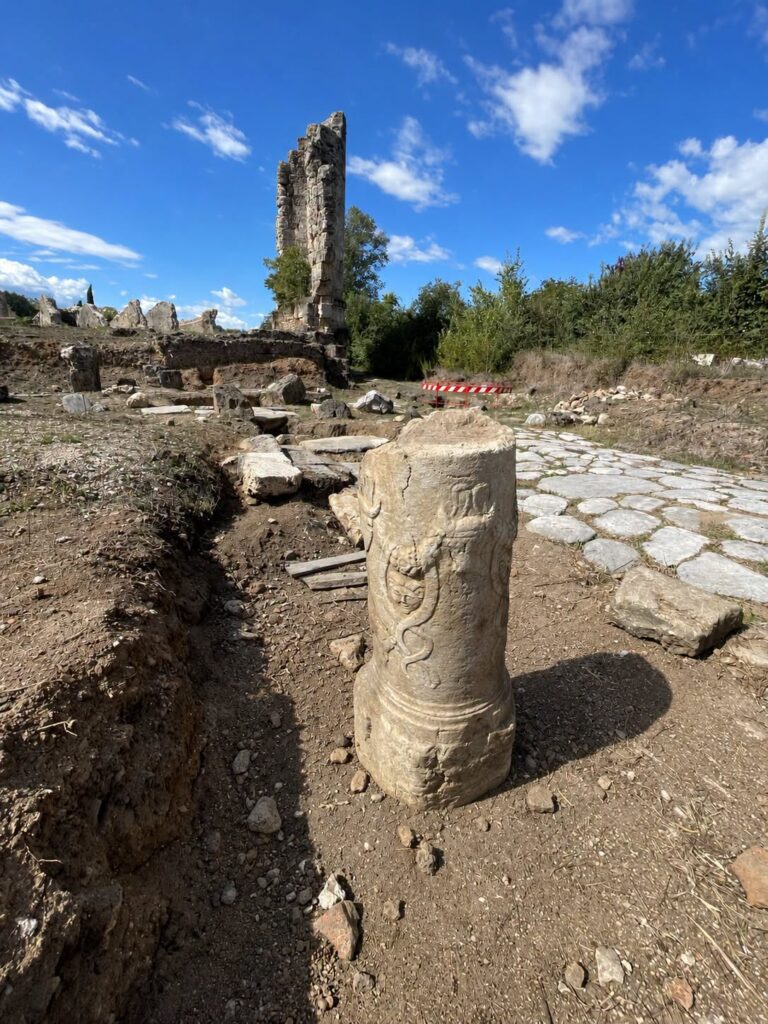
Archaeologists found the decorated cippus reused in paving near one of Aquinum’s principal intersections. Its carved surface preserves garlands, festoons and bucrania, decorative representations of cattle skulls often associated with sacrifice.
Among these elements appear three animals: a bull, a ram and a pig. That combination is significant because it corresponds to the animals sacrificed during the Roman ritual known as the suovetaurilium, whose name combines the Latin words for pig, sheep and bull.
The suovetaurilium was one of the major collective sacrifices of Roman religion and could accompany ceremonies of purification, consecration or the ritual marking of space. The Aquinum carving may therefore refer to such a ceremony, although archaeologists remain cautious because the stone was not found in its original setting.
At some point, the monument had been removed from wherever it originally stood and reused in the street paving. That secondary context makes it difficult to connect the carving securely with a particular sanctuary, public building or ritual space.
A Roman name survives on the stone
The monument also carries an inscription that may preserve the name of the person who commissioned or dedicated it. Archaeologists tentatively read the name as Caius Ammius Cammarus, although they stress that the full reading still requires confirmation.
The inscription adds another layer to the discovery because it may connect a named inhabitant of Aquinum with the monument and its sacrificial imagery. The decorated stone was later stripped of that earlier role and reused as building material, a common fate for older monuments in Roman and later urban environments.
A second discovery reveals the imperial cult
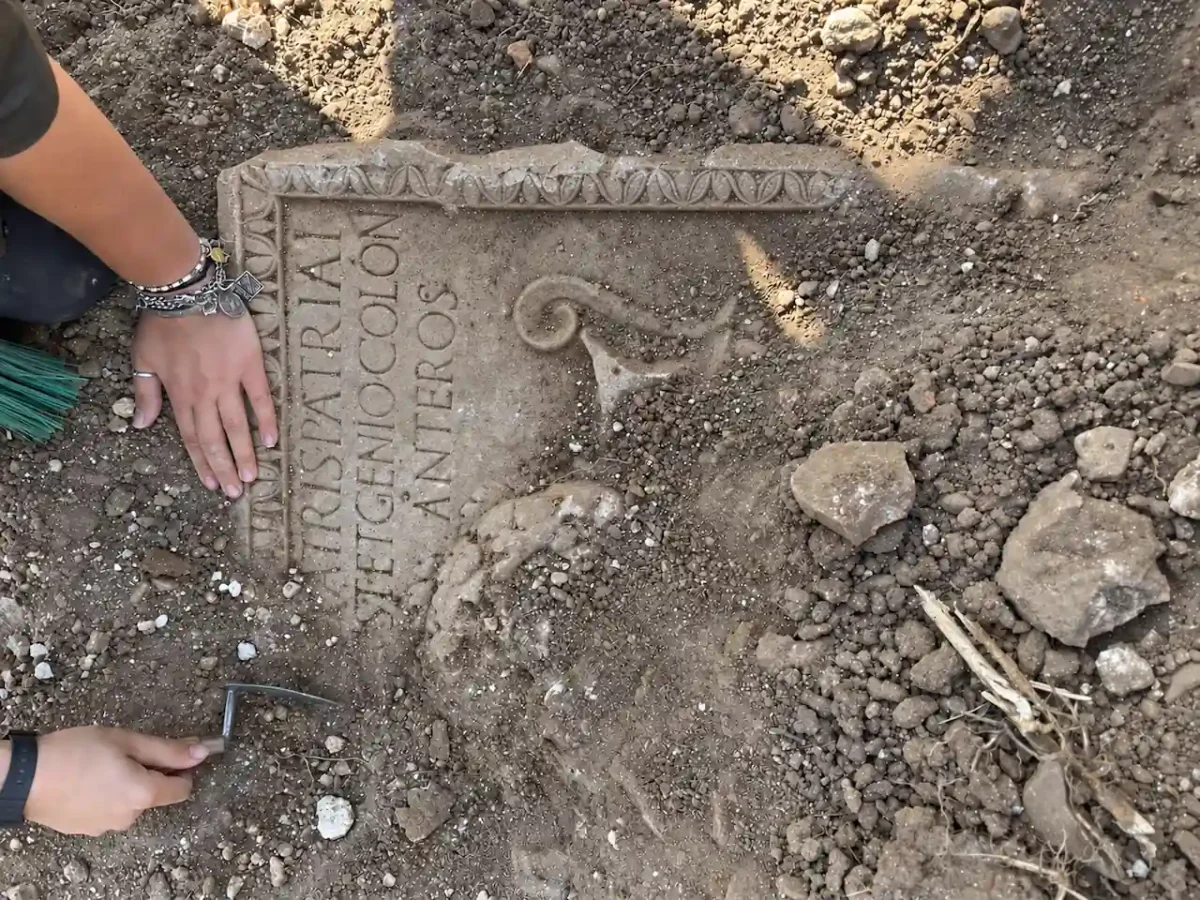
The same excavation campaign also produced a new fragment belonging to a marble votive altar. Archaeologists already knew part of its inscription, but the newly recovered piece allows them to reconstruct much more of the dedication.
The text names the Genius of Augustus, the Lares of Augustus and the Genius of the Colony, bringing together the imperial cult and the civic identity of Aquinum.
The altar was dedicated by Manius Popidius Anteros, a wealthy freedman who served as a sevir Augustalis. Members of this group played an important role in promoting the imperial cult in Roman towns, and the office could give prosperous freedmen a prominent place in civic and religious life.
Taken together, the altar and the decorated cippus reveal different aspects of religion at Aquinum. One appears to preserve imagery associated with traditional animal sacrifice, while the other connects a named freedman with the cult of Augustus and the colony itself.
A season rich in religious evidence
The two discoveries form part of a wider picture emerging from the 2026 excavation season. Earlier work in Aquinum’s Roman theater also uncovered a marble inscription reading FVL(GVR) C[ONDITVM], a formula associated with a place struck by lightning and subsequently marked or consecrated according to Roman religious practice.
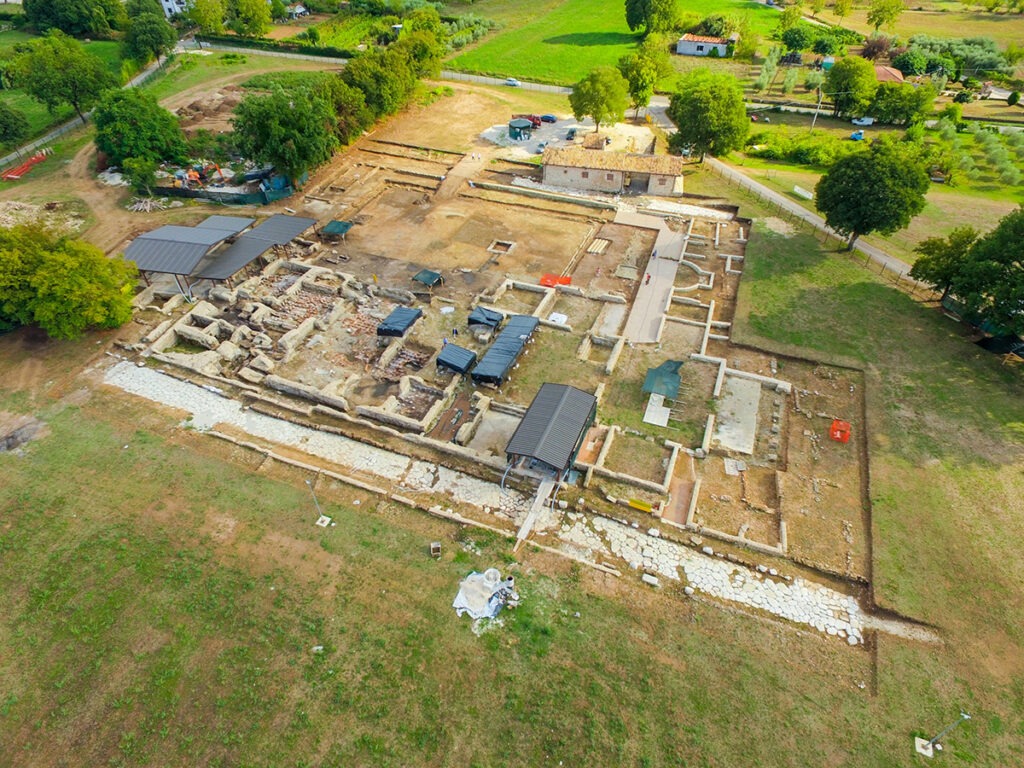
The finds came from the long-running Aquinum project directed by Giuseppe Ceraudo of the University of Salento in collaboration with Italy’s Archaeology, Fine Arts and Landscape Superintendence for the provinces of Frosinone and Latina and the municipalities of Castrocielo and Aquino.
After 18 excavation seasons, the project continues to reconstruct the public and monumental landscape of the Roman city. The latest discoveries are particularly important because they add several different forms of evidence for how religion operated within Aquinum, from sacrifice and civic cult to the ritual treatment of exceptional events such as lightning strikes.
Cover Image: Detail of the decorated Roman cippus discovered at Aquinum, preserving an inscription and sacrificial imagery linked to the newly identified monument. Credit: University of Salento